
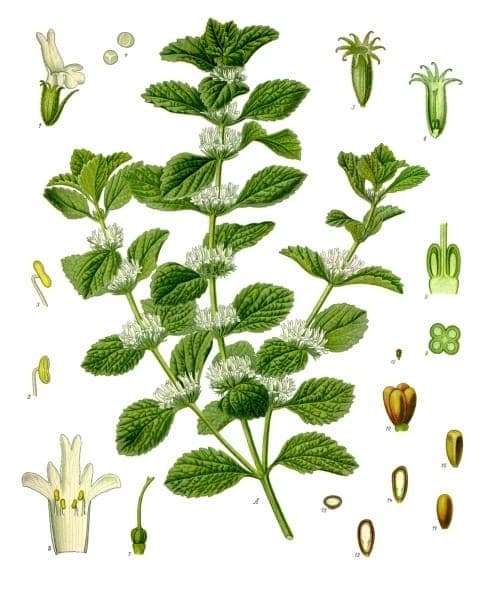
Franz Eugen Köhler, Köhler's Medizinal-Pflanzen / Public domain, via Wikimedia Commons
Horehound (Marrubium vulgare): complete guide
Marrubium vulgare
¿Quieres ver Horehound (Marrubium vulgare): complete guide en tu jardín?
1 minuto, sin tarjeta de crédito
Overview
Horehound (Marrubium vulgare), called white horehound or common horehound in English, is a hardy herbaceous perennial from the mint family (Lamiaceae) native to Mediterranean Europe, North Africa, and temperate Asia eastward to the Himalayas. This remarkably drought-tolerant plant grows wild on sunny slopes, rocky hillsides, and marginal lands throughout its native range, demonstrating ecological flexibility alongside architectural beauty. Horehound has been valued in traditional medicine for over two thousand years, recommended for coughs, sore throats, bronchial congestion, and digestive complaints. Modern herbalists continue recognizing horehound's legitimate medicinal properties, while contemporary gardeners appreciate this silvery-leaved plant as an ornamental, a reliable nectar source for pollinators, and an accessible medicinal herb for home cultivation.
Horehound distinguishes itself through fine white hairs covering stems and leaves, producing distinctive silvery-gray foliage and characteristic sticky-surfaced small white flowers arranged in dense vertical whorls. The plant's strongly herbal, somewhat bitter flavor suits preparation as medicinal tea and traditional cough remedies. In modern gardens, horehound fulfills multiple roles: as ornamental structural plant with architectural interest, as pollinator magnet attracting honeybees, and as accessible medicinal plant for home-growing herbalists. The plant thrives under neglect and invites itself into sustainable, low-maintenance gardens, actually improving performance with minimal intervention.
Appearance & bloom cycle
Horehound develops as an upright, branching, hairy perennial typically reaching 45-90 centimeters tall, occasionally exceeding 120 centimeters under favorable conditions. The entire plant is covered with dense, short, whitish hairs creating distinctly silvery appearance throughout. Stems are characteristically square - a hallmark of the Lamiaceae family - densely clothed with opposite leaves.
Leaves are elliptical to nearly round, 1-4 centimeters long, appearing wrinkled or rumpled with faint veining and soft hairy texture. Each leaf exhibits finely toothed margins. Characteristic flowers appear from May through September in dense, tight vertical whorls along the stems. Individual flowers measure merely 8-10 millimeters, displaying two lips: a straight upper lip and spreading lower lip, all in white to pale pink coloring. These flowers prove exceptionally attractive to honeybees and other pollinators. Following flowering, small brown nutlets form within characteristically hooked calyxes that readily attach to clothing and animal fur for dispersal. These nutlets can be collected for seed propagation.
Ideal location
Horehound grows optimally in full sun locations receiving minimum 6-8 hours direct sunlight daily. The plant tolerates partial shade, though it becomes less dense and flowers more sparsely in reduced light. Select the sunniest, most open available position. Horehound is frost-tolerant and benefits from some wind protection, though it doesn't strictly require shelter. In hot climates, afternoon shade in July-August, particularly in continental zones with temperatures exceeding 35 degrees Celsius, provides modest benefit. Even in these situations, the plant blooms excellently while foliage develops characteristic pale gray appearance as heat adaptation.
Soil requirements
Horehound is remarkably indifferent to soil quality. The plant thrives in poor, sandy, rocky soils rejecting most other plants. In fact, in rich garden loam, horehound sometimes develops excessively leafy with reduced flowering. The ideal soil is well-drained, sand-dominant to gravelly, with pH 6.0-8.0 (neutral to slightly alkaline). In temperate gardens, add sand, gravel, and grit to standard garden soil in 50-60% proportions improving drainage. The plant tolerates drought excellently once established through extensive deep-reaching root systems.
Organic matter should remain minimal; no more than 10-15 percent of soil volume should be compost. Excessive feeding promotes soft growth susceptible to fungal diseases. Horehound actually performs better in marginal soils reflecting its Mediterranean origin.
Diseño gratis
¿Quieres ver Horehound (Marrubium vulgare): complete guide en tu jardín? Crea un diseño gratis ahora.
Watering
Horehound is remarkably drought-tolerant following establishment. During the first growing season (particularly first 6-8 weeks), provide regular water until the plant develops deep rooting. Thereafter, water only during extended drought periods. Established plants require water only when soil becomes very dry. Overwatering represents the greatest enemy of horehound, promoting root rot and fungal diseases. Ensure excellent drainage consistently. In rainy seasons, fully developed plants typically need no supplemental water. In containers, allow soil to dry well between waterings. Reduce watering in autumn and winter when growth slows dramatically.
Harvesting for medicine & culinary use
Horehound may be harvested throughout the growing season (May-October) for flowers and foliage, though maximum medicinal potency develops during peak flowering. Harvest leaves and flowers in early morning after dew evaporates but before the hottest part of day. Hang cuttings upside-down in loose bundles in dry, dark, well-ventilated spaces for 2-3 weeks until completely desiccated. Store dried material in sealed glass containers away from light.
Dried flowers and leaves prepare as medicinal tea: steep 1-2 teaspoons dried herb in 250 milliliters boiling water for 5-10 minutes. The tea exhibits strong herbal, somewhat bitter character requiring gradual acclimation. For cough syrups, simmer 30-40 grams dried material with honey until thickened to syrup consistency. Traditional European herbals recommend 3-5 milliliters syrup three times daily for respiratory complaints.
Propagation
Horehound propagates with remarkable ease via seed. Sow seed directly outdoors in early spring (March-April) or autumn (September). Seed requires no stratification. Scatter seed lightly over prepared seedbed, press gently into surface but don't completely bury. Seeds germinate within 7-14 days at 15-20 degrees Celsius. Thin seedlings to 30 centimeter spacing when reaching 5-8 centimeters height. Alternatively, collect seed from existing plants in October-November; seeds maintain 2-3 years viability with dry storage. Softwood cuttings from new growth taken in early summer root readily in humid conditions within 3-4 weeks.
Maintenance calendar
March: Sow seed directly outside on prepared beds. Water gently after sowing.
April-May: Seedlings emerge and grow rapidly. Thin to 30-centimeter spacing. Young plants require regular watering.
June-July-August: Plants grow vigorously and bloom profusely. Harvest flowers and foliage regularly for tea or medicine. Reduce watering frequencies.
August-September: Flowering reaches peak. Allow some plants to set seed for next season. Seeds fully ripen by October.
October-November: Harvest and dry seed. Cut back plants to 15-centimeter height.
December-February: Plant remains dormant. Provide minimal water. In snowy regions, snow cover provides natural insulation.
Winter hardiness
Horehound is exceptionally winter-hardy, thriving as a permanent perennial in all temperate climates. Plants survive temperatures to -15 degrees Celsius without protection. In severe winters, above-ground portions may die back, but roots survive and regenerate in spring. In regions with extremely harsh winters (USDA zones 2-3), light mulch covering (5-8 centimeters straw) provides modest benefit, though not strictly necessary. In mild winters, plants grow year-round and permit winter harvesting.
Companion plants
Horehound grows beautifully with other Mediterranean herbs and silvery-foliaged plants: oregano, thyme, sage, lavender, and lamb's ears form harmonious communities. These plants share drainage preferences and drought tolerance. Plant horehound also in rock gardens, between stones and gravel zones, and along pathways where silvery foliage creates visual interest. In herb gardens, it pairs excellently with other medicinal and aromatic herbs. Avoid direct planting alongside moisture-demanding plants or poorly drained areas.
Closing
Horehound deserves far more attention than it typically receives in temperate gardens. This is a plant promising genuine gratitude for minimal effort: sow seed, let it grow, harvest flowers and foliage, and enjoy traditional herbal tea. The plant teaches gardeners what sustainable cultivation truly means - growth without synthetic fertilizers or constant watering. Establishing horehound in dry, marginal garden corners brings life to otherwise barren spaces. Learn more about medicinal herbs and Mediterranean gardening strategies at gardenworld.app.
For herb-growing enthusiasts or natural health practitioners, horehound is an essential plant for medicine and tea preparation. Begin by sowing seed in spring, and you'll enjoy years of harvests from this useful, beautiful plant. Discover more traditional healing herbs and herbal garden plans at gardenworld.app.
¿Quieres ver Horehound (Marrubium vulgare): complete guide en tu jardín? Crea un diseño gratis ahora.
Sube una foto, elige un estilo y obtén un diseño fotorrealista con lista de plantas en menos de un minuto.
Más de 10.000 jardines diseñados
Sin tarjeta de crédito


Plantas similares
Apple mint (Mentha x villosa): complete guide
Mentha x villosa
Meet apple mint (Mentha x villosa): a fruity-scented kitchen herb with woolly leaves, perfect for tea and mojitos.
Salvia peyronii: complete guide
Salvia peyronii
Discover Salvia peyronii, a rare Lebanese mountain sage. Growing tips, hardiness, and companion planting for a Mediterranean gravel garden.
Bigleaf mint (Mentha x rotundifolia): complete guide
Mentha x rotundifolia
Discover bigleaf mint: cultivation, care tips, and garden uses. Learn how to grow this aromatic herb with soft, hairy leaves.