
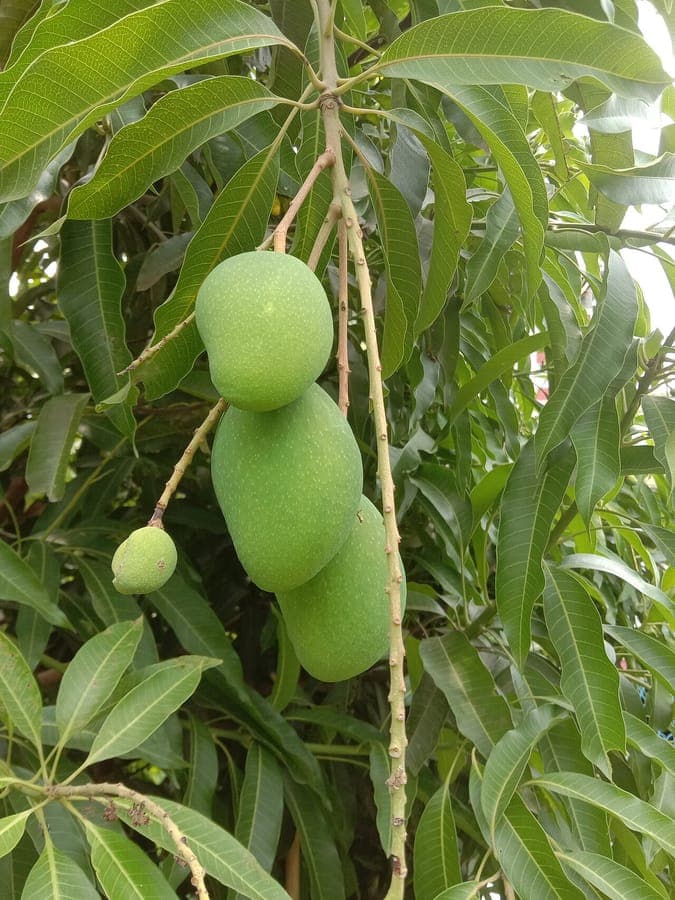
Billjones94 / CC BY-SA 4.0, via Wikimedia Commons
Mango: complete guide for growers
Mangifera indica
¿Quieres ver Mango: complete guide for growers en tu jardín?
1 minuto, sin tarjeta de crédito
Overview
The mango (Mangifera indica) is a majestic fruit tree native to Assam and South Yunnan in China. Revered for its delicious fruits and beautiful foliage, the mango tree thrives in warm climates. Ideal for Mediterranean and subtropical gardens, a well-cared mango can produce abundant harvests for decades. This ancient tree symbolizes tropical abundance and culinary delight.
Appearance and bloom
Mango grows into an impressive tree reaching 10 to 15 meters tall with a dense, rounded canopy. Leaves are elongated, glossy dark green, and up to 35 cm long. In spring, fragrant pale yellow-green flowers appear in large pyramidal clusters. These attract pollinators and develop into oval fruits that ripen from green to golden yellow or red tones.
Ideal location
Mango requires full sun for optimal growth and fruit production. Plant where the tree receives at least 6 hours of direct sunlight daily. Protect from strong winds. In cooler climates, container growing allows you to move the tree indoors during winter months, ensuring reliable fruit development.
Soil
Mango thrives in well-draining, fertile soil with pH between 5.5 and 7.5. Enrich with organic matter by incorporating compost and aged manure. Excellent drainage is critical as the tree cannot tolerate waterlogging. Add sand or perlite to heavy clay soils to improve structure.
Diseño gratis
¿Quieres ver Mango: complete guide for growers en tu jardín? Crea un diseño gratis ahora.
Watering
Water regularly, especially during growth and flowering seasons. Allow soil to dry slightly between waterings. Mature trees show moderate drought tolerance but perform best with consistent moisture. Reduce watering in winter. Ensure drainage to prevent root rot and fungal issues.
Pruning
Pruning is optional but improves shape and air circulation. Prune after harvest or in early spring before growth begins. Remove dead wood and crossing branches. Maintain an open framework for disease prevention and easier harvesting.
Maintenance calendar
Spring: Apply fertilizer, prune, inspect for pests. Summer: Regular watering, support heavy fruit clusters. Autumn: Reduce feeding, adjust water. Winter: Minimal care, water only if very dry.
Winter hardiness
Mango is tropical and frost-sensitive. Protect when temperatures drop below 10C. In cool zones: grow in containers, move indoors before frost. In Mediterranean climates, outdoor cultivation works with winter protection such as burlap wrapping.
Companion plants
Successful combinations include citrus trees, avocado, passion fruit, and other subtropical fruits. Avoid direct competition from large shade trees.
Closing
The mango tree brings tropical elegance and delicious fruit to any garden. With patience and proper care, you will enjoy abundant harvests. Start your mango journey today! Purchase quality plants from specialty retailers.
For more inspiration, visit gardenworld.app/en and explore plant guides and garden designs.
¿Quieres ver Mango: complete guide for growers en tu jardín? Crea un diseño gratis ahora.
Sube una foto, elige un estilo y obtén un diseño fotorrealista con lista de plantas en menos de un minuto.
Más de 10.000 jardines diseñados
Sin tarjeta de crédito


Plantas similares
Skunkbush sumac: complete guide
Rhus trilobata
Everything about Rhus trilobata: siting, soil, autumn colour, pruning, and how this tough ornamental shrub earns a place in any garden.
Winged sumac: complete guide
Rhus copallinum
Everything about Rhus copallinum, the winged sumac with spectacular autumn colour. Location, pruning and garden value in full detail.
Aromatic sumac: complete guide
Rhus aromatica
Full guide to aromatic sumac (Rhus aromatica): planting, soil, care, pruning and companion plants for dry, sunny gardens and slope stabilisation.