
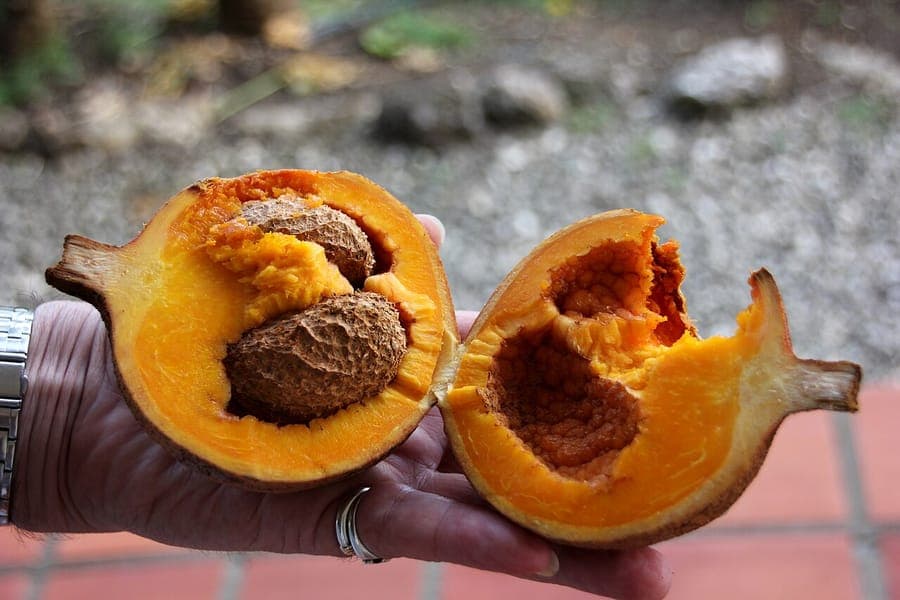
Sven Volkens / CC BY-SA 4.0, via Wikimedia Commons
Tropical-apricot: complete guide
Mammea americana
¿Quieres ver Tropical-apricot: complete guide en tu jardín?
1 minuto, sin tarjeta de crédito
Overview
Tropical-apricot (Mammea americana), commonly called mammee apple or mammey, is an impressive tropical tree native to Mexico, the Caribbean, and Central America. This remarkable tree produces large golden-yellow fruit with sweet, orange-colored flesh rich in vitamin C and fragrant white flowers.
Appearance and bloom cycle
Tropical-apricot grows into a large tree reaching 10-15 meters tall with dense, attractive green foliage. The flowers are small, white, and fragrant, appearing in clusters throughout the growing season. The fruit is large and round, with golden-yellow skin reaching 7-12 cm diameter. The flesh is orange-red, soft, and sweet with excellent flavor and a single large central seed.
Ideal location
Tropical-apricot thrives in warm, tropical climates with abundant sunlight (minimum 6 hours direct daily). In temperate regions, grow as a container specimen moved outdoors during summer and brought indoors during winter. Protection from wind and frost is essential.
Soil requirements
Tropical-apricot prefers fertile, well-draining soil with pH 4.0-8.5. The tree is quite flexible about soil conditions but appreciates humus-rich, slightly acidic environments. Ensure excellent drainage to prevent root rot.
Watering
Water regularly during the growing season, especially during flowering and fruit development. Tropical-apricot requires consistent moisture but tolerates brief dry spells. Water less during dormant periods, but never let soil dry completely.
Diseño gratis
¿Quieres ver Tropical-apricot: complete guide en tu jardín? Crea un diseño gratis ahora.
Pruning
Minimal pruning needed. Remove dead or weak wood. Fruit thinning helps produce larger individual fruits. This tree requires no aggressive pruning and develops naturally attractive form.
Maintenance calendar
Spring: Begin regular watering as growth accelerates. Summer: Support flowering and fruiting with consistent moisture and feeding. Autumn: Reduce watering as tree prepares for dormancy. Winter: Minimal care in cold climates; protect from freezing temperatures.
Winter hardiness
Tropical-apricot is frost-sensitive and cannot tolerate temperatures below 10 degrees Celsius. Outdoor cultivation is practical only in USDA zones 10-11. In temperate zones, grow as a containerized specimen, moving it indoors during winter.
Companion plants
In containers, combine with complementary tropical foliage plants. In gardens, underplant with shade-tolerant plants appreciating heat and humidity. The tree provides substantial shade for understory plantings.
Closing
Tropical-apricot brings authentic tropical abundance and nutritious fruit to warm-climate gardens and bright interiors. With proper care, this remarkable tree produces delicious golden fruit for many years. Discover more tropical fruit growing tips on gardenworld.app. Source your Tropical-apricot from specialized tropical plant nurseries, and let gardenworld.app help design your tropical paradise.
¿Quieres ver Tropical-apricot: complete guide en tu jardín? Crea un diseño gratis ahora.
Sube una foto, elige un estilo y obtén un diseño fotorrealista con lista de plantas en menos de un minuto.
Más de 10.000 jardines diseñados
Sin tarjeta de crédito


Plantas similares
Acer pycnanthum: complete guide
Acer pycnanthum
Acer pycnanthum, the Japanese swamp maple, is a fast-growing tree with early red flowers and brilliant autumn color, ideal for damp garden settings.
Freeman maple: complete guide
Acer × freemanii
Everything about the Freeman maple (Acer x freemanii): a fast-growing shade tree with spectacular autumn colour for large gardens.
Silver vine: complete guide
Actinidia polygama
Discover silver vine (Actinidia polygama): a hardy climbing plant with silvery foliage, loved by gardeners and cats alike.