
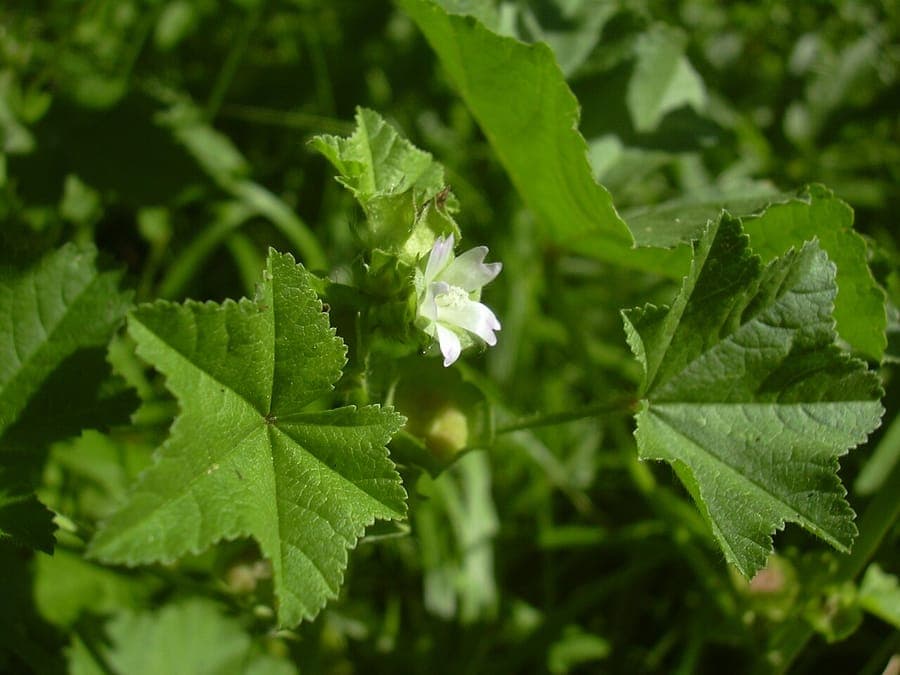
Forest & Kim Starr / CC BY 3.0, via Wikimedia Commons
Egyptian mallow: complete guide
Malva parviflora
¿Quieres ver Egyptian mallow: complete guide en tu jardín?
1 minuto, sin tarjeta de crédito
The Egyptian mallow, scientifically known as Malva parviflora, is an elegant annual or biennial plant from the Malvaceae family. This species originates from the Mediterranean region extending to Pakistan and has naturalized throughout warmer climates. Formally recognized since 1753, this plant carries a long history of use in garden and agricultural applications across southern European and North African regions. The Egyptian mallow grows naturally in dry meadows, rocky slopes, and ruderal habitats. It is exceptionally drought-tolerant and thrives even in warm, windy locations where other plants would suffer.
The appearance of Malva parviflora is compact and airy, with softly hairy stems reaching 30 to 60 centimeters in height. The leaves are heart-shaped to kidney-shaped with slightly wrinkled appearance and fine-grained texture. Each leaf reaches approximately 3 to 8 centimeters in diameter and is densely covered with soft, grayish hairs. The flowers are small yet numerous, measuring only 1 to 1.5 centimeters across, appearing in soft pink, white, or purple tones depending on growing conditions. Flowers are clustered in leaf axils and produce many small green seeds in characteristic seed capsules. Blooming typically extends from May through October in temperate climates.
Regarding soil composition, Malva parviflora is remarkably flexible. The plant tolerates sandy, lean soils as readily as richer, fertile ground. A neutral to slightly alkaline pH between 6.5 and 8.0 is ideal, though the plant also grows in mildly acidic soils. Add only modest compost when planting, avoiding heavy fertilization, as this promotes leaf growth at the expense of flowering. The plant actually thrives better in poorer soils. Watering is minimal once the plant is established. During the growing season, water when the top 2 centimeters of soil feel dry. Once flowering, you may even allow extended dry periods. This plant is ideal for water-saving xeriscapes and drought-tolerant garden designs.
Pruning is not critical but can be beneficial for a more compact form. Pinch back growing tips when the plant reaches 20 centimeters for a fuller, bushier habit. After main flowering, remove spent flowers to limit seed production and extend the bloom period. A light cutback of approximately one-third after first major bloom can stimulate a second flowering wave.
The maintenance calendar for Egyptian mallow is remarkably simple. In April, add compost around the plant. From May through October, occasionally check if water is needed, especially during extreme drought. In September-October, you may leave seed pods to self-seed next season or remove them for neater appearance. Winter hardiness varies by region. In temperate climates, Malva parviflora typically does not persist beyond first season or biennial cycle.
As a garden companion, Malva parviflora works beautifully with other Mediterranean drought-loving plants. Combine it with lavender, sage, santolina, and helichrysum for authentic Mediterranean garden style. The plant thrives alongside other Malva species and other light, airy plants. Egyptian mallow is a charming plant offering many benefits for drought-tolerant gardens. With minimal care, attractive flowers, and interesting seed forms, this plant is ideal for ecological and water-saving gardens. You will find seed much more readily available than full plants in commerce. For best results, consult local nurseries and garden centers. Gardenworld.app can help you determine where this plant fits best in your garden plan. This is a plant you can grow anew from seed each year, so it will perpetually inhabit your garden if you allow seeds to mature.
This plant symbolizes Mediterranean beauty and adaptation to water-limited environments. With careful placement, Malva parviflora can provide valuable accent in xerophyte gardens and drought-oriented garden designs.
¿Quieres ver Egyptian mallow: complete guide en tu jardín? Crea un diseño gratis ahora.
Sube una foto, elige un estilo y obtén un diseño fotorrealista con lista de plantas en menos de un minuto.
Más de 10.000 jardines diseñados
Sin tarjeta de crédito


Plantas similares
Crimean linden: complete guide
Tilia × euchlora
Crimean linden is an elegant, fast-growing shade tree ideal for large gardens. Discover cultivars, spacing, maintenance tips and winter hardiness.
California flannelbush: complete guide
Fremontodendron californicum
Everything about California flannelbush (Fremontodendron californicum): sunny placement, drainage, pruning and care for this spectacular yellow-flowering shrub.
Hairy rose mallow: complete guide
Hibiscus moscheutos subsp. lasiocarpos
Full growing guide for hairy rose mallow (Hibiscus moscheutos subsp. lasiocarpos): location, soil, watering, winter hardiness and garden design tips.