
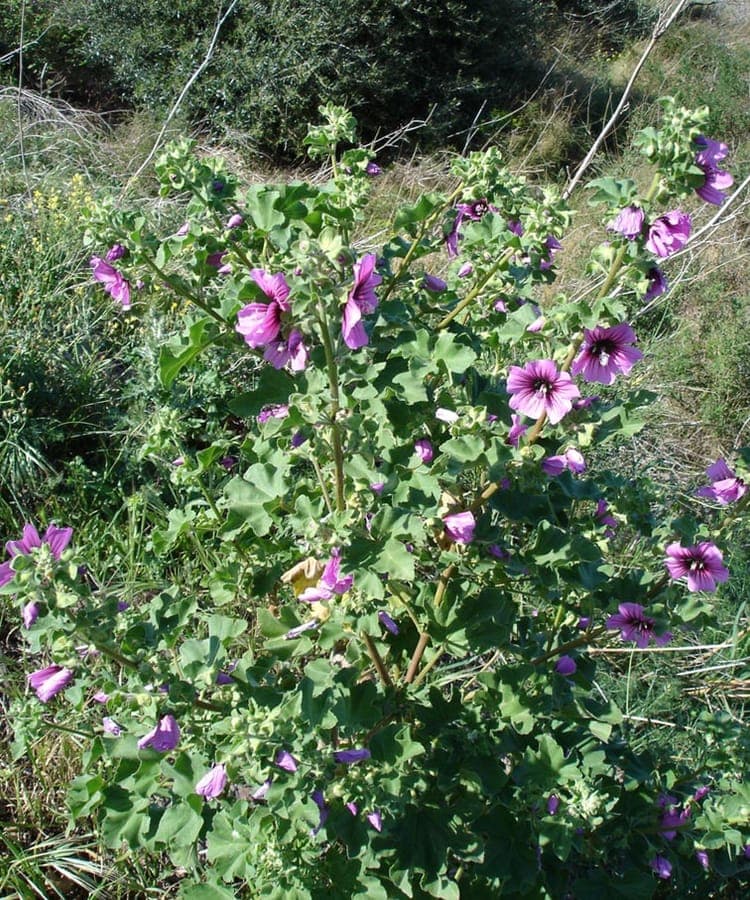
Wikimedia Commons / CC BY-SA 3.0, via Wikimedia Commons
Tree mallow: complete growing guide and care for Mediterranean gardens
Malva arborea
¿Quieres ver Tree mallow: complete growing guide and care for Mediterranean gardens en tu jardín?
1 minuto, sin tarjeta de crédito
Overview
Tree mallow (Malva arborea) is a striking and interesting shrub from the Malvaceae family, native to the Mediterranean region where it grows on coastal areas, dry slopes and islands. This plant is particularly known for its unique tree-like growth habit that distinguishes it from more familiar low-growing mallow species throughout Europe. With its charming pink to violet flowers appearing over extended periods, this tree mallow offers year-round visual interest in gardens throughout the Mediterranean region and adjacent climate zones.
Tree mallow reaches heights of 1.5 to 3 meters and grows with a characteristic tree-like form featuring a distinct, sturdy stem. The plant has an open, elegant growth pattern with branches extending in a brush-like manner creating a light fan-shaped structure. The leaves are deep green, round to heart-shaped in outline, rough-textured and approximately 8-12 centimeters wide. The charming flowers are about 3-4 centimeters across and appear pink to soft violet with darker veining that appears highly decorative. These flowers emerge from May through October in considerable quantities, making the plant look truly regal for months on end.
Following the flowers come characteristic disk-shaped seeds arranged like little circles in very decorative arrangement. The plant grows at a moderate pace and can increase substantially in size within several years. A mature tree mallow forms a lovely garden feature with permanent interest through its extended flowering period and distinctive form. However, the plant is not fully winter hardy in northern regions and can suffer significant damage during severe frost.
Appearance and bloom
Tree mallow grows as a very characteristic shrub becoming a small tree, reaching 1.5 to 3 meters height with a distinct, single stem. The leaves are smooth to rough-textured, deep green, round to heart-shaped, approximately 8-12 centimeters wide with clearly toothed margins. The leaf stalks are fairly long, about 5-8 centimeters, sturdy and greenish in color. The plant grows with open, brush-like branches moderately to densely packed together creating a striking architecture.
The flowers are very conspicuous and decorative, approximately 3-4 centimeters across, with five wavy petals in pink to violet with darker-colored veining that is very characteristic. The flower center contains a prominent yellow stamen column that strongly contrasts with the pink petals. The flowers appear throughout May through October, initially appearing sporadically but over time in considerable quantities. This provides a spectacular and extended flowering season that is highly impressive.
The fruits are very characteristic disk-shaped capsules separating into 8-12 segments. Each segment contains one seed. These fruits remain on the plant adding extra visual interest after flowering and continuing into autumn.
Ideal location
Tree mallow grows best in a sunny location with at least 6-7 hours direct sunlight daily. The plant prefers well-ventilated positions where air circulation is not obstructed and where it can grow against warm walls. Plant tree mallow in a sheltered garden or against warm house walls where it can benefit from extra heat and wall reflection. In the Netherlands and Belgium, sheltered south-facing positions against buildings are ideal. The plant is not fully winter hardy in northern regions and can suffer serious damage during very severe winters.
Use tree mallow as a specimen plant or as part of a mixed shrub border. The plant can also grow against a warm wall where it receives extra protection and warmth from wall reflection.
Diseño gratis
¿Quieres ver Tree mallow: complete growing guide and care for Mediterranean gardens en tu jardín? Crea un diseño gratis ahora.
Soil
Tree mallow prefers moderately fertile to fairly poor soil with good drainage. The plant grows well in dry to moderately moist soils without excessive feeding. The ideal pH range is 5.5 to 7.5 and can tolerate slightly higher. The plant grows well in both sandy and loam-containing soils, provided these drain well and are not waterlogged. Avoid heavy wet clay soils without radical improvement as the plant has sensitivity to moisture accumulation around roots.
When planting add compost and ensure extra drainage with coarse sand. The plant is relatively nutrient-tolerant and grows well in modest soils. It prefers not to receive too much fertility, as this can lead to lush growth at the expense of flowering production.
Watering
Tree mallow has fairly moderate water requirements once established. During the growing season water regularly but not excessively - let the soil partially dry between waterings. During dry periods water somewhat more frequently, but avoid waterlogged conditions that cause root rot. Young plants need more water than established specimens, so monitor carefully during the first growing season.
In winter watering can be substantially reduced, especially in climates with cold winters. The plant tolerates reasonable drought stress once established and grows well in fairly dry conditions.
Pruning
Tree mallow benefits from regular pruning to maintain a compact, regal form. In early spring cut the plant back to approximately two-thirds of its previous size to encourage bushiness. Remove dead, damaged or very long branches that grow out of proportion. After heavy frost inspect the plant thoroughly and remove all clearly frost-damaged tissue to stimulate regrowth.
The plant tolerates fairly vigorous pruning very well and recovers quickly to very quickly. Regular annual pruning ensures optimal flowering and form over many years.
Maintenance calendar
January-February: Inspection for frost damage, careful pruning of damaged branches. March-April: Preparation for growth, add compost and prune back carefully. May: Beginning of bloom, enjoy first flowers. June-September: Regular watering and observation, continuous bloom expected. October-November: Leaf fall begins, reduce watering gradually. December: Protection against heavy frost, mulch around base with leaf mulch.
Winter hardiness
Tree mallow is moderately winter hardy and can tolerate approximately -5 to -8 degrees Celsius. In southern Netherlands, Flanders and Brussels it grows in sheltered positions without much protection. In northern regions (North Brabant, Gelderland, Dutch coasts) protection is highly advisable. Plant against warmer house walls or in very sheltered corners of the garden. In very cold winters the plant can suffer serious branch damage.
In regions with regular frost it is wise to lightly wrap the plant in December or apply a burlap jacket for extra insulation and protection.
Companion planting
Combine tree mallow with other Mediterranean plants such as roses, lavender, salvias and other sun-seekers. Plant against warm garden walls with other sun-lovers. Tree mallow forms a lovely backdrop for lower-flowering plants. Avoid heavy shade-creating plants nearby. It plants well in mixed shrub borders in sheltered gardens where it can reach its full potential.
Closing thoughts
Tree mallow is a fascinating and interesting plant choice for gardeners with some sheltered space. This Mediterranean shrub provides extended flowering periods and distinctive form over many years. With proper placement in sheltered locations and careful winter protection this plant can be enjoyed for decades. Find seeds and young plants at Intratuin or Gamma in the Netherlands. Gardenworld.app offers much inspiration for Mediterranean garden designs and climate-sensitive plant choices. Tree mallow certainly deserves a place in every sunny, sheltered front garden.
¿Quieres ver Tree mallow: complete growing guide and care for Mediterranean gardens en tu jardín? Crea un diseño gratis ahora.
Sube una foto, elige un estilo y obtén un diseño fotorrealista con lista de plantas en menos de un minuto.
Más de 10.000 jardines diseñados
Sin tarjeta de crédito


Plantas similares
Crimean linden: complete guide
Tilia × euchlora
Crimean linden is an elegant, fast-growing shade tree ideal for large gardens. Discover cultivars, spacing, maintenance tips and winter hardiness.
California flannelbush: complete guide
Fremontodendron californicum
Everything about California flannelbush (Fremontodendron californicum): sunny placement, drainage, pruning and care for this spectacular yellow-flowering shrub.
Hairy rose mallow: complete guide
Hibiscus moscheutos subsp. lasiocarpos
Full growing guide for hairy rose mallow (Hibiscus moscheutos subsp. lasiocarpos): location, soil, watering, winter hardiness and garden design tips.