
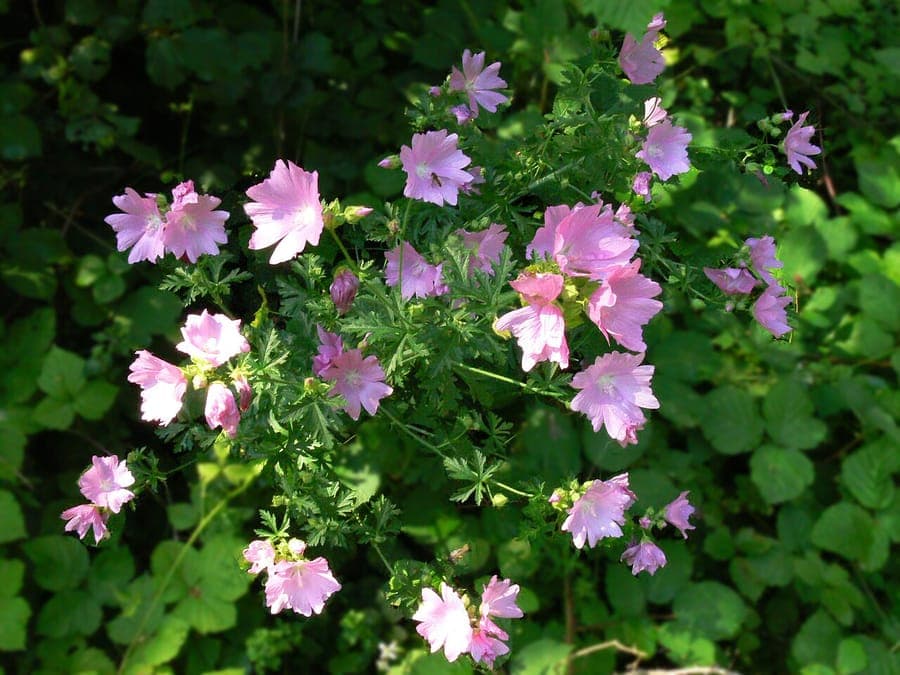
Daniel J. Layton / CC BY-SA 3.0, via Wikimedia Commons
Malva alcea: complete guide
Malva alcea
¿Quieres ver Malva alcea: complete guide en tu jardín?
1 minuto, sin tarjeta de crédito
Overview
Malva alcea, commonly known as greater mallow or musk mallow, is an elegant hardy perennial naturally distributed from southern Sweden through central and eastern Europe extending into northern Turkey. This member of the Malvaceae family (also called the mallow or hibiscus family) has been cultivated in European gardens for centuries and now represents a classic component of traditional borders, cottage gardens, and naturalized planting schemes. With its upright growth habit, prolific flowering over an extended season spanning eight to ten weeks, and minimal maintenance requirements, Malva alcea provides an ideal solution for gardenworld.app users seeking effortless garden beauty. The species thrives equally well in full sun to part-shade positions and serves as an important nectar and pollen source for numerous butterfly and bee species, making it a cornerstone of pollinator-friendly gardens. Furthermore, the plant self-seeds generously, allowing for natural succession and spontaneous garden renewal year after year. The species is notably drought tolerant once established, requiring minimal supplemental irrigation even during extended dry periods typical of continental summers.
Appearance and Bloom Period
Malva alcea develops as a slowly-maturing perennial that typically reaches flowering maturity in its second growing season. The plant achieves heights of 80-120 cm with a naturally upright, somewhat spreading habit and lateral width of 45-60 cm. The foliage consists of large, deeply lobed leaves with 5-7 prominent lobes and a notably rough surface texture with prominent venation. Individual leaves attain diameters of 10-12 cm, creating substantial textural impact even when the plant is not flowering. Flowers emerge abundantly from July through September in succession of blooming periods. Each flower measures 3-4 cm in diameter displaying soft to deeper pink coloration, frequently marked with darker rose-pink venation across the petals creating intricate linear patterns. The flowers are semi-double, with clearly visible stamens and carpels creating an open, inviting appearance that attracts pollinators. The inflorescence forms as a loose raceme with sequential flower opening along the upper stems providing continuous color over 8-10 weeks of extended bloom.
Ideal Location
Malva alcea thrives in full sun - minimum 6 hours direct daily solar radiation - though it tolerate part-shade positions, particularly in warmer regions where afternoon shade proves beneficial. In the Netherlands and Belgium, south- and southwest-facing borders succeed admirably. USDA hardiness zones 4-10 encompass this species' range, indicating suitability throughout virtually all European regions. The plant demonstrates exceptional winter hardiness, tolerating temperatures to -35°C without protection.
Diseño gratis
¿Quieres ver Malva alcea: complete guide en tu jardín? Crea un diseño gratis ahora.
Soil Requirements
Malva alcea develops successfully in virtually any well-drained soil medium. The plant accepts lean substrates, sandy soils, and clay soils provided drainage remains adequate. Soil pH tolerance extends from neutral to slightly acidic (pH 6.0-7.5). While the plant tolerates drought conditions, it prefers well-draining soil avoiding waterlogged conditions. For optimal development, regular compost incorporation enhances growth. The species remains relatively undemanding nutritionally, thriving in poor soils perfectly suited to ecological gardens.
Seed Propagation
Malva alcea germinates readily from seed, either direct-sown into garden soil in spring or started under protection in March-April. Seed germination requires approximately 2-3 weeks. Seedlings typically reach flowering maturity in the second growing season following transplanting into permanent positions. Alternatively, mature plants divide successfully in spring. Self-seeding represents a characteristic feature; volunteer seedlings regularly emerge in unexpected garden locations.
Watering Requirements
Once established, Malva alcea demonstrates exceptional drought tolerance requiring minimal supplemental irrigation except during unusual precipitation deficit. Water cautiously during establishment - approximately the first growing season - until the root system develops adequately. Excessive moisture promotes root rot development. This species suits dry summer gardens and xeric landscape designs perfectly. During extended drought periods, plants produce fewer flowers but survive without supplemental water.
Maintenance Calendar
April-May: Young growth emerges, self-sown seedlings appear throughout the garden June: Flowering commences on second-year plants July-September: Full flowering display, regular deadheading extends season and shape October-November: Growth slows naturally, seeds mature December-March: Complete dormancy, fully winter-hardy
Companion Planting
Malva alcea combines effectively with:
- Hypericum - golden flowers provide striking contrast
- Liatris - purple flowers bloom simultaneously
- Echinacea - extended flowering season, pollinator-friendly
- Heuchera - textured foliage, shade tolerance
- Ornamental grasses - movement and textural interest
Wildlife Contribution
Malva alcea seeds provide essential nutrition for numerous seed-eating bird species throughout autumn and winter. Goldfinches, siskins, and other granivore species actively seek and consume these abundant seeds. For maximum bird-feeding benefit, resist deadheading in autumn, allowing seed maturation and continued availability for wildlife foraging throughout winter months.
Conclusion
Malva alcea delivers ecologically-responsible effortless gardening for borders and meadow gardens. The combination of visual beauty, wildlife food sources, and minimal intervention makes this essential for gardenworld.app users. Direct sow in spring and enjoy extended bird visitation throughout winter.
¿Quieres ver Malva alcea: complete guide en tu jardín? Crea un diseño gratis ahora.
Sube una foto, elige un estilo y obtén un diseño fotorrealista con lista de plantas en menos de un minuto.
Más de 10.000 jardines diseñados
Sin tarjeta de crédito


Plantas similares
Crimean linden: complete guide
Tilia × euchlora
Crimean linden is an elegant, fast-growing shade tree ideal for large gardens. Discover cultivars, spacing, maintenance tips and winter hardiness.
California flannelbush: complete guide
Fremontodendron californicum
Everything about California flannelbush (Fremontodendron californicum): sunny placement, drainage, pruning and care for this spectacular yellow-flowering shrub.
Hairy rose mallow: complete guide
Hibiscus moscheutos subsp. lasiocarpos
Full growing guide for hairy rose mallow (Hibiscus moscheutos subsp. lasiocarpos): location, soil, watering, winter hardiness and garden design tips.