
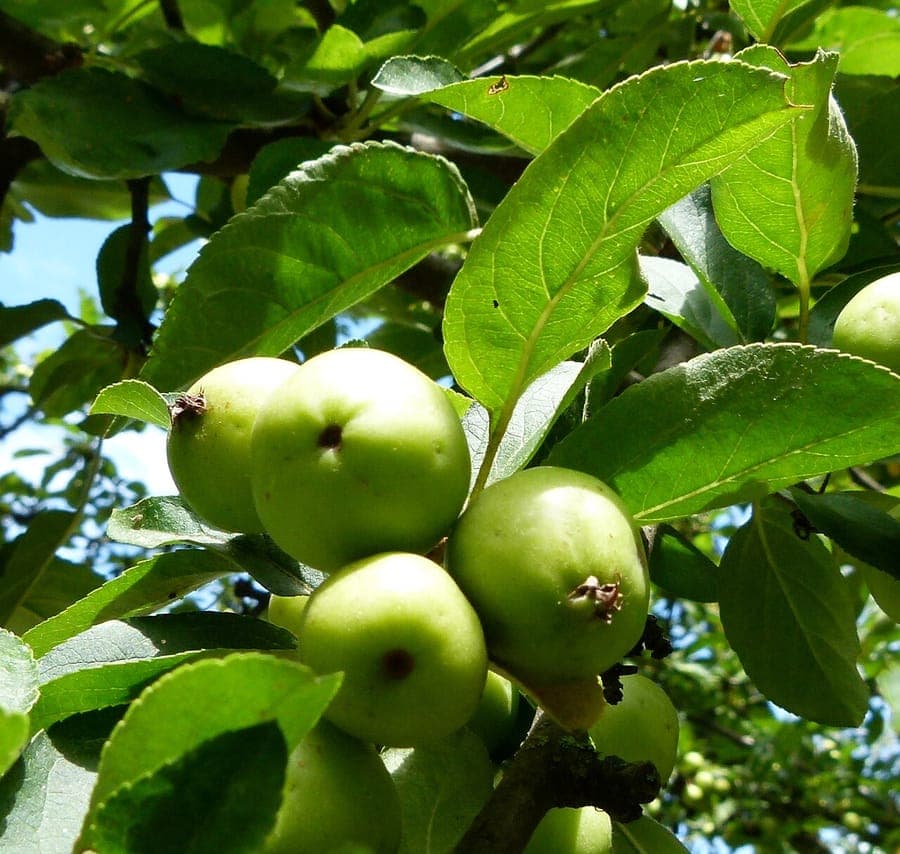
Dinkum / CC0, via Wikimedia Commons
Malus toringo: complete guide
Malus toringo
¿Quieres ver Malus toringo: complete guide en tu jardín?
1 minuto, sin tarjeta de crédito
Overview
Malus toringo, also known as Toringo crab apple or Japanese crab apple, is a charming deciduous tree native to East Asia. This tree is highly valued for its pink flowers in spring and its bright orange fruits that hang well into winter. The Toringo crab apple is an excellent choice for gardens seeking to add natural beauty and wildlife.
Appearance and bloom
The Toringo crab apple is a small tree normally growing to 5 to 8 meters tall with a spread of 4 to 6 meters. The tree has a slender, distinctive form with gray, smooth bark. In spring (April-May), numerous pink to white flowers appear in small clusters, followed by abundant small, orange to red fruits ripening from September to November. These fruits are inedible for humans but highly loved by birds.
Ideal location
Place the Toringo crab apple in a sunny to partially shaded location with at least four hours of direct sunlight daily. The tree performs well in open, breezy locations that ensure good air circulation. This helps prevent diseases. Avoid strong winds that may damage the tree.
Soil
The Toringo crab apple is not fussy about soil type and performs well in most garden soils. The tree prefers moderately moist, well-draining soil but can also tolerate dry soil once established. Ensure adequate organic matter by adding compost or well-rotted manure when planting.
Watering
The Toringo crab apple requires regular watering during its first growing season until roots are well established. Once established, the tree is fairly drought-tolerant. During dry periods in summer, supplemental watering should be given to promote fruit set. In normal rainy years, additional watering is rarely needed.
Diseño gratis
¿Quieres ver Malus toringo: complete guide en tu jardín? Crea un diseño gratis ahora.
Pruning
Pruning is important for maintaining good form and a healthy tree. In late winter (February-March), dead or crossing branches can be removed. Thinning overly dense branches improves air circulation and reduces disease risk. Make clean cuts and avoid steep branch angles.
Maintenance calendar
Spring: Prune and remove dead branches. Add compost around the base. Summer: Water regularly, especially in dry periods. Check for insect pests. Fall: Fruits appear and ripen. No pruning needed. Winter: Protect young trees from frost. Inspect for damage.
Winter hardiness
The Toringo crab apple is hardy in zones 5-8 (down to -25 degrees Celsius). In very cold regions, mulching around the base may help. Young trees may require extra frost protection in their early years.
Companion plants
The Toringo crab apple works well in combination with other ornamental shrubs and bushes. Plant understory plants such as ivy, wood sorrel, or other ground covers beneath and around the tree. Other ornamental crab apples and fruit trees create interesting mixtures. Shrubs with interesting fall colors such as barberry provide nice contrast.
Closing
Malus toringo is a beautiful, low-maintenance tree that provides beauty and bird food for many years. With minimal care and maximum ecological value, this tree is ideal for natural gardens. Plant at Intratuin or Gamma for a healthy specimen and enjoy years of blossoms and fruits.
For more inspiration and specific garden designs, visit gardenworld.app/nl or gardenworld.app/en and discover how to integrate ornamental crab apples into your garden.
¿Quieres ver Malus toringo: complete guide en tu jardín? Crea un diseño gratis ahora.
Sube una foto, elige un estilo y obtén un diseño fotorrealista con lista de plantas en menos de un minuto.
Más de 10.000 jardines diseñados
Sin tarjeta de crédito


Plantas similares
Siberian crab apple: complete guide
Malus x robusta
Complete guide to the Siberian crab apple (Malus x robusta): location, soil, pruning, winter hardiness and the best companion plants for your garden.
Chinese flowering crabapple (Malus x spectabilis): complete guide
Malus x spectabilis
Meet the Chinese flowering crabapple (Malus x spectabilis): a classic spring bloomer with carmine buds and pink blossom.
Potentilla crassinervia: complete guide
Potentilla crassinervia
Potentilla crassinervia, the Corsican cinquefoil, grows wild on Corsica and Sardinia's peaks. Discover how to grow this hardy alpine rock garden gem.