
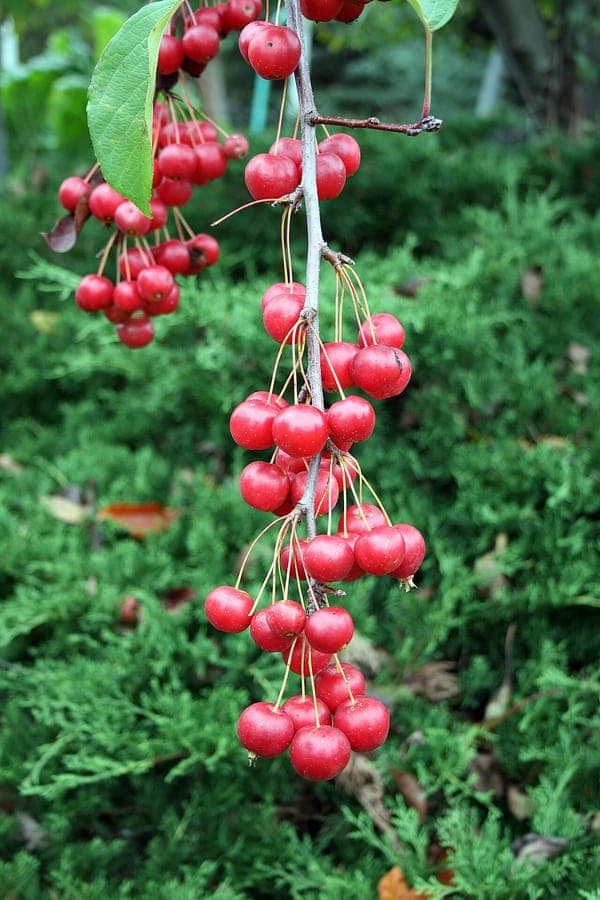
Darren Swim / CC BY-SA 3.0, via Wikimedia Commons
Sikkim crabapple: complete guide
Malus sikkimensis
¿Quieres ver Sikkim crabapple: complete guide en tu jardín?
1 minuto, sin tarjeta de crédito
Overview
Malus sikkimensis, known as the Sikkim crabapple, is an ornamental apple from the Himalayan region, particularly Nepal, Sikkim, Tibet, and southern China. This tree belongs to the Rosaceae family and is prized for its deep purple flowers and decorative red fruits. Standing 4 to 8 meters tall, it is ideal for many gardens, larger than a shrub but not overwhelming.
This crabapple is extremely hardy and forms a reliable addition to Dutch gardens. The flowers attract bees and the fruits provide bird food. It is an underrated choice among ornamental crabapples.
Appearance and blooming
The leaves of Malus sikkimensis are dark green, lance to oval shaped, approximately 5 to 10 centimeters long. The foliage develops attractive autumn colors in yellow to orange shades.
The flower is the highlight. From April to May, deep red buds open into beautiful purple to mauve flowers, approximately 3 to 4 centimeters across. They are very abundant, wrapping the entire tree in a purple-white cloud. The flowers are highly attractive to bees and bumblebees.
After flowering, numerous small red to orange-red fruits appear in September to October, about 1.5 centimeters in diameter. These fruits hang on the tree until November, providing food for birds.
Ideal location
Malus sikkimensis thrives best in full sun to partial shade. Full sun promotes richer flowering and better fruit display. The tree is frost hardy to -25 degrees Celsius and grows in virtually all Dutch climates without protection.
The tree is not fussy about location as long as it does not stand in permanent deep shade. Wind is tolerated well.
Soil
Malus sikkimensis is not very particular about soil type. It grows in sand, clay, loam, and all combinations thereof. A pH between 5 and 7.5 is acceptable. Well-drained soil is important for long-term health, especially in wet winters.
Add compost or well-rotted manure at planting for a better start.
Diseño gratis
¿Quieres ver Sikkim crabapple: complete guide en tu jardín? Crea un diseño gratis ahora.
Watering
Once established, the tree is relatively drought tolerant. Young trees (first 2 years) should receive regular water during dry summers. Mature trees can thrive without supplemental water except in very dry years.
Water well at planting and then regularly in the first season, up to twice weekly in very dry periods.
Pruning
Pruning is not essential as the tree naturally develops a handsome form. Do remove dead or damaged branches during dormancy. Light shaping can be done in May after flowering if needed.
Avoid heavy pruning that creates many open wounds.
Maintenance calendar
March: Feed at growth start, prune dead branches. April: Monitor flowering, check for pests. May to August: Water in dry periods, no feeding needed. September to October: Monitor fruit development, enjoy autumn colors. November to February: No maintenance needed, winter dormancy.
Winter hardiness
Malus sikkimensis is extremely hardy to -25 degrees Celsius. This tree tolerates severe winters without protection. Even in the coldest parts of the Netherlands it grows without problems.
Young trees in their first winter may benefit from some mulch around the base for root protection.
Companion plants
The Sikkim crabapple pairs well with:
- Other crabapples in group planting
- Hydrangeas for summer blooms
- Low-growing groundcovers beneath
- Forsythia for early spring color
- Spiraea for white spring flowers
In mixed borders combine with red-leafed berberis or spiraea varieties.
Final thoughts
Malus sikkimensis is an underrated crabapple offering many advantages: reliable hardiness, beautiful purple flowering, red fruits for birds, and attractive autumn color. With its moderate height it fits virtually any garden.
This Himalayan beauty is easy to grow and requires minimal maintenance after planting. An excellent choice for anyone wanting an ornamental apple without fuss. It's widely available at reasonable prices.
Your garden will undoubtedly benefit from this hardy beauty!
¿Quieres ver Sikkim crabapple: complete guide en tu jardín? Crea un diseño gratis ahora.
Sube una foto, elige un estilo y obtén un diseño fotorrealista con lista de plantas en menos de un minuto.
Más de 10.000 jardines diseñados
Sin tarjeta de crédito


Plantas similares
Siberian crab apple: complete guide
Malus x robusta
Complete guide to the Siberian crab apple (Malus x robusta): location, soil, pruning, winter hardiness and the best companion plants for your garden.
Chinese flowering crabapple (Malus x spectabilis): complete guide
Malus x spectabilis
Meet the Chinese flowering crabapple (Malus x spectabilis): a classic spring bloomer with carmine buds and pink blossom.
Potentilla crassinervia: complete guide
Potentilla crassinervia
Potentilla crassinervia, the Corsican cinquefoil, grows wild on Corsica and Sardinia's peaks. Discover how to grow this hardy alpine rock garden gem.