
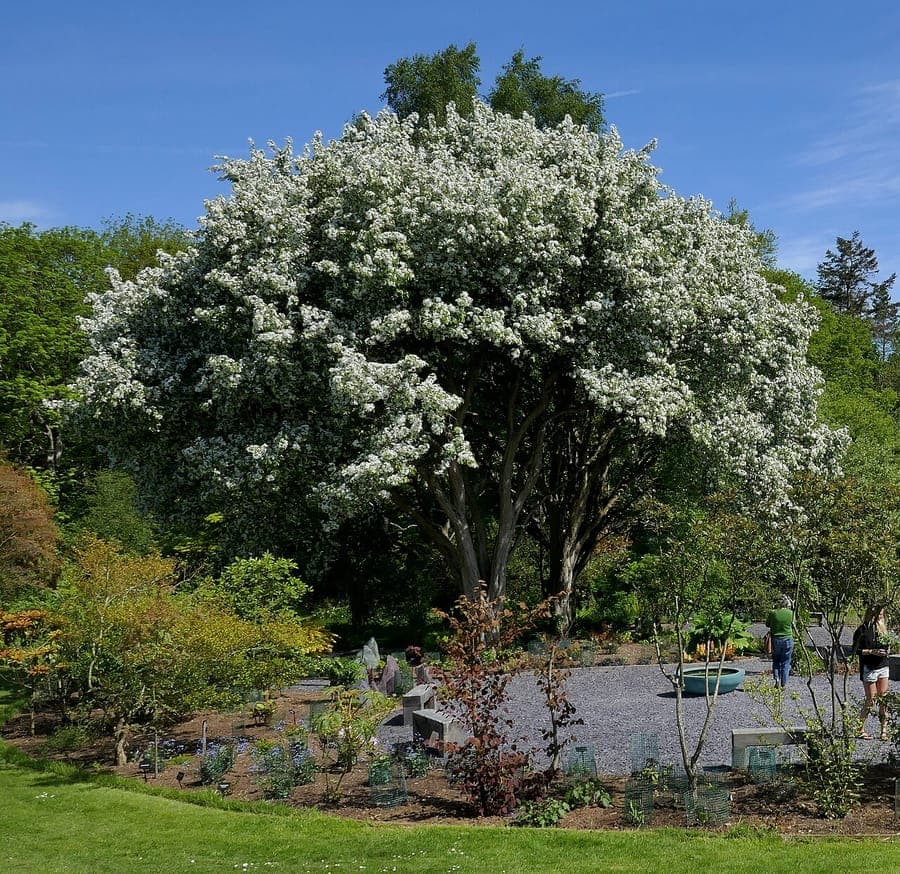
Velella / CC BY-SA 4.0, via Wikimedia Commons
Chinese crab apple: complete guide
Malus hupehensis
¿Quieres ver Chinese crab apple: complete guide en tu jardín?
1 minuto, sin tarjeta de crédito
Overview
The Chinese crab apple (Malus hupehensis), also called Hupei crab or tea crab apple, is a cold-hardy ornamental tree native to central and southern China. This valuable garden specimen offers pink spring flowers, decorative red fruit persisting into winter, and refined architectural form.
Appearance and bloom cycle
Chinese crab apple grows into a medium-sized tree reaching 7-10 meters tall with dense, compact crowning habit. Deep-pink to rosy flowers appear in May, completely covering the branches in spectacular bloom. Following flowers, small red fruit 2-3 cm diameter develops, persisting on branches until December, providing winter color and wildlife food.
Ideal location
Plant in full sun (minimum 6 hours daily). This tree is extremely cold-hardy and suitable for all temperate climates. Space as a specimen tree, in informal groups, or along garden pathways where its refined flowering and fruiting displays shine brilliantly.
Soil requirements
Chinese crab apple adapts to most well-draining soils with pH 5.0-7.5. This tree is quite flexible about soil conditions. Incorporate organic matter at planting to support establishment. Avoid waterlogged conditions and soil compaction.
Watering
Water regularly during the first growing season until the tree establishes a strong root system. Once mature, this tree tolerates moderate drought well. Water during extreme dry periods, particularly during summer heat waves.
Diseño gratis
¿Quieres ver Chinese crab apple: complete guide en tu jardín? Crea un diseño gratis ahora.
Pruning
Minimal pruning required. Remove weak, dead, or crossing branches in late summer. This tree develops handsome natural form without aggressive pruning. Avoid heavy-handed cutting that disrupts its refined architecture.
Maintenance calendar
March-April: Check for winter damage and remove broken branches. May: Enjoy the spectacular pink flowering display. June-July: Monitor growth and water during extended dry periods. August-September: Tree sets abundant small red fruit. October-December: Observe persistent red fruit attracting wildlife. The tree needs minimal intervention.
Winter hardiness
Chinese crab apple is extremely cold-hardy, naturally occurring in central and southern China. It tolerates temperatures down to -25 degrees Celsius without difficulty.
Companion plants
Underplant with spring bulbs like tulips and crocuses. Combine with shade-tolerant groundcovers such as ferns and woodland geraniums. The tree's open canopy provides filtered light for understory plantings.
Closing
Chinese crab apple is a true jewel offering seasonal interest from spring bloom through winter fruit. This cold-hardy tree provides years of reliable beauty and wildlife support. Explore more ornamental structure trees on gardenworld.app. Source your Chinese crab apple from specialty nurseries, and let gardenworld.app help design the perfect woodland setting.
¿Quieres ver Chinese crab apple: complete guide en tu jardín? Crea un diseño gratis ahora.
Sube una foto, elige un estilo y obtén un diseño fotorrealista con lista de plantas en menos de un minuto.
Más de 10.000 jardines diseñados
Sin tarjeta de crédito


Plantas similares
Siberian crab apple: complete guide
Malus x robusta
Complete guide to the Siberian crab apple (Malus x robusta): location, soil, pruning, winter hardiness and the best companion plants for your garden.
Chinese flowering crabapple (Malus x spectabilis): complete guide
Malus x spectabilis
Meet the Chinese flowering crabapple (Malus x spectabilis): a classic spring bloomer with carmine buds and pink blossom.
Potentilla crassinervia: complete guide
Potentilla crassinervia
Potentilla crassinervia, the Corsican cinquefoil, grows wild on Corsica and Sardinia's peaks. Discover how to grow this hardy alpine rock garden gem.