
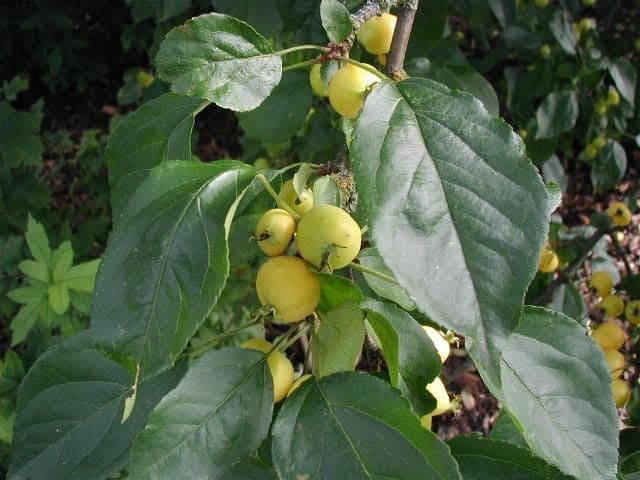
Sten at Danish Wikipedia / CC BY-SA 3.0, via Wikimedia Commons
Malus baccata: complete guide
Malus baccata
¿Quieres ver Malus baccata: complete guide en tu jardín?
1 minuto, sin tarjeta de crédito
Overview
Malus baccata, commonly known as Siberian crabapple, is a resilient deciduous tree belonging to the Rosaceae family. Native to Siberia through Korea and the Himalayas, this ornamental performs excellently in temperate climates. The tree is prized for its abundant flowering and impressive fruit production, making it ideal for gardeners seeking wildlife food and seasonal garden interest.
This compact-growing tree typically reaches 6 to 9 meters in height and spreads equally wide. It remains a robust choice providing years of ornamental and practical value.
Appearance and Bloom
The Siberian crabapple displays elegant dark green leaves with slightly coarse texture. In spring, branches burst with numerous purple-tinted flowers. These blossoms not only provide visual appeal but attract pollinators essential for fruit development.
Following the flowering period, small red berries about 1 to 1.5 cm across develop. These fruits persist on branches well into winter, attracting birds and maintaining visual interest during cold months.
Ideal Location
When selecting a planting location, seek a site receiving full to partial sun. The tree thrives with at least six hours of direct sunlight daily. Good air circulation around the tree helps prevent disease and promotes robust growth.
Ensure adequate spacing with at least 4 to 5 meters distance from other large plants or structures. This prevents overcrowding and maintains tree health.
Soil
Siberian crabapple is not particularly fussy about soil but prefers well-draining earth. A pH range between 5.0 and 7.5 is optimal. For trees planted in heavy clay soil, adding organic matter like compost improves drainage significantly.
Ensure the tree does not sit in waterlogged conditions, as this causes root rot. If planting in poor drainage areas, consider creating raised beds with improved soil composition.
Diseño gratis
¿Quieres ver Malus baccata: complete guide en tu jardín? Crea un diseño gratis ahora.
Watering
During the first year after planting, water regularly, particularly during dry spells. Once established, Malus baccata shows good drought tolerance, though deep watering during extended dry periods remains beneficial.
Water carefully at the tree base rather than on foliage to prevent fungal issues. A thick mulch layer around the trunk helps retain moisture and regulates soil temperature.
Pruning
Pruning is not essential but helps shape the tree and remove dead branches. The best pruning time is late winter before the growing season begins.
Remove all damaged, diseased, or insect-infested branches. Thin overlapping branches to improve air circulation within the tree canopy.
Maintenance Calendar
Spring: Check for frost damage. Add organic fertilizer around the base. Summer: Monitor for drought stress. Remove damaged foliage. Autumn: Watch for disease signs. Collect fallen leaves. Winter: Perform pruning. Inspect for pests.
Winter Hardiness
Malus baccata is exceptionally hardy and tolerates temperatures as low as -40°C. This makes it an excellent choice for cold climates and northern European gardens. The tree requires no special winter protection in temperate zones.
Companion Plants
This fruit tree pairs well with underplanting of rowan bushes and winter jasmine. It also combines effectively with other wildlife-friendly plants such as holly and yew. Surround with low-growing groundcovers to create bird habitat.
Consider planting several specimens together to enhance cross-pollination and maximize fruit production.
Closing
Malus baccata represents a valuable addition to any landscape, especially for those seeking bird-friendly food sources and seasonal interest. Following this comprehensive care guide ensures many years of ornamental value from this hardy tree. Choose a sunny location with well-draining soil and your Siberian crabapple will flourish.
Available in British garden centers and online retailers specializing in fruit trees.
¿Quieres ver Malus baccata: complete guide en tu jardín? Crea un diseño gratis ahora.
Sube una foto, elige un estilo y obtén un diseño fotorrealista con lista de plantas en menos de un minuto.
Más de 10.000 jardines diseñados
Sin tarjeta de crédito


Plantas similares
Siberian crab apple: complete guide
Malus x robusta
Complete guide to the Siberian crab apple (Malus x robusta): location, soil, pruning, winter hardiness and the best companion plants for your garden.
Chinese flowering crabapple (Malus x spectabilis): complete guide
Malus x spectabilis
Meet the Chinese flowering crabapple (Malus x spectabilis): a classic spring bloomer with carmine buds and pink blossom.
Potentilla crassinervia: complete guide
Potentilla crassinervia
Potentilla crassinervia, the Corsican cinquefoil, grows wild on Corsica and Sardinia's peaks. Discover how to grow this hardy alpine rock garden gem.