
Irina S.B. / CC BY 4.0, via Wikimedia Commons
Malus angustifolia: complete guide
Malus angustifolia
¿Quieres ver Malus angustifolia: complete guide en tu jardín?
1 minuto, sin tarjeta de crédito
Overview
Malus angustifolia, commonly known as Southern crab apple or narrow-leaved crabapple, is a charming native North American tree belonging to the Rosaceae family. This small to medium-sized tree naturally inhabits the southeastern United States, from North Carolina south to Florida and west to Louisiana and Missouri. Typically reaching 15 to 25 feet (5-8 meters) tall with a dense, rounded crown, the Southern crab apple is a favorite ornamental tree, prized for its abundant pink or white spring flowers and decorative red or yellow fruit persisting into winter. Its narrow leaves inspired the botanical name angustifolia, meaning narrow-leaved.
Highly adaptable and cold-hardy, this tree thrives in USDA zones 4-9 and tolerates diverse soil conditions. Its combination of ornamental appeal, wildlife value, and low maintenance requirements makes it an excellent choice for residential landscapes, native plant gardens, and public plantings.
Appearance and Bloom
The Southern crab apple develops into an elegant tree with reddish-brown bark and a dense, finely branched crown. Its narrow, lance-shaped leaves are dark green and held gracefully along the twigs, creating a fine-textured appearance. Fall foliage transforms to warm reds and oranges before dropping, providing extended seasonal interest.
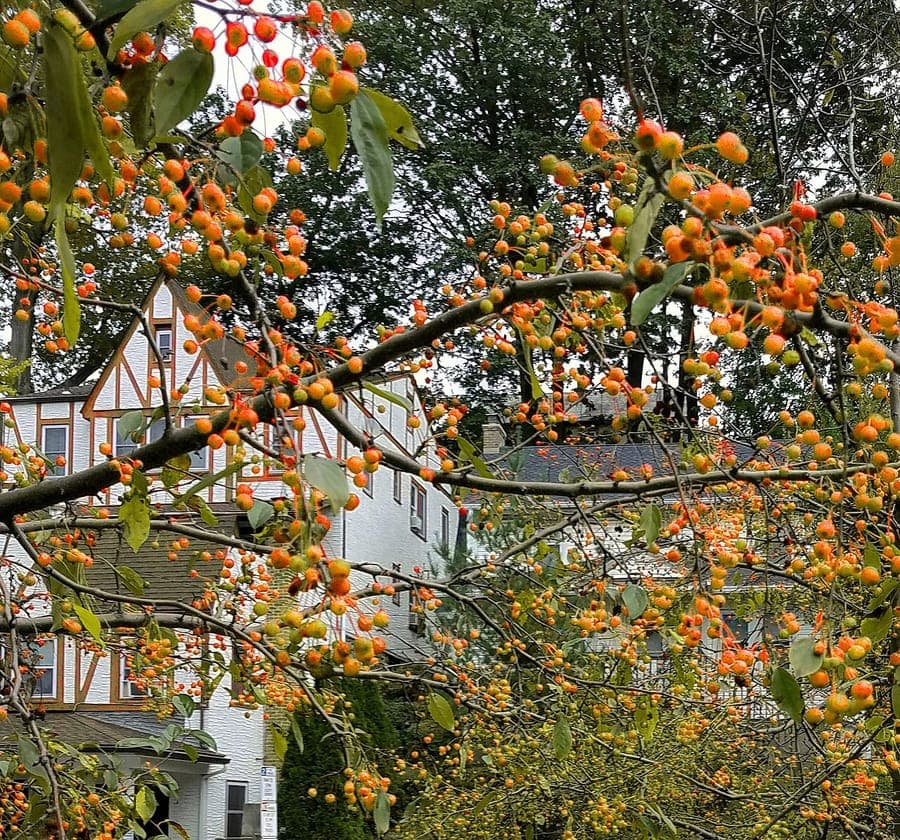
Flowers are the tree's crowning glory, appearing in spring (April to May in northern zones, March to April southward). These small, pink or pale red flowers, roughly 0.8 inches (2 cm) in diameter, cluster thickly along branches, creating spectacular floral displays. The blossoms are lightly fragrant. Following pollination, fruit development begins in early summer. Small apples measuring 0.8 to 1.2 inches (2-3 cm) in diameter mature to brilliant red, orange, or yellow, persisting on the tree well into winter. Though inedible for humans, these fruits are eagerly consumed by birds, providing essential winter nutrition for cardinals, cedar waxwings, robins, and finches.
Ideal Location
The Southern crab apple thrives in full sunlight. Plant in a location receiving at least 6 hours of direct sunlight daily. In hot southern climates, light afternoon shade may be beneficial. Good air circulation helps prevent fungal diseases. Select a location protected from severe winds. This tree is well-suited to USDA zones 4-9, performing best in areas with distinct seasonal temperature variation.
Soil
Malus angustifolia is undemanding regarding soil type. It thrives in sandy clay loams, pure clay, and even poor soils. A pH of 5.0 to 7.5 is acceptable, with 6.0 to 7.0 being optimal. The tree tolerates both moderately dry and somewhat wet soils but prefers well-draining conditions. Waterlogging should be avoided. A 5 cm mulch layer around the base aids moisture retention and weed suppression, keeping mulch several inches from the trunk.
Diseño gratis
¿Quieres ver Malus angustifolia: complete guide en tu jardín? Crea un diseño gratis ahora.
Watering
Once established, the Southern crab apple tolerates dry periods well. Young trees, however, require regular water for the first two to three years until firmly rooted. Water deeply once weekly during the growing season, more frequently during severe drought. Established trees often need supplemental water only during pronounced dry spells. Consistent moisture during the growing season optimizes flowering and fruit set. Avoid waterlogging, which invites root rot.
Pruning
The Southern crab apple requires minimal pruning. Remove any dead, diseased, or broken branches promptly. Young trees benefit from light shaping during their first few years to establish a strong, well-balanced crown structure, best done in late winter before growth resumes. Remove overcrowding or crossing branches to maintain an open crown structure. Light pruning after flowering can remove weak growth. Avoid heavy pruning, which encourages excessive growth at the expense of flowering. The tree naturally develops an attractive form.
Maintenance Calendar
March-April brings abundant flowering; enjoy the spectacular spring show. May-June sees fruit development and new growth; ensure adequate water. July-September is the growing season; water during dry periods. October-November brings fall color and fruit ripening. December-February: the fruit hangs attractively, feeding wildlife. This is an ideal time for any needed pruning in late winter. No special maintenance is typically required.
Every two to three years, apply a 5 cm layer of shredded bark mulch around the trunk base. The tree responds well to moderate spring feeding with balanced fertilizer.
Winter Hardiness
Malus angustifolia is extremely cold-hardy, tolerating temperatures as low as -20 degrees Fahrenheit (-29 degrees Celsius). The tree thrives in USDA zones 4-9. In zone 3 and colder, winter damage may occur. In regions where this tree is native (zones 4-8), no special winter protection is required.
Companion Plants
The Southern crab apple pairs beautifully with native understory trees and shrubs. Underplant with native groundcovers or low-growing native shrubs to create layered, natural looking gardens. Combine with other native species for maximum wildlife value, especially for birds. Consider pairing with native viburnums, dogwoods, and serviceberries for extended seasonal interest.
Closing
Malus angustifolia is a beautiful, low-maintenance native tree offering dual ornamental rewards: exquisite spring flowers and abundant winter fruit for wildlife. With full sunlight, well-draining soil, establishment watering, and minimal pruning, you'll enjoy decades of spring beauty and wildlife activity. This is an ideal tree for bird gardens, native plant landscapes, and naturalistic designs. Source trees from native plant nurseries and bring authentic American beauty and wildlife habitat to your landscape!
¿Quieres ver Malus angustifolia: complete guide en tu jardín? Crea un diseño gratis ahora.
Sube una foto, elige un estilo y obtén un diseño fotorrealista con lista de plantas en menos de un minuto.
Más de 10.000 jardines diseñados
Sin tarjeta de crédito


Plantas similares
Siberian crab apple: complete guide
Malus x robusta
Complete guide to the Siberian crab apple (Malus x robusta): location, soil, pruning, winter hardiness and the best companion plants for your garden.
Chinese flowering crabapple (Malus x spectabilis): complete guide
Malus x spectabilis
Meet the Chinese flowering crabapple (Malus x spectabilis): a classic spring bloomer with carmine buds and pink blossom.
Potentilla crassinervia: complete guide
Potentilla crassinervia
Potentilla crassinervia, the Corsican cinquefoil, grows wild on Corsica and Sardinia's peaks. Discover how to grow this hardy alpine rock garden gem.