
Eric Gaba (Sting - fr:Sting) / CC BY-SA 3.0, via Wikimedia Commons
Acerola: complete guide
Malpighia glabra
¿Quieres ver Acerola: complete guide en tu jardín?
1 minuto, sin tarjeta de crédito
Overview
Acerola (Malpighia glabra), commonly called Barbados cherry or West Indian cherry, is a remarkable tropical shrub native to the Caribbean and South America. This plant uniquely combines showy pink flowers with exceptionally nutrient-dense red fruits packed with vitamin C.
Appearance and bloom cycle
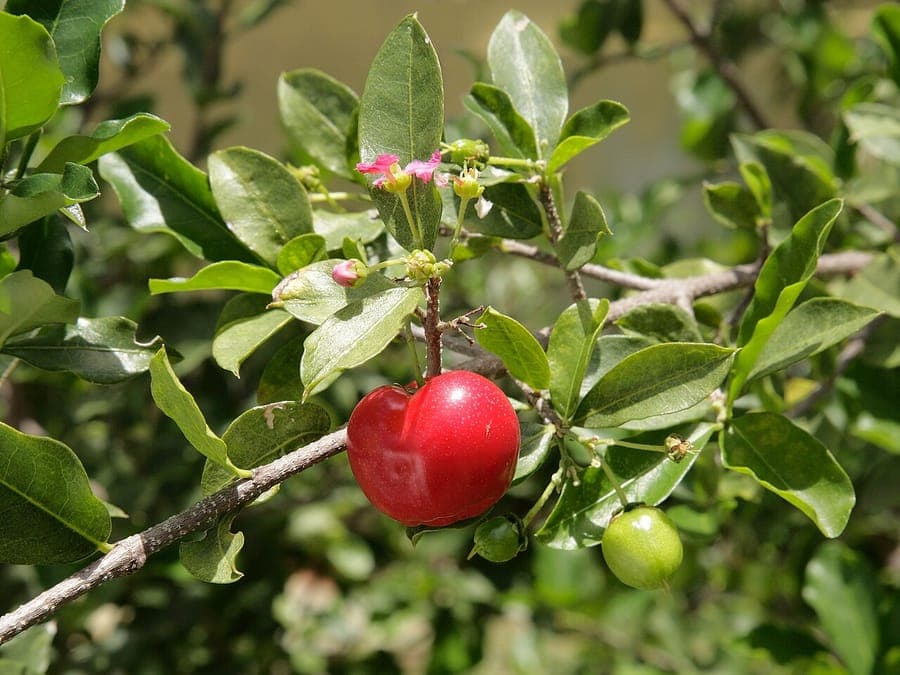
Acerola grows as a compact ornamental shrub reaching 2-4 meters tall. The flowers are delicate pink, appearing in clusters throughout warm months, creating a charming display against glossy green foliage. The small red to orange-red fruits follow flowering, with smooth skin and soft flesh within. Multiple harvests occur annually in suitable climates.
Ideal location
Place Acerola in full sun locations (minimum 6 hours direct sunlight daily) in warm climates. In cooler regions, grow as a containerized specimen near bright windows or under grow lights. This tropical plant thrives in warm, humid conditions and cannot tolerate frost.
Soil requirements
Acerola requires well-draining, slightly acidic soil (pH 5.5-6.8) enriched with organic matter. Use a quality potting mix for containers. Avoid waterlogged conditions that cause root rot. Excellent drainage is essential for healthy development.
Watering
Water regularly during growing season, maintaining moist but not saturated soil. Reduce watering in dormant periods. In containers, water when top inch of soil feels dry. Consistent moisture supports fruit production. Provide humidity by misting foliage occasionally.
Diseño gratis
¿Quieres ver Acerola: complete guide en tu jardín? Crea un diseño gratis ahora.
Pruning
Prune lightly to maintain compact shape and encourage branching. Remove dead wood and weak growth. Timing pruning after harvest cycles. This plant responds well to light shaping without radical cutting.
Maintenance calendar
Spring: Begin regular watering as growth accelerates. Summer: Maintain moisture and watch for flowering. Autumn: Reduce watering slightly as temperatures decline. Winter: Minimal watering if in dormancy. Container specimens may need rotating for even light exposure.
Winter hardiness
Acerola is frost-sensitive, tolerating temperatures only above 10 degrees Celsius. Protect from freezing in cold climates. Outdoor cultivation is practical only in USDA zones 9-11.
Companion plants
In containers, combine with complementary tropical foliage plants. In gardens, underplant with heat-loving groundcovers. The shrub's glossy foliage provides contrast for colorful annuals.
Closing
Acerola brings tropical vibrancy and nutritional rewards to warm-climate gardens and bright interiors. With proper care, it produces abundant delicious fruit while displaying charming pink flowers. Discover more tropical growing tips on gardenworld.app. Source your Acerola from specialty nurseries specializing in tropical fruit plants, and let gardenworld.app help design your tropical oasis.
¿Quieres ver Acerola: complete guide en tu jardín? Crea un diseño gratis ahora.
Sube una foto, elige un estilo y obtén un diseño fotorrealista con lista de plantas en menos de un minuto.
Más de 10.000 jardines diseñados
Sin tarjeta de crédito


Plantas similares
Peanut butter fruit: complete guide
Bunchosia glandulifera
Full guide to Bunchosia glandulifera, the peanut butter fruit shrub: care, siting, fruiting, overwintering in pots, and tropical garden companions.
Banisteriopsis caapi: complete guide
Banisteriopsis caapi
Banisteriopsis caapi is a tropical ornamental climber from South America with attractive yellow flowers. Learn how to grow this exotic plant in warm climates.
Acerola cherry: complete guide
Malpighia emarginata
Grow your own acerola cherry tree with this practical guide covering planting, care, and harvesting tips.