
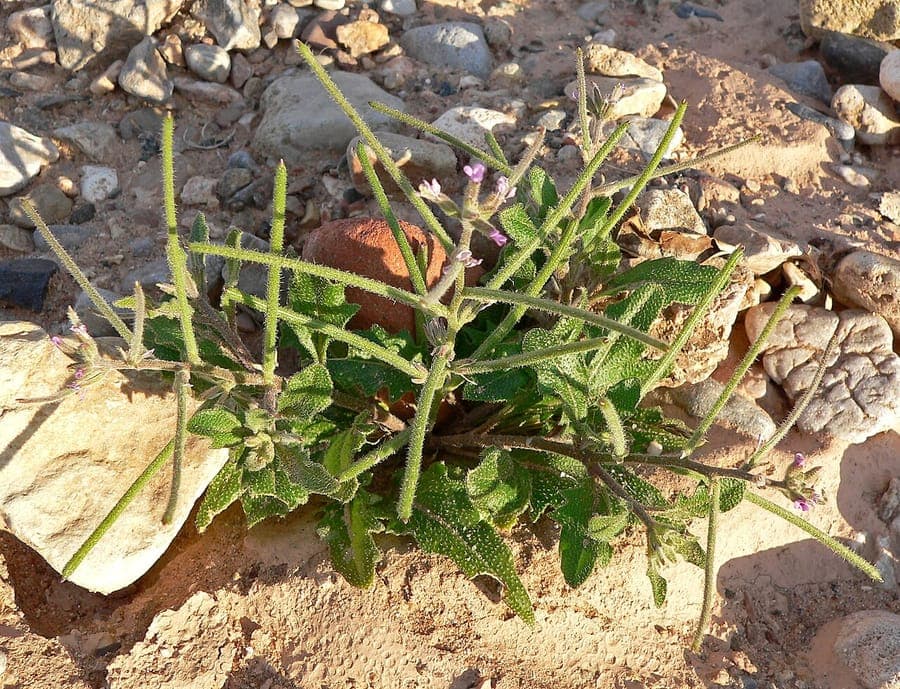
Stan Shebs / CC BY-SA 3.0, via Wikimedia Commons
Malcolmia africana: complete guide
Malcolmia africana
¿Quieres ver Malcolmia africana: complete guide en tu jardín?
1 minuto, sin tarjeta de crédito
Overview
Malcolmia africana, known as African mustard or African wallflower, is a charming, fast-growing annual from the Brassicaceae family. Originating from Africa, it's increasingly seen in European gardens. This species is celebrated for its bright blue flowers, rapid growth, and ease of cultivation.
Its quick establishment and compact form make Malcolmia africana ideal for borders, flower pots, and early spring displays. Garden centres now regularly stock this delightful species. A genuine magnet for various insects thanks to its nectar-rich flowers.
Appearance and bloom
Malcolmia africana grows into a compact plant reaching approximately 20-40 cm in height. Leaves are lance-shaped, finely serrated, and dark green. The foliage is dense and elegant, perfectly suited for low borders.
Flowers appear from April to May in numerous small clusters. They are bright blue-violet to purple-blue, extremely abundant, and highly attractive to insects. Each flower has four cross-arranged petals, typical of the Brassicaceae family. Post-pollination produces long, thin seed pods.
Ideal location
Malcolmia africana thrives in full sun to partial shade positions. The plant grows in shadier environments but flowers less prolifically. Position plants in low borders, along pathways, or in containers and pots.
It's excellent for early spring displays, as it grows rapidly and flowers within six to eight weeks. Perfect for filling gaps in borders where winter plantings have disappeared. Combine with other early bloomers like forget-me-nots and daisies.
Soil requirements
Malcolmia africana grows in virtually any soil type. Optimal pH ranges from 6.5 to 7.5. The plant cannot tolerate heavy, waterlogged soils and will struggle or die from root rot. Ensure good drainage.
Amend heavy soils with sand or compost. Fertiliser isn't necessary, but light feeding (compost) promotes better growth. The plant grows faster and flowers more abundantly on well-prepared, lightly enriched soils.
Diseño gratis
¿Quieres ver Malcolmia africana: complete guide en tu jardín? Crea un diseño gratis ahora.
Watering
After sowing or planting, water regularly until roots establish fully. Once growth begins, normalise watering. Regularly, moderately moist soil is ideal. Don't let it dry out completely, but avoid waterlogging.
During dry periods, supplemental watering may be needed. The plant isn't known for exceptional drought tolerance, so regular watering is important. In containers, be more careful with watering - check moisture levels regularly.
Pruning
Pruning is unnecessary for Malcolmia africana. The plant naturally forms a compact, full shape. Remove only spent flower clusters ('deadheading') to encourage further blooming.
At season's end (May-June), remove entire plants. Some seeds will fall at ground level and regrow next spring.
Maintenance calendar
February-March: Prime sowing season for seeds in pots for transplanting or direct outdoor sowing April: Transplant seedlings, monitor growth May: Flowering begins, deadhead spent flowers June-July: Flowering ends, seed formation, plant removal July-January: No work required
Winter hardiness
Malcolmia africana is not winter-hardy and is treated as an annual. The plant dies at first frosts in October-November. This is normal and expected behaviour.
Re-sow seed annually in March-April for a new generation. This is simple and quick - seeds germinate within a week at warm soil temperatures.
Companion planting
Malcolmia africana pairs beautifully with:
- Myosotis sylvatica: For blue forget-me-nots
- Bellis perennis: For pink daisies
- Viola odorata: For purple violets
- Primula veris: For yellow spotted cowslips
- Lunaria annua: For silver coins at later heights
- Erysimum: For red and yellow tones
Closing thoughts
Malcolmia africana is a valuable plant for early spring borders throughout Europe. The blue flowers, rapid growth, and exceptional ease of cultivation make it perfect for beginner gardeners. By sowing seed annually, you can enjoy this beautiful plant year after year.
Found at major garden centres as seed. Begin sowing in February-March for flowers in April-May. Visit gardenworld.app for additional early spring inspiration.
¿Quieres ver Malcolmia africana: complete guide en tu jardín? Crea un diseño gratis ahora.
Sube una foto, elige un estilo y obtén un diseño fotorrealista con lista de plantas en menos de un minuto.
Más de 10.000 jardines diseñados
Sin tarjeta de crédito


Plantas similares
Brassica cretica: complete guide
Brassica cretica
Brassica cretica, the Cretan cabbage, grows wild on Aegean cliffs. Discover how to grow this drought-tolerant, yellow-flowered Mediterranean perennial.
Corsican cabbage: complete guide
Brassica insularis
Corsican cabbage is a rare Mediterranean rock cabbage with white flowers and blue-green leaves. Location, soil and winter protection.
Prostrate cabbage: complete guide
Brassica procumbens
Prostrate cabbage is a creeping North African cliff plant with yellow flowers. Discover location, soil type and winter protection.