
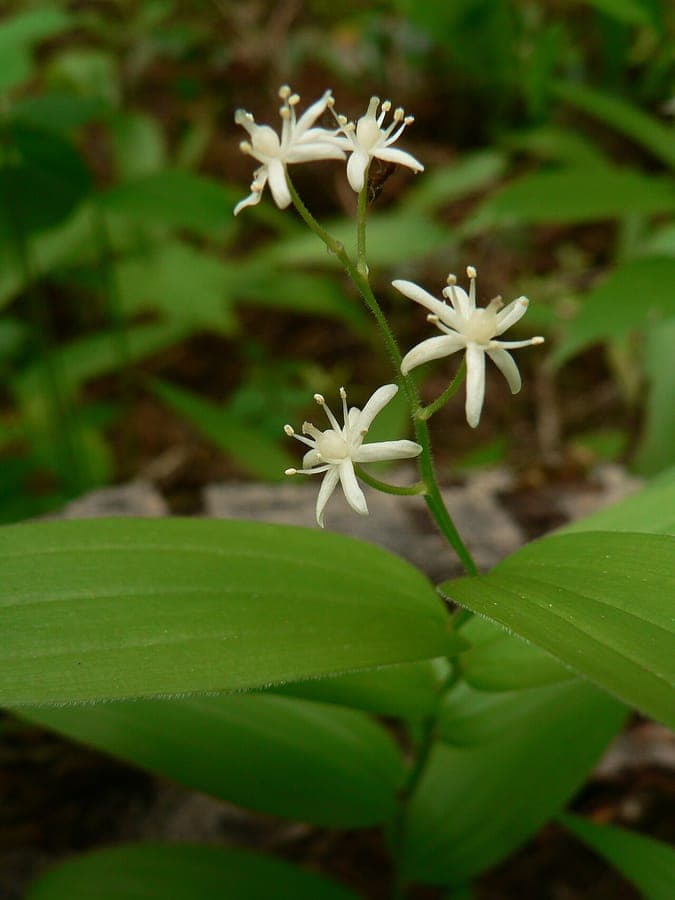
Walter Siegmund (talk) / CC BY 2.5, via Wikimedia Commons
Maianthemum stellatum: complete guide to starflower false Solomon's seal
Maianthemum stellatum
¿Quieres ver Maianthemum stellatum: complete guide to starflower false Solomon's seal en tu jardín?
1 minuto, sin tarjeta de crédito
Overview
Maianthemum stellatum, commonly known as starflower false Solomon's seal or little false Solomon's seal, is an elegant groundcover native to North America. This charming woodland plant is prized for its delicate star-shaped white flowers, feathery green foliage, and important role in forest ecosystems. It thrives in shaded woodland gardens and is an excellent alternative to traditional groundcovers in naturalistic landscapes.
Native from Canada to Mexico, Maianthemum stellatum grows naturally in forest floors, moist meadows, and mountain regions. Its ornamental beauty and ecological benefits make it popular for wildflower gardens and sustainable landscaping projects.
Appearance and bloom
Maianthemum stellatum spreads via underground rhizomes, creating dense patches over time. The plant reaches 20-30 cm in height and produces lanceolate, light green leaves arranged alternately along slender stems. The foliage is delicate and wispy, creating an airy appearance.
During late spring and early summer (May-June), the plant produces tiny, star-like white flowers clustered in racemes at stem tips. The blooms are fragrant and attract native pollinators. Following flowering, attractive red berries develop and persist into fall, providing food for birds.
The overall texture is light and feathery, adding natural grace to shaded spaces. Individual flower clusters last approximately two weeks in peak bloom.
Ideal location
Maianthemum stellatum grows best in partial to full shade. It thrives in woodland settings where dappled light filters through the tree canopy. This makes it ideal for planting beneath oak trees, birches, and similar deciduous trees.
The plant accepts some morning sun, particularly in cooler regions. Full sun in warm climates can cause leaf bleaching and reduce flowering. In USDA zones 3-5, more sun exposure is tolerated.
Locations with good air circulation are preferred. Avoid deep, still shade where air movement is restricted, as this can promote fungal issues.
Soil
Maianthemum stellatum prefers acidic to neutral, moisture-retentive soil rich in organic matter. The plant grows best in woodland soil with abundant leaf litter, humus, and decomposing organic material.
Soil pH of 5.5-7.0 is ideal, with slight acidity preferred. The plant tolerates slightly acidic conditions well. In very alkaline soils, chlorosis may occur.
Excellent drainage is important despite the plant's moisture preference. Amend planting holes with compost or leaf mold. Mulch with 5 cm of shredded leaves to maintain moisture and regulate soil temperature.
Diseño gratis
¿Quieres ver Maianthemum stellatum: complete guide to starflower false Solomon's seal en tu jardín? Crea un diseño gratis ahora.
Watering
Maianthemum stellatum is moisture-loving and requires consistently moist soil. Water regularly throughout the growing season (May-September), especially during dry periods. The plant naturally inhabits forest soils where moisture remains relatively constant.
During summer, water regularly if rainfall is less than 2.5 cm per week. Water at soil level, avoiding wetting the foliage.
Reduce watering in fall and winter, though soil should never completely dry out. In dry climates, supplemental winter watering may be necessary.
Pruning
Maianthemum stellatum requires minimal pruning. Remove dead leaves in early spring. After flowering, you may remove spent flower stems if you prefer not to encourage self-seeding.
Deadheading spent flowers can prevent excessive self-seeding. However, in most garden settings, seed production is not problematic.
Avoid aggressive pruning, as this disrupts the plant's natural growth pattern.
Maintenance calendar
April-May: Apply mulch, inspect for new growth. May-June: Monitor blooming, water regularly. July-August: Maintain moisture, top-up mulch. September-October: Allow seed berries to persist for wildlife. November-March: Dormancy period, minimal maintenance required.
Winter hardiness
Maianthemum stellatum is extremely hardy in USDA zones 3-8 (-35 to -40 C). Across most of North America and northern Europe, the plant is reliably winter-hardy. The plant survives frost events to -45 C.
In regions with very little snow cover, extra mulch provides protective insulation. Avoid areas prone to waterlogging in winter, as this can cause root suffocation.
Companion plants
Maianthemum stellatum pairs well with other shade-loving groundcovers. Combine with Asarum canadense (wild ginger), Ajuga reptans, or Waldsteinia ternata for natural plant communities.
In larger settings, it works beautifully with Heuchera hybrids, Tiarella polyphylla, and Carex oshimensis. For structure, use Hosta species, Acanthus mollis, or dwarf shade-tolerant shrubs as background plantings.
Pair with spring bulbs like Erythronium americanum or Trillium ovatum for extended seasonal interest.
Closing remarks
Maianthemum stellatum is an excellent native groundcover for shaded woodland gardens. With minimal maintenance and consistent moisture, this plant thrives while adding natural beauty. The delicate flowers and attractive berries support native wildlife, making it both ornamental and ecologically valuable.
This plant is available at major garden centers across North America and Europe. For more information, visit gardenworld.app.
¿Quieres ver Maianthemum stellatum: complete guide to starflower false Solomon's seal en tu jardín? Crea un diseño gratis ahora.
Sube una foto, elige un estilo y obtén un diseño fotorrealista con lista de plantas en menos de un minuto.
Más de 10.000 jardines diseñados
Sin tarjeta de crédito


Plantas similares
Narrow-leaved dracaena: complete guide
Dracaena angustifolia
Everything about Dracaena angustifolia - the narrow-leaved dracaena: location, care, overwintering and use as a houseplant or patio plant.
Chaparral yucca: complete guide to Hesperoyucca whipplei
Hesperoyucca whipplei
Hesperoyucca whipplei (Our Lord's candle) is a dramatic rosette-forming plant from California that produces a towering flower spike, ideal for dry and gravel gardens.
False lily-of-the-valley: complete guide
Maianthemum dilatatum
Everything about Maianthemum dilatatum, the false lily-of-the-valley. Care, shade location, propagation and garden combinations for this popular shade ground cover.