
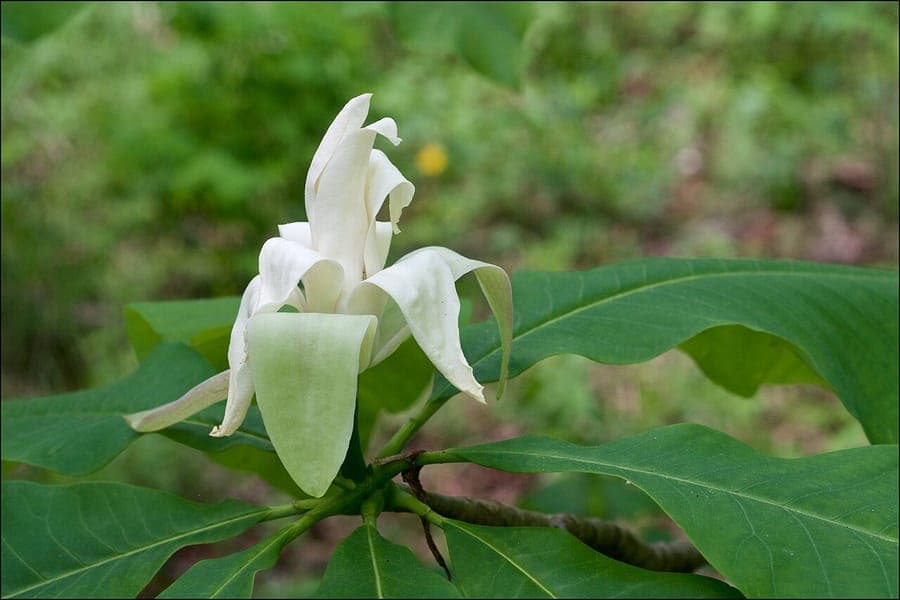
Eric Hunt / CC BY-SA 4.0, via Wikimedia Commons
Umbrella magnolia: complete growing guide and care tips
Magnolia tripetala
¿Quieres ver Umbrella magnolia: complete growing guide and care tips en tu jardín?
1 minuto, sin tarjeta de crédito
Overview
The umbrella magnolia (Magnolia tripetala) is an impressively distinctive deciduous tree from the Magnoliaceae family, native to the eastern United States where it grows naturally in mixed deciduous forests. This tree is renowned for its remarkably large leaves arranged in a parasol-like pattern at branch tips - hence the common name that perfectly captures this unique morphology. With its pure white, strongly fragrant flowers appearing early in the season, this magnolia offers a truly spectacular spring display in front yards and larger landscapes throughout temperate regions.
The umbrella magnolia reaches heights of 8 to 12 meters and develops an open, graceful form that becomes more impressive with age. The most striking characteristic is undoubtedly its enormous leaves - reaching up to 60 centimeters long and 25 centimeters wide - which are gray-green and clustered at the twig ends in dense bundles. These huge leaves give the tree a very distinctive silhouette that immediately distinguishes it from other landscape trees. The pure white flowers are indeed large, up to 25 centimeters across, with a pleasant citrus-like fragrance. Flowers appear in May before leaves fully unfurl, providing a full month of spectacular bloom.
Following the flowers come decorative red fruits that mature in September into approximately 10-centimeter-long aggregates containing numerous small seeds. The tree grows relatively slowly, especially in its first years after planting, but once the root system develops well the growth rate can increase considerably. A mature umbrella magnolia immediately commands attention in any landscape and provides visual interest for decades.
Appearance and bloom
The umbrella magnolia is unmistakable thanks to its massive, umbrella-arranged leaves. These leaves are obovate in shape, reaching approximately 60 centimeters long and 25 centimeters wide, with a truncate apex and soft texture. In spring the foliage emerges fresh green, deepening to darker green through summer, then turning yellow to yellow-green before dropping in autumn. The petioles are thick and rigid.
The flowers are very large and conspicuous, consisting of nine tepals rather than true petals, pure white sometimes with pinkish tints at the base. The tepals are elongated and wavy-edged. The flowers are distinctly fragrant, particularly in morning and evening hours, and attract pollinators including bees and other insects. Flowers appear in May before or coincident with leaf development.
The fruits are characteristic red aggregates reaching approximately 10 centimeters in length. Each fruit aggregate contains dozens of small individual carpels each bearing a seed. These red fruits are highly decorative and persist on the tree for an extended period. The tree crown is open and spreading, with thick branches not densely packed. The winter silhouette is particularly interesting, displaying characteristic thick, knotted branches.
Ideal location
The umbrella magnolia thrives in full sun to partial shade, though it prefers as much sunlight as possible for optimal flowering and growth. The tree requires protection from strong winds since large leaves create considerable wind resistance and heavy wind can damage foliage and branches. Provide at least 5 to 6 meters of space to allow the tree to develop fully to its complete potential. In the Netherlands and Belgium they perform excellently in gardens in temperate climate zones. Plant the tree where you can easily view it from house windows or terraces, as it deserves prominence as a primary landscape feature.
Avoid locations exposed to very strong winds or extreme weather conditions. A sheltered garden protected from westerly or northerly wind gusts is ideal. Ensure your planting location won't cause problems with excessive leaf drop affecting neighboring properties in autumn.
Diseño gratis
¿Quieres ver Umbrella magnolia: complete growing guide and care tips en tu jardín? Crea un diseño gratis ahora.
Soil
This magnolia prefers moist, well-draining soil. The ideal pH range is 5.0 to 7.5, though the tree exhibits some acid tolerance. Incorporate adequate organic material into the soil through composting or leaf mulch additions before planting. Avoid heavy clay soils without amendments. If soil is compacted, gently loosen and incorporate coarse sand and garden compost. Apply a layer of organic mulch (5-10 centimeters) around the tree after planting, which helps retain soil moisture and stabilizes soil temperature.
When planting, ensure the planting hole is approximately twice as wide as the root ball and plant at the same depth as in the nursery. Fill the hole with a mixture of native soil, compost and sand.
Watering
Consistent soil moisture is essential, especially during the growing season and dry periods. Water deeply and regularly, approximately 2-3 times weekly in dry conditions or when the top 5-10 centimeters of soil feel dry. During wet winters, be cautious of overwatering as it causes root rot. Mulching around the tree helps retain soil moisture and reduces water loss through evaporation.
Young trees require significantly more water than mature specimens and should be intensively monitored during their first two growing seasons. Use drip irrigation or soaker hoses for the most efficient watering system.
Pruning
The umbrella magnolia requires minimal pruning and develops naturally into an attractive form. Remove only dead, damaged or clearly crossing branches in late autumn after flowering. Avoid heavy pruning as it seriously disrupts the tree's natural form and can take years to recover. Large wounds heal slowly on magnolias, so work carefully with very sharp tools.
If necessary, carefully remove lower branches only if they create excessive shade or obstruct passages. However, endeavor to preserve and respect the tree's natural form as much as possible.
Maintenance calendar
February-March: Prepare for growth, add compost and mulch to soil. This is also the time to carefully remove any dead branches. April: Bloom begins, enjoy the spectacular fragrance. May: Peak bloom period, observe regularly. June-July: Regular watering during hot weather is very important. August-September: Harvest red fruits if desired, tree begins preparing for winter dormancy. October-November: Extensive leaf fall occurs, perform cleanup around tree and collect leaves for composting. December-January: Inspect for damage, protect young trees from heavy frost.
Winter hardiness
The umbrella magnolia is hardy to -20 degrees Celsius and thrives in USDA hardiness zones 5-9. In southern Netherlands and Belgium it grows without any protection. In northern regions protection from late frost may benefit young specimens. Mature, well-established trees are considerably hardier than young ones.
During very severe winters, young trees may experience some twig damage, particularly on the upper shoot tips, but this usually recovers reasonably well in spring.
Companion planting
Combine umbrella magnolia with shade-loving underplantings like hostas in various cultivars, astilbe with their feathery flowers, and Japanese anemones blooming beautifully in autumn. Rhododendrons and azaleas grow well nearby due to similar soil requirements and preference for slightly acidic soils. Avoid heavy root competition by keeping aggressive plants at distance. This ensures your tree grows optimally without nutrient and water competition.
Avoid heavy groundcovers that would prevent mulch spreading. Fine groundcovers like small ferns can work appropriately.
Closing thoughts
The umbrella magnolia is a truly spectacular choice for those with space and patience. This slow-growing tree develops into a truly remarkable landscape feature that can persist for generations. With proper placement, wind protection and regular care, it provides decades of exceptional beauty and visual interest. Find this magnolia at specialty nurseries throughout the region. Gardenworld.app contains extensive inspiration for tree selection and professional garden design. The umbrella magnolia absolutely deserves a prominent place in any landscape that appreciates natural elegance and botanical distinction.
¿Quieres ver Umbrella magnolia: complete growing guide and care tips en tu jardín? Crea un diseño gratis ahora.
Sube una foto, elige un estilo y obtén un diseño fotorrealista con lista de plantas en menos de un minuto.
Más de 10.000 jardines diseñados
Sin tarjeta de crédito


Plantas similares
Saucer magnolia: complete growing guide
Magnolia × soulangeana Soul.-Bod.
Saucer magnolia is a hybrid featuring spectacular pink-white flowers appearing before leaf emergence. Ideal as specimen plant. Winter-resistant to -15°C.
Magnolia delavayi: complete guide
Magnolia delavayi
Delavay magnolia is an imposing shrub from southern China with large glossy leaves and fragrant creamy-white flowers. Learn about cultivation, hardiness, and care for this rare species.
Sweet michelia: complete guide
Magnolia doltsopa
Discover the sweet michelia, a majestic tree from the Himalayas. Learn everything about this impressive specimen, blooming, and perfect growing conditions.