
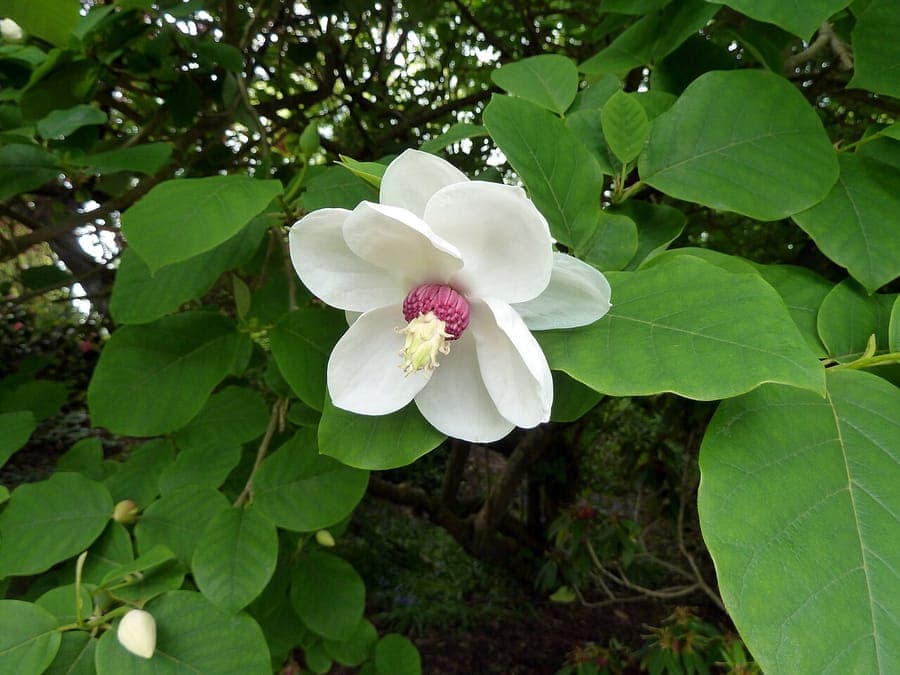
Wendy Cutler from Vancouver, Canada / CC BY 2.0, via Wikimedia Commons
Oyama magnolia: complete guide
Magnolia sieboldii
¿Quieres ver Oyama magnolia: complete guide en tu jardín?
1 minuto, sin tarjeta de crédito
Overview
The Oyama magnolia (Magnolia sieboldii), also known as Siebold's Magnolia, is a refined deciduous tree originating from central and southern China and Japan. This understated beauty produces exquisite white flowers and develops an elegantly vase-shaped habit that becomes more sculptural with age.
Appearance and bloom cycle
Oyama magnolia grows as a medium-sized tree reaching 10-12 meters at maturity. The delicate white flowers, 7-10 cm across, appear in May-June after the leaves have partially emerged, displaying prominent red stamens at their centers. The elongated, deep-green leaves provide good summer foliage, turning bronze before dropping in autumn.
Ideal location
Plant in full sun to partial shade, ideally in sheltered positions protected from strong winds and late spring frosts that damage emerging flowers. Good air circulation prevents frost pockets. Allow generous space around the crown for the tree's natural spreading habit.
Soil requirements
Oyama magnolia prefers fertile, well-draining soil with a pH between 5.0 and 6.5. Incorporate organic matter at planting. The tree tolerates clay soils well if drainage is adequate. Avoid compacted, waterlogged conditions that restrict root development.
Watering
Water regularly during the first growing season and during dry spells. Once established, this magnolia tolerates moderate drought reasonably well. Maintain consistent moisture during the critical spring flowering period and summer growth.
Diseño gratis
¿Quieres ver Oyama magnolia: complete guide en tu jardín? Crea un diseño gratis ahora.
Pruning
Minimal pruning required. Remove damaged branches in late summer after flowering. This tree develops its best shape naturally without vigorous pruning. Avoid hard heading, which disrupts the elegant natural form.
Maintenance calendar
February-March: Inspect for winter damage, remove broken branches. April-May: Ensure adequate moisture during flowering. June-August: Reduce watering if rainfall is adequate. September-October: Prepare for dormancy. The tree requires little intervention once established.
Winter hardiness
Magnolia sieboldii is hardy in most temperate zones but benefits from protection against harsh late-spring frosts that damage flower buds and young foliage in March-April.
Companion plants
Underplant with spring bulbs, shade-tolerant groundcovers, and hostas. Combine with other spring bloomers like rhododendrons or early-flowering magnolias for extended seasonal interest.
Closing
Oyama magnolia brings timeless spring elegance and subtle Asian refinement to any garden. Once established, it requires minimal care while providing decades of delicate floral beauty. Explore spring-blooming designs on gardenworld.app. Source your Oyama magnolia from specialized nurseries, and let gardenworld.app help create the perfect spring garden backdrop.
¿Quieres ver Oyama magnolia: complete guide en tu jardín? Crea un diseño gratis ahora.
Sube una foto, elige un estilo y obtén un diseño fotorrealista con lista de plantas en menos de un minuto.
Más de 10.000 jardines diseñados
Sin tarjeta de crédito


Plantas similares
Saucer magnolia: complete growing guide
Magnolia × soulangeana Soul.-Bod.
Saucer magnolia is a hybrid featuring spectacular pink-white flowers appearing before leaf emergence. Ideal as specimen plant. Winter-resistant to -15°C.
Magnolia delavayi: complete guide
Magnolia delavayi
Delavay magnolia is an imposing shrub from southern China with large glossy leaves and fragrant creamy-white flowers. Learn about cultivation, hardiness, and care for this rare species.
Sweet michelia: complete guide
Magnolia doltsopa
Discover the sweet michelia, a majestic tree from the Himalayas. Learn everything about this impressive specimen, blooming, and perfect growing conditions.