
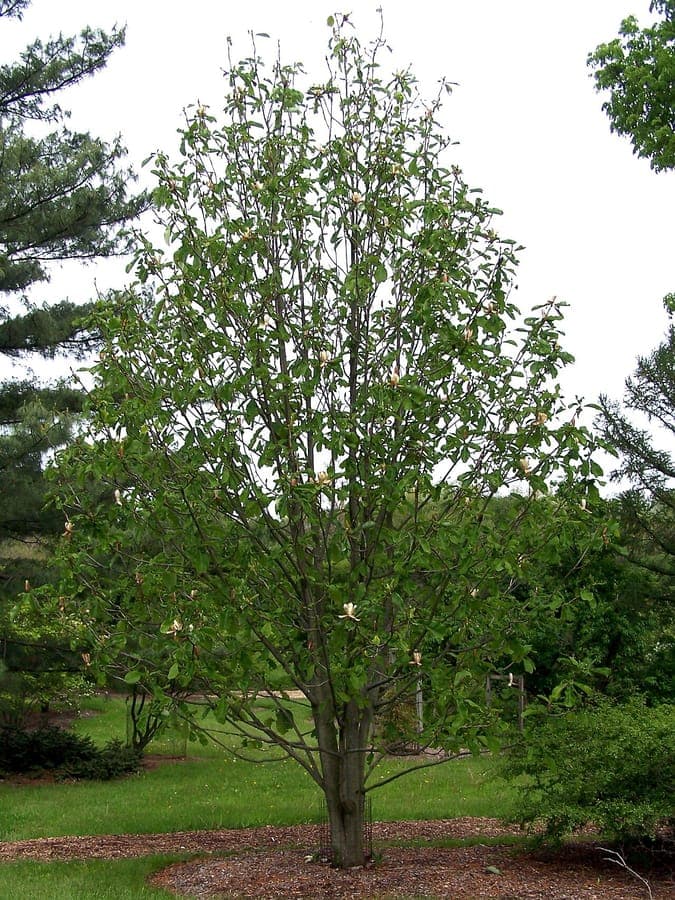
Bruce Marlin / CC BY-SA 3.0, via Wikimedia Commons
Magnolia-bark: complete guide
Magnolia officinalis
¿Quieres ver Magnolia-bark: complete guide en tu jardín?
1 minuto, sin tarjeta de crédito
The magnolia-bark (Magnolia officinalis) is a beautiful tree originating from China, known for its large, green leaves and frost-sensitive flowers. The tree grows as an ornamental, reaching heights up to 20 meters, and provides a luxuriant form. In temperate climates, it usually grows as a smaller tree or large shrub.
The leaves are very large, approximately 20 to 40 cm long and 10 to 20 cm wide, giving a tropical appearance. They are oblong to inversely egg-shaped and glossy dark green. The leaves appear after the flowers in spring.
The flowers are very striking, large and white, widely open, appearing directly on the branches in early spring before the leaves fully emerge. Each flower can be up to 20 cm in diameter. They have a sweet fragrance and usually bloom from March to April.
This magnolia prefers full sun to partial shade. At least four hours of direct sunlight daily is needed for good blooming. The tree grows well in well-draining, slightly acidic to neutral soils. A pH range of 5.5 to 7 is ideal.
It is very frost-sensitive and grows best in USDA zones 8 to 10. In zone 7, it can be vulnerable to late spring frosts. Protection from strong wind is important, as the flowers and leaves are susceptible to damage. Planting in a sheltered corner is recommended.
Watering is important, especially in the first years. The tree thrives in well-draining soil with regular watering. Watering during dry periods is essential. Once established, it is somewhat drought tolerant, but regular watering promotes better growth.
Pruning is not really necessary, but you can remove weak or damaged branches after blooming. Avoid heavy pruning wounds as the tree heals slowly. Gently shape the tree as a young plant if desired.
Fertilizer is not strictly necessary, but once per season in spring can be beneficial. A balanced fertilizer (10-10-10) or magnolia-specific fertilizer is suitable. Over-fertilizing should be avoided.
Planting time is best in spring for zones 8 to 9. In zone 10, fall planting can also work well. Plant at least 4 to 6 meters apart for mature growth. Ensure regular watering in the first growing year.
The magnolia-bark is susceptible to various fungal diseases. Ensure good air circulation and avoid crowding. Inspect regularly for signs of disease. In very humid areas, fungicide protection may be needed.
This magnolia combines well with other shade-loving shrubs and tree underplanting. Plant in groups for dramatic effect. Protect from intense afternoon sun in very warm climates.
The magnolia-bark is valued for its beauty rather than ecological use. The tree is however a bird plant and attracts birds with its winter fruits. With suitable climate and location, it is an elegant addition to any garden.
¿Quieres ver Magnolia-bark: complete guide en tu jardín? Crea un diseño gratis ahora.
Sube una foto, elige un estilo y obtén un diseño fotorrealista con lista de plantas en menos de un minuto.
Más de 10.000 jardines diseñados
Sin tarjeta de crédito


Plantas similares
Saucer magnolia: complete growing guide
Magnolia × soulangeana Soul.-Bod.
Saucer magnolia is a hybrid featuring spectacular pink-white flowers appearing before leaf emergence. Ideal as specimen plant. Winter-resistant to -15°C.
Magnolia delavayi: complete guide
Magnolia delavayi
Delavay magnolia is an imposing shrub from southern China with large glossy leaves and fragrant creamy-white flowers. Learn about cultivation, hardiness, and care for this rare species.
Sweet michelia: complete guide
Magnolia doltsopa
Discover the sweet michelia, a majestic tree from the Himalayas. Learn everything about this impressive specimen, blooming, and perfect growing conditions.