
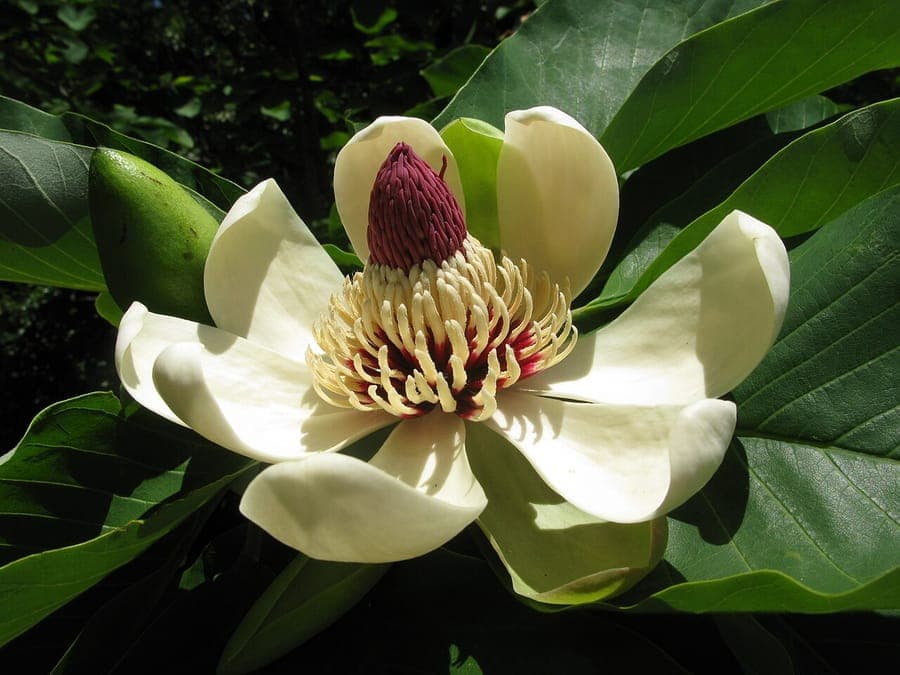
Qwert1234 / CC BY-SA 3.0, via Wikimedia Commons
Magnolia obovata: complete guide
Magnolia obovata
¿Quieres ver Magnolia obovata: complete guide en tu jardín?
1 minuto, sin tarjeta de crédito
Overview
The Magnolia obovata, commonly known as Japanese whitebark magnolia, is an impressive tree native to Japan and the Kuril Islands. This magnolia belongs to the Magnoliaceae family and is renowned for its large, eye-catching leaves and beautiful, fragrant flowers that emerge in late spring. The tree grows to a majestic height and serves as a true focal point in any garden.
Appearance and Bloom
The Japanese whitebark magnolia distinguishes itself through exceptionally large, obovate leaves that can reach 30-50 cm in length. The foliage is dark green above and persistently grey-green beneath, creating a unique two-toned effect. The white to cream-colored flowers appear in May and June before the complete canopy emerges. These flowers are highly aromatic and can reach up to 15 cm in diameter. The flowering period lasts several weeks and creates a spectacular display in the garden.
Ideal Location
Magnolia obovata thrives best in full sun to partial shade. The tree tolerates more shade than many other magnolias but blooms most profusely in full sun. Choose a sheltered location where young shoots are protected from cold, cutting winds that can damage flowers. A position against a south-facing wall or near protective trees is ideal.
Soil
This tree performs best in moist, well-draining soil with a pH between 5.5 and 6.5. At planting, incorporate plenty of organic matter such as compost or leaf mold to improve soil structure. The tree is sensitive to both very dry and very wet conditions, so maintain good balance. Mulch around the base helps keep soil moist and protects shallow roots.
Watering
During the growing season, water the tree regularly, especially when soil feels dry. Once established, Magnolia obovata is reasonably drought-tolerant but blooms best with consistently moist soil. Water at the tree base and avoid wetting foliage, which can promote fungal diseases. In dry summers, supplemental watering may be necessary.
Diseño gratis
¿Quieres ver Magnolia obovata: complete guide en tu jardín? Crea un diseño gratis ahora.
Pruning
Magnolia obovata requires minimal pruning. Remove only dead, damaged, or crossing branches in late summer or early fall. The pruning window is limited; avoid pruning after September to prevent cutting into flowering wood. The natural form is elegant and attractive, so drastic pruning is unnecessary and may disturb the characteristic shape.
Maintenance Calendar
Spring: Check for frost damage, add mulch if needed, and begin regular watering. Summer: Follow consistent watering schedule, especially during dry periods, and monitor for pests. Fall: Leaf color change is normal; collect fallen leaves around the tree. Winter: Protect young trees with screening or winter cloth against extreme frost.
Winter Hardiness
Magnolia obovata is moderately hardy and can withstand temperatures down to -15 degrees Celsius once well-established. Young trees are more tender and may require protection during severe winters. The large flower buds are sometimes sensitive to late frosts, particularly in regions with erratic winters. Plant young trees in sheltered locations in colder areas.
Companion Plants
Magnolia obovata combines beautifully with Ericaceae and other shade-tolerant shrubs such as Pieris, Mahonia, and Rhododendron. The white flowers of this magnolia harmonize nicely with blue flowering plants or silvery-foliaged specimens like Senecio cinearia.
Conclusion
Magnolia obovata is an excellent choice for garden enthusiasts seeking a majestic tree with dramatic foliage and stunning flowers. With proper care and ideal growing conditions, this Japanese magnolia will provide years of enjoyment in your garden.
Available at: Quality garden centers specializing in ornamental trees and magnolias for superior selection and expertise.
¿Quieres ver Magnolia obovata: complete guide en tu jardín? Crea un diseño gratis ahora.
Sube una foto, elige un estilo y obtén un diseño fotorrealista con lista de plantas en menos de un minuto.
Más de 10.000 jardines diseñados
Sin tarjeta de crédito


Plantas similares
Saucer magnolia: complete growing guide
Magnolia × soulangeana Soul.-Bod.
Saucer magnolia is a hybrid featuring spectacular pink-white flowers appearing before leaf emergence. Ideal as specimen plant. Winter-resistant to -15°C.
Magnolia delavayi: complete guide
Magnolia delavayi
Delavay magnolia is an imposing shrub from southern China with large glossy leaves and fragrant creamy-white flowers. Learn about cultivation, hardiness, and care for this rare species.
Sweet michelia: complete guide
Magnolia doltsopa
Discover the sweet michelia, a majestic tree from the Himalayas. Learn everything about this impressive specimen, blooming, and perfect growing conditions.