
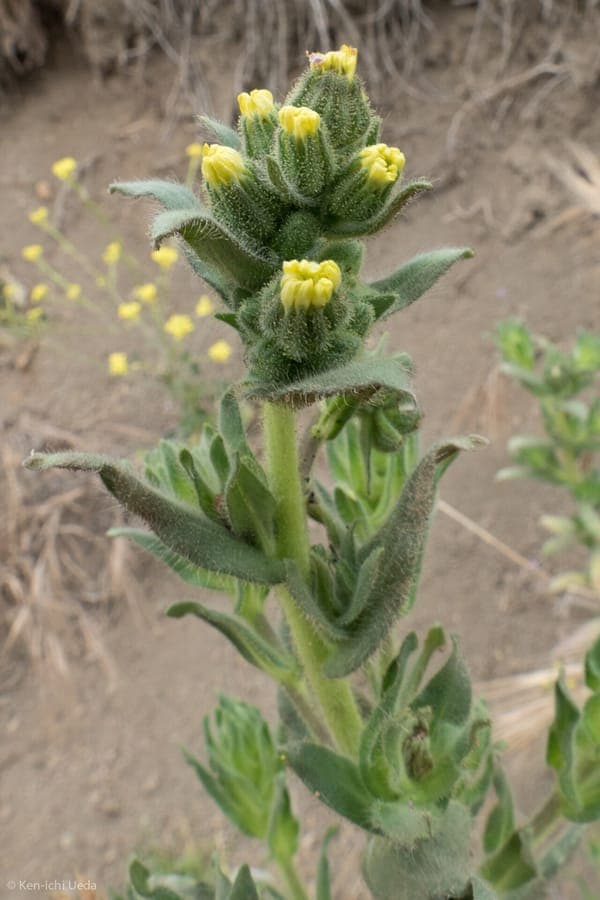
Ken-ichi Ueda / CC BY 4.0, via Wikimedia Commons
Madia sativa: complete guide
Madia sativa
¿Quieres ver Madia sativa: complete guide en tu jardín?
1 minuto, sin tarjeta de crédito
Overview
Madia sativa, known by common names like tarweed, Chilean oilplant and coast tarweed, is a remarkable annual herb native to Chile and Argentina. This wild plant has spread across Europe, Asia and Australia over centuries, establishing itself in many climates. The plant is primarily valued for its oil-rich seeds, which have been used historically for various purposes. In modern gardens, this plant is gaining renewed attention due to its low maintenance requirements and ecological value.
Madia sativa grows relatively quickly into a substantial bush and produces numerous small yellow flowers throughout an extended season. These flowers attract insects and provide a valuable food source for bees and other pollinators. After flowering, the seeds mature, containing a high oil percentage.
Appearance and bloom
The plant reaches a height of approximately 60 to 100 cm and forms a broad, rough-textured shrub with many branches. The stems are hairy and have a noticeably sticky surface, making them feel more moist than many other plants. This is not a sign of disease but a natural characteristic.
The leaves are elongated to linear, approximately 5 to 15 cm long, and feel rough to the touch. They have a dark green colour and are arranged alternately on the stems.
The flowers are small, approximately 1 to 2 cm across, and display an intense golden yellow colour. They grow in loose clusters towards the top of the plant and bloom from June to September. Each flower head consists of numerous small florets that open gradually, resulting in a prolonged flowering period. The flowers have a delicate structure and are less showy than sunflowers, for example, but together form an attractive natural display.
After flowering, inconspicuous fruits develop containing numerous tiny seeds. These seeds are oily, dark brown to black in colour and extremely small.
Ideal location
Madia sativa thrives best in sunny spots. The plant requires a minimum of 6 to 8 hours of direct sunlight daily to grow well and flower abundantly. Without sufficient light, the plant will grow but will form more branches and bloom less profusely.
The plant tolerates windy conditions quite well, making it suitable for gardens in exposed locations or coastal areas. A slightly breezy spot also helps reduce moisture around the foliage, preventing fungal diseases.
Soil
Madia sativa grows in virtually all soils as long as water drains well. The plant is undemanding and thrives in sand, clay and loam. The most important factor is avoiding water stagnation, as this can lead to root rot.
The soil can be nutrient-poor; in fact, the plant grows better in leaner soil. Excessive feeding promotes leaf growth at the expense of flowering. A pH between 6.5 and 7.5 is ideal, but the plant tolerates heavier acidic soils as well.
On heavy clay soils, it can be useful to work in some sand or coarse organic material to improve drainage.
Diseño gratis
¿Quieres ver Madia sativa: complete guide en tu jardín? Crea un diseño gratis ahora.
Watering
This South American plant is remarkably drought-tolerant. Once established, the plant requires virtually no watering attention. The deep root system extracts water from deeper soil layers.
During the growing season, especially in dry summers, regular watering can promote growth, but is not strictly necessary. Young plants in their first season need more moisture attention than mature specimens.
Excessive watering poses a risk, especially in autumn months. Ensure water drains well and plants do not stand in stagnant water.
Pruning
Madia sativa requires little pruning. The plant naturally grows into an attractive shape with many branches. If the plant becomes too dense, the oldest, most damaged stems can be carefully removed in early spring.
Faded flowers can be pinched off to encourage more blooming, although this is not strictly necessary. At the end of the growing season, plants can be cut back or removed entirely, as they are annual.
If you wish to collect seeds, leave some flower heads on the plant until they turn yellow and the seeds are ripe.
Maintenance calendar
Spring (March-May): Sow seeds directly outdoors after the last frost. Water young plants carefully.
Summer (June-August): Enjoy the blooms. Water during dry periods.
Autumn (September-October): Blooming diminishes. Seeds can be collected.
Winter (November-February): Annual plant dies back. Clean up soil or prepare for next season.
Winter hardiness
Madia sativa is not winter-hardy in temperate climates. This is a true annual plant that cannot withstand frost. The plant grows only in the warm season and dies off when temperatures drop below freezing.
Resow seeds each spring after the last frost date. In warm regions (USDA zones 9-11), seeds may self-sow and regenerate naturally the following year.
Companion plants
Madia sativa combines beautifully with many other wild flowers. Plant it together with other drought-tolerant summer-flowering species.
Good combinations include:
- Sunflower (Helianthus)
- Daisy (Chrysanthemum)
- Larkspur (Delphinium)
- Coreopsis (Coreopsis)
- Coneflower (Echinacea)
Madia sativa also grows well in groups of the same species, creating an attractive wild effect.
Closing thoughts
Madia sativa is an excellent choice for gardeners seeking simple, drought-tolerant summer-flowering plants with ecological value. This plant demands minimal maintenance, attracts pollinators and adds texture and colour to natural or edible gardens.
The plant can easily be grown from seed and is available from specialist seed suppliers or in containers at larger garden centres. Plant Madia sativa in groups of at least five specimens for best effect in your garden. For more inspiration and plant selection, visit gardenworld.app.
¿Quieres ver Madia sativa: complete guide en tu jardín? Crea un diseño gratis ahora.
Sube una foto, elige un estilo y obtén un diseño fotorrealista con lista de plantas en menos de un minuto.
Más de 10.000 jardines diseñados
Sin tarjeta de crédito


Plantas similares
Calendula stellata: complete guide
Calendula stellata
Complete guide to Calendula stellata, the star-flowered marigold from Sicily: location, soil, watering and companion planting tips.
Korean chrysanthemum: complete guide
Chrysanthemum x rubellum
Chrysanthemum x rubellum is a hardy autumn perennial with single pink to copper flowers from August to November. Care and combinations.
Helianthus divaricatus: complete guide
Helianthus divaricatus
Helianthus divaricatus is a North American woodland sunflower with yellow summer blooms, ideal for naturalistic borders and shady edges.