
Wikimedia Commons / CC BY-SA 3.0, via Wikimedia Commons
Wood pimpernel: complete guide
Lysimachia nemorum
¿Quieres ver Wood pimpernel: complete guide en tu jardín?
1 minuto, sin tarjeta de crédito
Overview
Wood pimpernel, scientifically known as Lysimachia nemorum, is an elegant and modest perennial naturally occurring in moist, shaded woodland areas of Europe. This member of the Primulaceae family is an excellent choice for creating naturalistic woodland gardens and shade plantings. The plant is characterized by small yellow flowers appearing from May to July, reaching approximately 15-30 centimeters height, making it perfect ground-level planting material for beneath trees or in partial shade situations.
For garden designers working on naturalistic, woodland-like scenes and shade gardens, gardenworld.app offers professional support in creating layered planting designs. Wood pimpernel plays an essential role in mimicking woodland ecosystems and contributes ecological value by providing nourishment for butterflies and bees. With appropriate placement in moist, shaded locations, this plant forms an elegant understory covering for years.
Appearance & Bloom Cycle
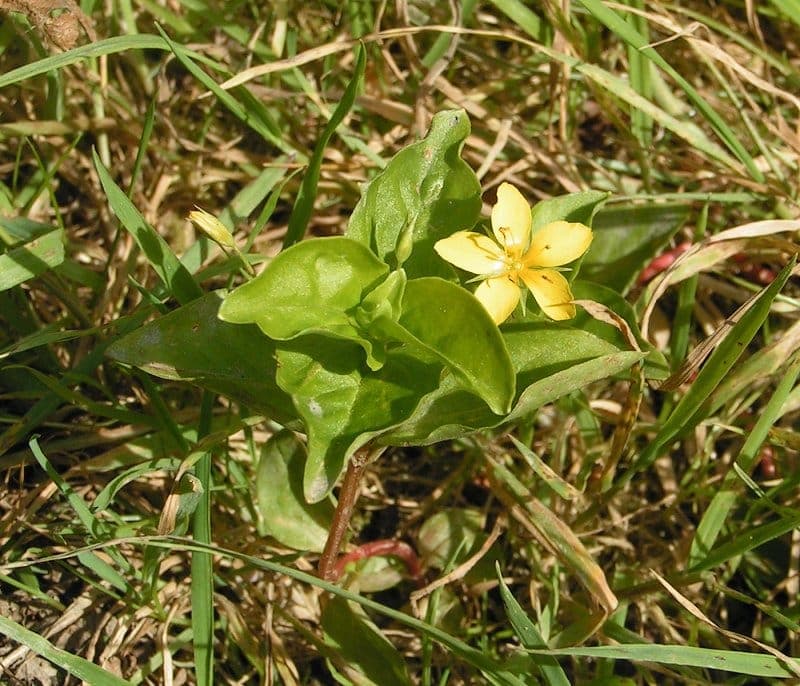
Wood pimpernel is a compact, woodland perennial displaying fine architecture. The stems are slender and upright to semi-trailing, reaching approximately 15-30 centimeters height. The leaves are small to medium, oval to heart-shaped, approximately 2-4 centimeters long, with smooth margins. The foliage is bright green, glossy, giving the plant refined, delicate appearance perfectly suited to woodland environments.
The flowers are the plant's most distinctive feature. They are small, approximately 0.5-1 centimeter diameter, bright yellow in color, growing individually or in pairs from leaf axils. They are five-petaled with delicate, fine-textured petals. Flowering extends from May to July, with peak activity typically in June. This relatively long flowering period attracts small pollinators and butterflies.
Following bloom, small seed capsules develop, gradually ripening in August-September. The foliage remains green throughout the growing season, providing year-round decorative value.
Ideal Location: Sun, Shade, or Partial Shade
Wood pimpernel performs best in partial to full shade, characteristic of woodland plants. The plant accepts locations with only 1-3 hours direct sunlight daily, though light or filtered sun is usually present through tree canopies. The plant grows far less well in full sun and is therefore perfect for beneath trees and other densely shaded locations. Even in very deep shade, the plant grows slower but still survives reasonably.
The plant particularly suits woodland sections of gardens, beneath deciduous trees, along woodland paths, and beside water margins under tree cover. The plant's fine architecture perfectly suits such environments, where it adds subtle beauty without appearing obtrusive or disruptive.
Soil & Underground Requirements
Wood pimpernel favors woodland, humus-rich, moisture-retentive soils. pH can range from acidic to neutral (pH 5.0-7.0), though the plant accepts more acidic soils. The plant grows best in soils enriched with organic matter such as leaf mold, compost, or natural forest floor.
At planting, abundant organic material should be incorporated into the soil. For woodland gardens, ideal practice involves applying 5-10 centimeters of leaf mold or rotting leaf litter to the planting area to mimic woodland conditions. The plant requires little nutrition and will even thrive in nutrient-poor woodland soil.
Diseño gratis
¿Quieres ver Wood pimpernel: complete guide en tu jardín? Crea un diseño gratis ahora.
Watering: When and How Much
Wood pimpernel is a moisture-loving plant requiring consistently moist soils. In natural habitats, the plant grows in moist woodland and marshy environments, making water provision crucial. Regular watering is required during the growing season, with 2-3 weekly waterings potentially necessary depending on soil and moisture conditions.
The plant must never completely dry out. During drier periods, especially in summer, additional watering is necessary. In winter, when the plant diminishes, watering can be reduced, but soil must not completely dry. The plant appreciates mulching, which helps keep soils moister and mimics woodland conditions.
Pruning: When and How
Wood pimpernel requires minimal pruning intervention. The plant naturally forms a neat shape without much intervention. Spent flowers can be removed during the growing period to keep the plant tidy, though this is not necessary.
Following bloom in October-November, dead leaf and stem material can be removed. Pruning must be gentle since the plant can be somewhat fragile.
Maintenance Calendar
- April - May: Plant begins active growth. Start regular watering. No pruning needed. Light fertilizer is not necessary but can be applied.
- June - July: Flowering in full swing. Regular watering during dry periods. Small spent flowers can be removed.
- August - September: Bloom concludes, seed ripens. Watering can be slightly reduced. Plant prepares for winter.
- October - November: Plant begins dying back. Dead material can be removed. Minimize watering frequency.
- December - March: Dormancy. Minimal activity. Water must remain available but apply very sparingly.
Winter Hardiness & Protection
Wood pimpernel is exceptionally winter hardy, tolerating temperatures down to approximately -30°C, making it suitable for USDA zones 3-8. In the Netherlands, Belgium, and other Northern European regions, no special protection is necessary. The plant dies back to ground level in winter, which is normal.
Underground parts are completely winter hardy and emerge with new growth in spring. Optionally, a 5-7 centimeter layer of leaf mold or compost can be applied for extra protection, though this is usually unnecessary.
Companion Plants & Combinations
Wood pimpernel combines beautifully with other woodland plants and shade-loving species:
- Hosta varieties: The fine, small leaves of wood pimpernel form interesting contrast with Hosta's large, sculptural foliage.
- Helleborus (Hellebore): The elegant, purple or white flowers contrast beautifully with yellow wood pimpernel blooms.
- Carex (Sedge): The grass-like structure of sedge forms textural contrast.
- Astilbe: The feathery, fine structure of Astilbe combines beautifully with wood pimpernel.
- Geranium (Cranesbill): These shade-loving Geranium varieties grow well alongside wood pimpernel.
Materials are available at local garden centres.
Conclusion
Wood pimpernel is a refined, reliable plant for woodland gardens and shady corners. With its fine architecture, shade preference, and moisture-loving nature, it perfectly suits naturalistic woodland plantings. For professional garden designs mimicking woodland ecosystems, gardenworld.app provides essential tools. With appropriate placement and minimal care, this delicate plant offers years of subtle beauty.
¿Quieres ver Wood pimpernel: complete guide en tu jardín? Crea un diseño gratis ahora.
Sube una foto, elige un estilo y obtén un diseño fotorrealista con lista de plantas en menos de un minuto.
Sin tarjeta de crédito


Plantas similares
Primula incana: complete guide to silvery alpine primrose
Primula incana
Silvery primrose (Primula incana), a delicate alpine flower with white blooms and powdered grey-green leaves. Growing, care, and cultivation guide.
Mealy cowslip: complete guide
Primula pulverulenta
Grow the Mealy cowslip (Primula pulverulenta): striking candelabra flowers in red and purple tones, moisture-loving and ideal for shady, damp garden corners.
Cliff dwarf-primrose: complete guide
Androsace laevigata
Full guide to growing Androsace laevigata, a rare Pacific Northwest alpine cushion plant. Planting, care, and garden design tips explained.