
Stephan Sprinz / CC BY 4.0, via Wikimedia Commons
Black saltwort: complete guide
Lysimachia maritima
¿Quieres ver Black saltwort: complete guide en tu jardín?
1 minuto, sin tarjeta de crédito
Overview
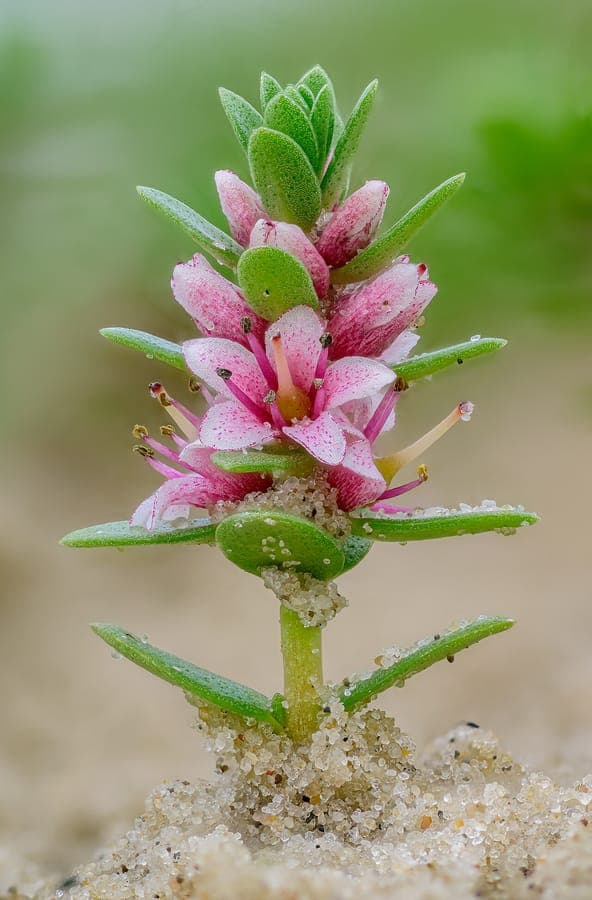
Black saltwort, scientifically known as Lysimachia maritima, is a fascinating perennial naturally occurring in salt-influenced and brackish environments around coastal regions of Northern Europe. This remarkable member of the Primulaceae family is particularly valued for its ability to thrive in saline and brackish conditions where most other garden plants cannot survive. Black saltwort is a modest plant with yellow flowers appearing from May to July, reaching approximately 20-40 centimeters height. This makes it a unique and valuable addition for coastal gardeners or those interested in halophytic (salt-tolerant) gardens.
For garden designers working with challenging environments such as salty or windy coastal areas, gardenworld.app offers professional assistance creating designs with adapted plant species. Black saltwort can transform coastal gardens and contribute to salt-tolerant planting schemes that echo coastal ecosystems. With appropriate placement and minimal care, this unique plant returns year after year.
Appearance & Bloom Cycle
Black saltwort is a compact perennial displaying neat growth habit. The stems are slender, upright, and greenish, reaching approximately 20-40 centimeters height. The leaves are small, linear to lanceolate, approximately 5-10 centimeters long, with smooth margins. The foliage is glossy green and may acquire slight bluish tinting in warm, sunny conditions, creating pleasant aesthetic effects.
The flowers are small to medium, approximately 0.5-1.5 centimeters diameter, bright yellow in color, growing in small clusters along the stems. They are five-petaled, delicate, and highly attractive to bees and other pollinators. Flowering occurs from May through July, with peak activity in June, providing valuable nectar source for insects throughout spring and summer.
Following bloom, small rounded seed capsules develop, ripening in August-September with natural seed dispersal. The foliage remains green and healthy throughout the growing season.
Ideal Location: Sun, Shade, or Partial Shade
Black saltwort thrives best in full sun, typical of coastal plants. The plant requires minimum 6-8 hours direct sunlight daily for optimal growth and full flowering. In partial shade conditions, the plant will grow but produce fewer flowers and display lankier growth patterns. The plant demonstrates exceptional tolerance for windy conditions, essential since it naturally inhabits breezy coastal regions.
For coastal gardens, a sunny, windy location is not merely suitable but actually ideal. The plant can develop considerably sturdier growth in windy conditions than many other garden plants. For landscape applications, black saltwort can be employed to stabilize coasts and prevent erosion.
Soil & Underground Requirements
Black saltwort is remarkable for its ability to grow in saline and mineral-rich soils - a characteristic making it unique among garden plants. The plant accepts salt-laden, brackish, and mineral-rich soils far better than most garden plants. pH can vary from acidic to alkaline (pH 5.5-8.0), though the plant demonstrates reasonable tolerance.
For garden planting, well-draining soil proves essential. Heavy clay soils can be improved with sand and gravel. In coastal gardens, salt content in soil need not be reduced - black saltwort actually thrives better in such conditions. In inland gardens, attention must be given to drainage and avoiding water stagnation. The plant forms a compact root system and doesn't spread aggressively.
Diseño gratis
¿Quieres ver Black saltwort: complete guide en tu jardín? Crea un diseño gratis ahora.
Watering: When and How Much
Black saltwort is a moisture-loving plant but not to the extent of extreme wetland plants. The soil must be moisture-retentive but not waterlogged. Regular watering is required during the growing season, with 2-3 weekly waterings potentially necessary, depending on temperature and soil type. In coastal areas with significant salt presence, consistent water supply proves essential for leaching salt from root zones.
During wet periods, water application should be reduced. In winter, when the plant grows minimally, watering can be substantially reduced, though soil must never completely dry. Container plants may require more frequent watering due to faster moisture depletion.
Pruning: When and How
Black saltwort requires minimal pruning intervention. Spent flowers can be removed during the growing season to encourage continued blooming. In late autumn, October-November, when the plant dies back, above-ground material can be cut back to approximately 5 centimeters above soil surface.
Caution must be exercised against excessive pruning, as this can stress this somewhat tender plant. Gentle pruning is recommended.
Maintenance Calendar
- April - May: New growth begins. Start regular watering as temperature rises. Remove dead material from previous season. Light fertilizer application (especially potassium-rich formulas) may be given.
- June - July: Flowering in full swing. Regular watering, especially during dry periods. Removing spent flowers encourages continued bloom.
- August - September: Flowering concludes, seed formation begins. Watering can be slightly reduced. Allow seeds to disperse naturally.
- October - November: Plant prepares for winter. Cut back to ground level. Minimize watering frequency.
- December - March: Winter dormancy. Minimal activity. Water must remain available but apply very sparingly.
Winter Hardiness & Protection
Black saltwort is a semi-tender plant, tolerating temperatures down to approximately -5°C to -10°C, making it suitable for USDA zones 8-10. In more northern regions, including parts of the Netherlands and Belgium, the plant requires frost protection. The plant dies back in winter frosts and may completely perish during very cold winters.
In colder regions, the plant must be grown as a container plant and overwintered indoors. A bright, cool location (5-10°C) is ideal. Ensure adequate air circulation to prevent fungal diseases. In spring, when temperatures remain above 0°C consistently, the plant can be moved outdoors. For ground cultivation in northern regions, applying a protective layer of 10-15 centimeters leaf mold or compost around the plant provides extra protection.
Companion Plants & Combinations
Black saltwort combines well with other salt-tolerant and coastal-friendly plants:
- Armeria maritima (Sea thrift): With pink-red flowers, sea thrift forms attractive color contrast with black saltwort's yellow blooms.
- Eryngium maritimum (Sea holly): The blue, decorative flowers of sea holly create interesting color contrast while both are salt-tolerant.
- Limonium species (Sea lavender): The delicate purple flowers combine beautifully with yellow.
- Suaeda (Seablite): This halophytic shrub grows well alongside black saltwort in very saline conditions.
- Atriplex (Orache): Also salt-tolerant, this plant provides structure beside black saltwort.
Materials are available at local garden centres.
Conclusion
Black saltwort is a unique and valuable plant for coastal gardeners or those interested in halophytic gardens. With its remarkable ability to grow in saline soils and yellow flowers, it offers a valuable contribution to challenging coastal locations. For professional garden designs adapted to coastal environments, gardenworld.app provides essential support. With appropriate placement and minimal care, this rare plant provides years of garden pleasure.
¿Quieres ver Black saltwort: complete guide en tu jardín? Crea un diseño gratis ahora.
Sube una foto, elige un estilo y obtén un diseño fotorrealista con lista de plantas en menos de un minuto.
Más de 10.000 jardines diseñados
Sin tarjeta de crédito


Plantas similares
Primula incana: complete guide to silvery alpine primrose
Primula incana
Silvery primrose (Primula incana), a delicate alpine flower with white blooms and powdered grey-green leaves. Growing, care, and cultivation guide.
Mealy cowslip: complete guide
Primula pulverulenta
Grow the Mealy cowslip (Primula pulverulenta): striking candelabra flowers in red and purple tones, moisture-loving and ideal for shady, damp garden corners.
Cliff dwarf-primrose: complete guide
Androsace laevigata
Full guide to growing Androsace laevigata, a rare Pacific Northwest alpine cushion plant. Planting, care, and garden design tips explained.