
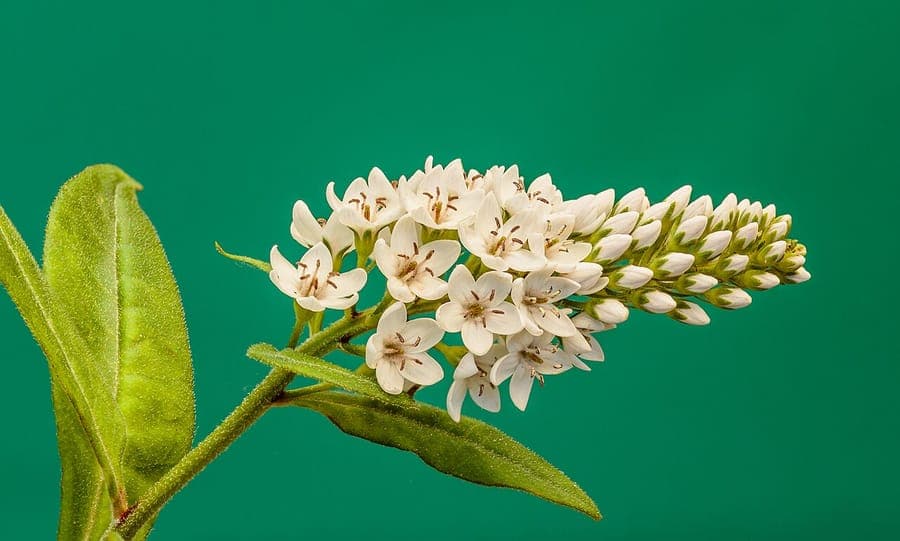
Dominicus Johannes Bergsma / CC BY-SA 4.0, via Wikimedia Commons
Gooseneck loosestrife: complete guide
Lysimachia clethroides
¿Quieres ver Gooseneck loosestrife: complete guide en tu jardín?
1 minuto, sin tarjeta de crédito
Overview
Gooseneck loosestrife, scientifically known as Lysimachia clethroides, is a striking perennial native to East Asia, particularly Japan, Korea, and China. This member of the Primulaceae family is renowned for its distinctive arched white flower spikes that resemble a goose's neck, giving the plant its common name. The gooseneck loosestrife is an excellent choice for gardeners seeking a long flowering period from June to September and elegant architectural qualities. The plant grows as a rhizomatous perennial, gradually spreading horizontally, and can reach heights of 60-80 centimeters. It performs excellently in mixed borders, woodland gardens, and damp areas.
For gardeners seeking professional design assistance, gardenworld.app offers tools to create garden plans that incorporate this distinctive plant alongside complementary species. The flower spikes are particularly valuable as cut flowers for indoor arrangements, providing weeks of elegant display. With proper placement and care, the gooseneck loosestrife becomes a reliable performer that returns year after year, adorning the garden with its unique graceful form and extended blooming season.
Appearance & Bloom Cycle
The gooseneck loosestrife is a remarkable perennial with distinctive architectural qualities. The stems are upright, slender, yet strong, typically reaching 60-80 centimeters in height. The leaves are lanceolate, green, and relatively narrow, approximately 8-15 centimeters long, arranged alternately along the stems. The foliage has a fine texture and smooth surface, contributing to the plant's overall elegance and refined appearance.
The flowers are the plant's most distinctive feature. They appear in dense, gently arched spikes resembling a goose's extended neck, hence the charming common name. These white flower spikes typically measure 20-30 centimeters in length and comprise numerous tiny white flowers opening progressively from bottom to top. Each individual flower measures roughly 1.5-2 centimeters across, five-petaled, and delicate in appearance. Flowering begins in June and continues through September, with peak display typically occurring in July and August. This extended blooming period makes the plant invaluable for garden designers seeking season-long interest.
Following the flowering period, small rounded seed capsules develop, gradually maturing throughout autumn and providing attractive seed-bearing elements for several weeks. These can remain ornamental well into late autumn, creating pleasing late-season garden effects. The foliage typically remains vibrant throughout the growing season, sometimes acquiring golden-yellow tones in autumn.
Ideal Location: Sun, Shade, or Partial Shade
Gooseneck loosestrife performs optimally in partial shade, though it demonstrates reasonable tolerance for varying light conditions. The plant prefers locations receiving 3-4 hours of direct sunlight daily, particularly morning sun. Excessive afternoon sun, especially in warm regions, can cause leaf scorching or flower bleaching. In cooler northern climates where summer intensity is moderate, the plant tolerates greater sun exposure.
The plant also grows acceptably in fuller shade, though this may result in reduced flowering abundance and lankier growth habits. For optimal flowering, positions beneath deciduous trees or on the northeast or northwest sides of buildings prove ideal, providing afternoon shade protection while maintaining adequate light for healthy growth. In particularly warm climates, partial shade becomes almost essential for maintaining flowering quality and preventing heat stress.
Soil & Underground Requirements
While gooseneck loosestrife is not particularly demanding regarding soil composition, it thrives best in moisture-retentive, fertile soils. The plant prefers soils with a pH of approximately 6.0-7.0, ranging from slightly acidic to neutral. However, the plant demonstrates considerable tolerance and can even thrive on slightly more alkaline soils.
Drainage presents a paradox: while the plant loves moisture, permanently waterlogged conditions prove detrimental. An ideal soil composition combines garden soil mixed with well-decomposed compost or leaf mold, ensuring simultaneous moisture retention and adequate drainage. For heavy clay soils, incorporating sand, gravel, or vermiculite substantially improves drainage characteristics. The gooseneck loosestrife spreads via underground rhizomes that are vigorous but not invasive, creating manageable expansion over several seasons.
Diseño gratis
¿Quieres ver Gooseneck loosestrife: complete guide en tu jardín? Crea un diseño gratis ahora.
Watering: When and How Much
Gooseneck loosestrife is a moisture-loving plant with distinct water requirements. Soil must remain consistently moist throughout the growing season from April through October - not waterlogged, but regularly moist. During dry spells, particularly in summer, daily watering may become necessary. New plants require careful establishment watering, especially during their first growing season.
In nature, these plants frequently colonize areas bordering water features and damp ground, so maintaining moisture levels proves essential for optimal growth and flowering. Undersupply of water can lead to stunted growth, reduced flowering, and potential plant decline. During winter dormancy, when the plant dies back, watering can be substantially reduced, though the soil should never completely dry out. Mulching the planting area with 5-7 centimeters of compost or leaf mold helps maintain consistent moisture levels while providing slow nutrient release.
Pruning: When and How
Gooseneck loosestrife requires relatively minimal pruning intervention. After flowering concludes, typically in October or November when stems pale and the plant prepares for dormancy, spent flowers and dead foliage can be removed. This complete removal can occur at ground level, cutting back to approximately 5 centimeters above soil surface, allowing the rhizomes to rest undisturbed.
In spring, around April-May, when first green shoots emerge, light formative pruning can help maintain more compact growth if the plant threatens to exceed planned space. This plant requires minimal intervention; primarily, deadheading and removal of obviously disordered growth suffices. The plant naturally forms an attractive shape without heavy-handed pruning techniques.
Maintenance Calendar
- April - May: Active growth resumes. Ensure regular watering and begin applying balanced fertilizer (NPK 10-10-10 or equivalent) to stimulate growth.
- June - July: Flowering period commences, growth reaches its peak. Continue regular watering, especially during dry spells. Fertilizing can continue through late July.
- August - September: Full bloom display, plant appears at its finest. Maintain regular watering and monitor for pests or disease issues.
- October - November: Flowering concludes, plant begins senescence. Remove dead material and cut back to ground level. Gradually reduce watering frequency.
- December - March: Dormancy period. Minimal watering. Monitor soil for disease organisms. Add organic matter or compost to soil in preparation for the new growing season.
Winter Hardiness & Protection
Gooseneck loosestrife is exceptionally winter hardy, tolerating temperatures as low as -30°C to -40°C. This hardiness makes it suitable for USDA hardiness zones 3-8, covering much of Europe and beyond. In the Netherlands and Belgium, no special frost protection is necessary.
That noted, the above-ground plant naturally dies back during winter, which is normal and expected. Underground rhizomes are fully winter-hardy and emerge with new growth in spring. To prevent soil erosion and maintain aesthetic tidiness, the plant can be cut back after flowering concludes, or dead stems can remain standing through winter, actually providing protective insulation for the rhizomes below. In particularly harsh climates, a 5-10 centimeter layer of leaf mold or compost applied around the planting area offers additional protection.
Companion Plants & Combinations
Gooseneck loosestrife combines beautifully with numerous other perennials and shade-loving plants:
- Hosta varieties: The delicate, elegant flower spikes contrast magnificently with Hosta's bold, sculptural foliage. Both plants appreciate partial shade environments.
- Astilbe: Its feathery, reddish-brown plumes provide charming color contrast with white flowers, and both thrive in moisture-retentive soils.
- Ligularia: Large-leaved with yellow flowers, Ligularia creates interesting textural contrast with the gooseneck's refined spikes.
- Liatris (Blazing Star): Vertical purple spikes provide striking vertical contrast with the gooseneck's gracefully arched white flowers.
- Ferns: Delicately dissected fern fronds create textural contrast, and both plant types appreciate moisture and dappled shade.
Plant materials and supplies are available at local garden centres, where you can also source compost and fertilizers for optimal establishment.
Conclusion
Gooseneck loosestrife is an elegant, reliable perennial providing years of garden pleasure. With distinctive arched white flowers, preference for partial shade, and love of moisture-retentive soil, it fits seamlessly into diverse garden designs. For gardeners seeking professional guidance integrating this and other perennials into cohesive designs, gardenworld.app provides essential tools. With minimal maintenance, this East Asian treasure returns dependably year after year, enriching the garden with architectural grace and extended blooming season.
¿Quieres ver Gooseneck loosestrife: complete guide en tu jardín? Crea un diseño gratis ahora.
Sube una foto, elige un estilo y obtén un diseño fotorrealista con lista de plantas en menos de un minuto.
Más de 10.000 jardines diseñados
Sin tarjeta de crédito


Plantas similares
Primula incana: complete guide to silvery alpine primrose
Primula incana
Silvery primrose (Primula incana), a delicate alpine flower with white blooms and powdered grey-green leaves. Growing, care, and cultivation guide.
Mealy cowslip: complete guide
Primula pulverulenta
Grow the Mealy cowslip (Primula pulverulenta): striking candelabra flowers in red and purple tones, moisture-loving and ideal for shady, damp garden corners.
Cliff dwarf-primrose: complete guide
Androsace laevigata
Full guide to growing Androsace laevigata, a rare Pacific Northwest alpine cushion plant. Planting, care, and garden design tips explained.