
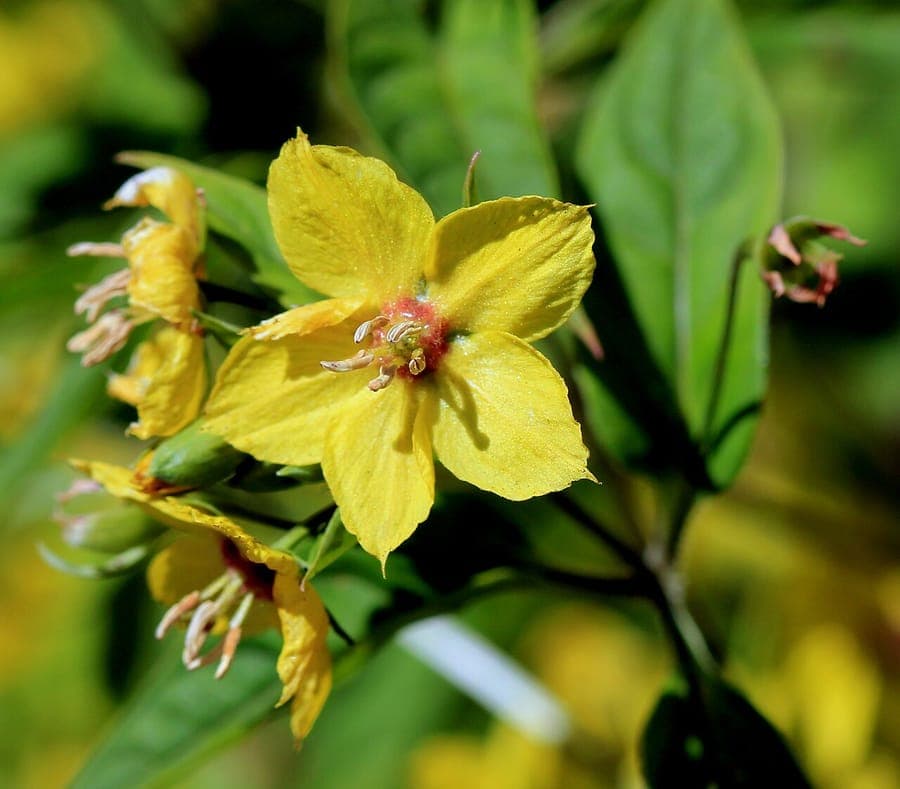
Karelj / CC BY-SA 3.0, via Wikimedia Commons
Lysimachia ciliata: complete guide
Lysimachia ciliata
¿Quieres ver Lysimachia ciliata: complete guide en tu jardín?
1 minuto, sin tarjeta de crédito
Overview
Lysimachia ciliata, commonly known as Fringed loosestrife or Lysimaque ciliée, is a graceful perennial plant from the Primulaceae family. This North American plant naturally inhabits moist areas and woodland edges. With its elegant yellow flowers and ornamental value, it forms an excellent choice for moist gardens and waterfronts.
This plant originates from Canada and the United States, where it grows along streams, lakes, and moist woodland edges. It is valued by landscape architects for its summer and fall bloom period and its attraction of pollinators. Lysimachia ciliata offers both ecological and aesthetic value.
Appearance and Bloom Time
Lysimachia ciliata grows as an elegant, upright plant reaching approximately 60-90 cm high. The leaves are elongated and arranged along the stems. These leaves display characteristic long hairs along the margins, giving the plant its name.
Flowers appear from July to September. The small, bright yellow flowers are arranged in elegant clusters along the stems. They form a beautiful complement to the green foliage. Bees and other pollinators are strongly attracted.
Ideal Location
Lysimachia ciliata grows best in half-shade to full sun. The plant tolerates partial shade particularly well. For optimal flowering, a minimum of 4 hours of indirect light is desirable.
This is an ideal plant for moist gardens, water gardens, woodland edges, and banks. In gardenworld.app designs, it is regularly used for waterside planting and moist borders. The plant also grows well in containers if regularly watered.
Soil
Lysimachia ciliata grows best in moist, humus-rich soils. The plant makes high demands on moisture levels and grows poorly in dry soils. Addition of abundant organic material (compost, peat moss) significantly improves growth.
PH preference is slightly acidic to neutral (pH 5.5-7.0). The plant also tolerates more basic soils. Well-drained soils are not suitable - this plant prefers moist conditions.
Diseño gratis
¿Quieres ver Lysimachia ciliata: complete guide en tu jardín? Crea un diseño gratis ahora.
Watering
Lysimachia ciliata requires regular watering. This is not a drought-tolerant plant. Young plants must be regularly watered until roots are well-developed.
Adult plants need less rainfall but cannot stand dry for long periods. Water regularly during dry spells. Waterlogged soils are not problematic - this plant often grows in marshes and along water.
Pruning
Lysimachia ciliata requires minimal pruning. Remove spent flowers for extended blooming. At the end of fall, the stem can be cut back to ground level.
The plant spreads naturally through side stems. Light pinching of growing material in early summer can stimulate bushy growth. Use clean tools to prevent disease.
Maintenance Calendar
Spring (March-May): New growth appears. Water regularly. Add organic material as needed.
Summer (June-August): Observe growth. Water regularly, especially during dry spells. Enjoy blooms.
Fall (September-November): Prune spent flowers. Prepare plant for rest.
Winter (December-February): Plant is dormant. Minimal water. Clear withered stems.
Winter Hardiness
Lysimachia ciliata is hardy to approximately -30 degrees Celsius. The plant easily grows in temperate and cold zones. In gardenworld.app, it is recommended for USDA zones 3-8.
The plant dies back in winter but returns from the roots in spring. Protection is usually not needed. In very wet winters, good drainage can help prevent foot rot.
Companion Plants
Lysimachia ciliata combines beautifully with other moisture-loving plants. Try it with astilbe, liatris, and hosta for contrast. This combination creates interesting texture and bloom.
Also combine with primula, grasses, and other waterside plants. In moist woodland edges, it grows well next to hostas, hellebores, and anemones. This strategy provides seasonal interest.
Closing Remarks
Lysimachia ciliata deserves more attention in modern moist gardens. With its elegant flowers, summer season interest, and pollinator value, it offers a worthwhile option. Whether you are planting a waterside garden or seeking moist borders - this American plant merits a place in your design.
Available at your local plant retailer. Discover this elegant plant and bring waterside elegance to your garden - gardenworld.app helps you plant successfully.
¿Quieres ver Lysimachia ciliata: complete guide en tu jardín? Crea un diseño gratis ahora.
Sube una foto, elige un estilo y obtén un diseño fotorrealista con lista de plantas en menos de un minuto.
Más de 10.000 jardines diseñados
Sin tarjeta de crédito


Plantas similares
Primula incana: complete guide to silvery alpine primrose
Primula incana
Silvery primrose (Primula incana), a delicate alpine flower with white blooms and powdered grey-green leaves. Growing, care, and cultivation guide.
Mealy cowslip: complete guide
Primula pulverulenta
Grow the Mealy cowslip (Primula pulverulenta): striking candelabra flowers in red and purple tones, moisture-loving and ideal for shady, damp garden corners.
Cliff dwarf-primrose: complete guide
Androsace laevigata
Full guide to growing Androsace laevigata, a rare Pacific Northwest alpine cushion plant. Planting, care, and garden design tips explained.