
MathieuMD / CC BY-SA 4.0, via Wikimedia Commons
Asian skunk-cabbage: complete guide
Lysichiton camtschatcensis
¿Quieres ver Asian skunk-cabbage: complete guide en tu jardín?
1 minuto, sin tarjeta de crédito
Overview
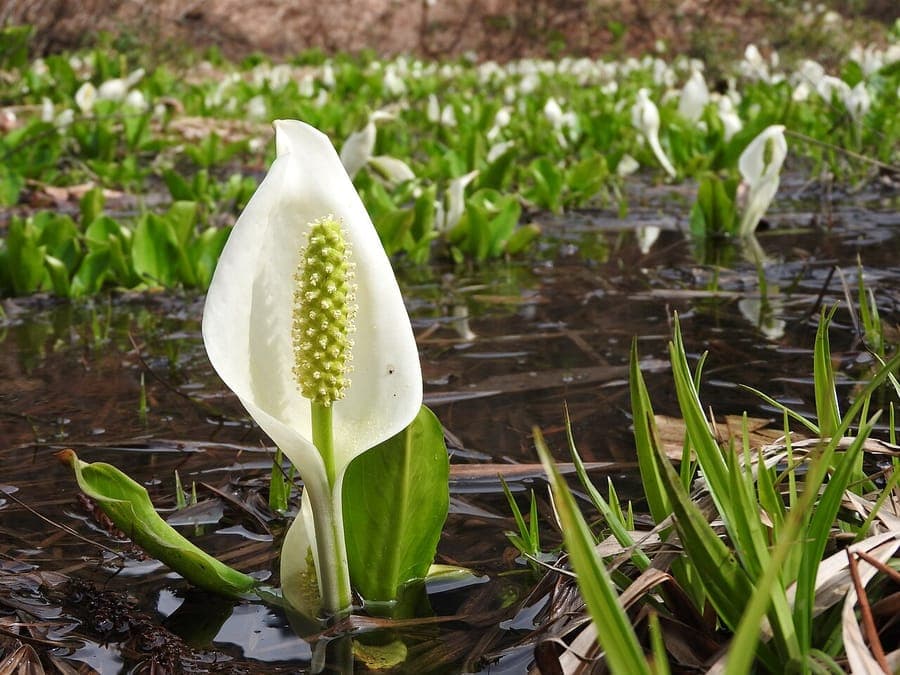
Lysichiton camtschatcensis, commonly known as Asian skunk-cabbage or white calla, is a spectacular flowering plant from the arum family. This extraordinary specimen produces large, white flower spathes with intensely fragrant spadices. With its monumental leaf form and exotic blooms, it is an absolute focal point in wet garden settings.
Appearance & Bloom
Asian skunk-cabbage reaches 80-150 cm in height with colossal, bright green leaves measuring 90 cm long. Flowers appear in April-May as spectacular white spathes (approximately 30 cm) surrounding a yellow, pleasantly scented spadix. After flowering, enormous seed pods develop containing many seeds.
Ideal Location
This plant thrives in full sun to partial shade in consistently moist areas. Place it in wet zones near ponds or streams in gardens with sufficient space. The white form is perfect for large gardens with extensive water features. Allow ample room for the monumental foliage canopy.
Soil
Rich, moisture-retaining soil is essential. Neutral to slightly acidic pH (6.0-7.0) is ideal. Incorporate abundant organic material. The plant even accepts muddy, poorly-drained conditions.
Diseño gratis
¿Quieres ver Asian skunk-cabbage: complete guide en tu jardín? Crea un diseño gratis ahora.
Watering
This plant demands consistent moisture. Keep soil evenly wet during the growing season. Reduce watering in winter but never allow it to dry completely. The plant can even grow in shallow water.
Pruning
Minimal pruning is required. Remove damaged leaves and flower parts after blooming. Seed pods may be removed for collection purposes; otherwise the plant self-seeds readily.
Maintenance Calendar
April: Plant in moist soil. May: Maintain consistent moisture. April-May: Enjoy spectacular blooms. June-October: Massive foliage growth; seed pods ripen. November-March: Light dormancy; reduce watering.
Winter Hardiness
Fully hardy in temperate climates. This plant is native to the Russian Far East and Kamchatka, indicating strong winter resilience. In extreme winters, foliage may die back, but the rhizomes survive.
Companion Plants
Pair with other large moisture-loving plants: Gunnera manicata, Rodgersia, Hosta, Iris sibirica, and Astilbe. These combinations create dramatic water gardens with complementary foliage and bloom times.
Closing
Asian skunk-cabbage offers unmatched exotic beauty in moist settings. Seek this rare specimen at specialized nurseries or online retailers. Once properly sited in appropriately wet environments, it becomes a spectacular long-term garden addition. Discover more plant guides at gardenworld.app.
¿Quieres ver Asian skunk-cabbage: complete guide en tu jardín? Crea un diseño gratis ahora.
Sube una foto, elige un estilo y obtén un diseño fotorrealista con lista de plantas en menos de un minuto.
Más de 10.000 jardines diseñados
Sin tarjeta de crédito


Plantas similares
Arrowhead vine: complete guide
Syngonium auritum
Everything about Syngonium auritum, the tropical five-fingers houseplant. Care, location, watering, and pruning explained clearly for beginners and enthusiasts.
Minute duckweed: complete guide to Lemna perpusilla
Lemna perpusilla
Everything about Lemna perpusilla, the minute duckweed: ecology, pond management, water quality and care in garden water features.
Dead horse arum lily: complete guide
Helicodiceros muscivorus
Everything about the dead horse arum lily (Helicodiceros muscivorus): growing conditions, spectacular bloom, thermogenesis, and care for this Mediterranean aroid.