
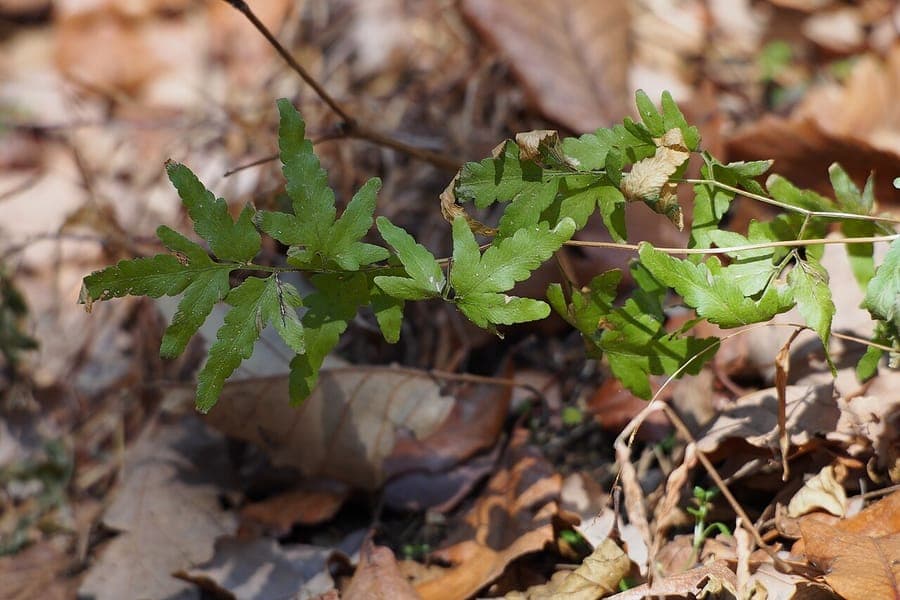
harum.koh from Kobe city, Japan / CC BY-SA 2.0, via Wikimedia Commons
Lygodium japonicum: complete guide
Lygodium japonicum
¿Quieres ver Lygodium japonicum: complete guide en tu jardín?
1 minuto, sin tarjeta de crédito
Overview
The Japanese climbing fern (Lygodium japonicum) is a remarkable vining plant that ascends with airy, spiraling aerial rootlets. This is no ordinary fern-it's a true climber that clings to supports with elegant, twine-like stems. In Asia, it inhabits subtropical forests and tropical regions. In the Benelux, it behaves differently but can thrive indoors or in protected locations.
Appearance and growth
The Japanese climbing fern grows as a slender, twining vine with exceptionally fine, lace-like fronds. These leaflets are small, triangular to ovate, and green, creating an airy, translucent effect.
The plant grows at a moderate pace under good conditions and can climb several meters given adequate support. Its characteristic spiral stems wind around supports, much like passion vine or clematis, but far more delicate.
As a fern, it produces no true flowers but rather sporangia (sori) on leaf undersides-typical fern reproduction.
Ideal location
Provide bright, filtered light rather than direct midday sun. Intense UV can cause scorching. Optimal conditions are dappled shade or filtered sunlight (such as behind windows or beneath leaf canopy).
It grows well against walls, trellises, and pergolas where it can twine. Indoors, it appreciates bright spots away from intense direct light.
The plant appreciates some wind protection and stable conditions.
Soil
A humus-rich, well-draining potting mix is ideal. Ensure soil is light and airy, not compacted. A blend of peat or coco, perlite, and some organic matter works well.
Ferns generally prefer higher moisture than many plants, but not waterlogged conditions. Soggy soil invites root rot.
Preferred pH ranges from neutral to slightly acidic (6-7).
Watering
This fern appreciates consistent moisture during the growing season (March-October). Water regularly so soil remains somewhat moist but never waterlogged.
In winter (November-February), reduce watering as growth slows. Ensure soil never dries completely, but also isn't oversaturated.
Misting (spraying) fronds helps, especially in dry indoor environments. This mimics the humidity of its natural habitat.
Diseño gratis
¿Quieres ver Lygodium japonicum: complete guide en tu jardín? Crea un diseño gratis ahora.
Pruning
Pruning is rarely necessary unless the plant outgrows its space. You can gently cut back long vines to maintain shape.
Remove yellowed or damaged fronds regularly. This encourages new growth. Occasionally the plant may grow weak-gently pinching tips can encourage branching.
Maintenance calendar
March: Soil check, growing season preparation. April-October: Regular watering, misting, occasional dilute fertilization. November-February: Reduced water, minimal feeding, winter dormancy. Annually: Repot every 1-2 years into slightly larger container.
Winter hardiness
Japanese climbing fern is not winter-hardy in the Benelux. In frost-prone areas, above-ground growth dies back. This means it's typically grown as a houseplant or in protected greenhouses.
Keep indoors from November through March in regions with temperatures below 5 degrees Celsius. It tolerates brief cold periods but prolonged frost is fatal.
Companion plants
In houseplant contexts, it pairs well with:
- Scindapsus aureus (golden pothos)
- Monstera deliciosa (Swiss cheese plant)
- Asparagus densiflorus (asparagus fern)
- Rhaphidophora tetrasperma (mini monstera)
- Ficus pumila (creeping fig)
In subtropical, protected outdoor settings:
- Trachelospermum jasminoides (star jasmine)
- Clematis montana (mountain clematis)
- Lonicera japonica (Japanese honeysuckle)
Closing
Lygodium japonicum appeals to plant enthusiasts seeking something different. It's a genuine showstopper, adding texture and elegance where others fail. With proper light, moisture, and care, it thrives beautifully.
Source Japanese climbing fern from specialized plant nurseries. Keep in warm, bright conditions and enjoy its delicate beauty.
Discover more exotic plant ideas on gardenworld.app.
¿Quieres ver Lygodium japonicum: complete guide en tu jardín? Crea un diseño gratis ahora.
Sube una foto, elige un estilo y obtén un diseño fotorrealista con lista de plantas en menos de un minuto.
Más de 10.000 jardines diseñados
Sin tarjeta de crédito


Plantas similares
Acer pycnanthum: complete guide
Acer pycnanthum
Acer pycnanthum, the Japanese swamp maple, is a fast-growing tree with early red flowers and brilliant autumn color, ideal for damp garden settings.
Freeman maple: complete guide
Acer × freemanii
Everything about the Freeman maple (Acer x freemanii): a fast-growing shade tree with spectacular autumn colour for large gardens.
Silver vine: complete guide
Actinidia polygama
Discover silver vine (Actinidia polygama): a hardy climbing plant with silvery foliage, loved by gardeners and cats alike.