
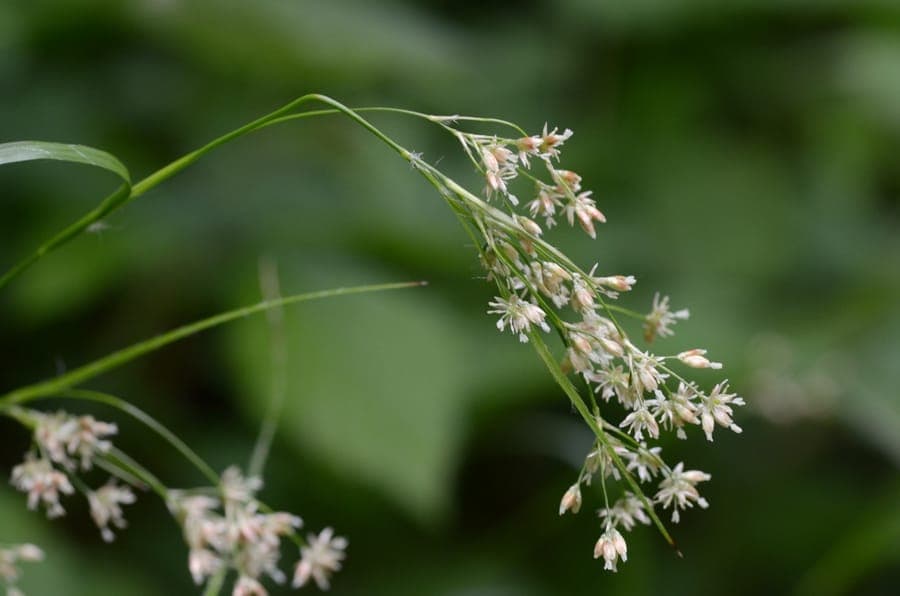
Radio Tonreg from Vienna, Austria / CC BY 2.0, via Wikimedia Commons
Forest wood-rush: complete guide
Luzula luzuloides
¿Quieres ver Forest wood-rush: complete guide en tu jardín?
1 minuto, sin tarjeta de crédito
Overview
Forest wood-rush (Luzula luzuloides) is an elegant, woodland-loving plant native to Europe. This grass-like plant belongs to the Juncaceae family and distinguishes itself through preference for shade and moist woodland conditions. For gardeners seeking inspiration on gardenworld.app for difficult shaded spots beneath trees, Luzula luzuloides is a true treasure.
Forest wood-rush produces attractive white flowers in spring, distinguishing it from many other grass-like plants. The plant grows best in part shade to full shade, making it ideal for gardens with numerous trees. Once established, forest wood-rush spreads gradually and creates full groundcover that suppresses weeds.
In its natural woodland habitat, Luzula luzuloides grows between shrubs and beneath deciduous trees, usually on somewhat moister soils. The plant plays an important ecological role, providing food for animals and nesting sites for insects.
Appearance & bloom cycle
Forest wood-rush forms compact rosettes of broad, linear leaves. The blades measure approximately 5-8 millimeters wide, considerably broader than other Luzula species, giving greater spatial presence. The foliage is glossy dark green colored with hairs along the margins, consistent with other genus members.
The blooming period extends from May through June. Most striking is that Luzula luzuloides produces white or cream-white flowers rather than red/brown colors of related species. Flowers appear in lax inflorescences on distinctly slender stalks. The complete floral structure reaches heights of 30-60 centimeters. This white character provides refreshing brightness to dark woodland margins.
Following bloom, triangular seeds form and ripen in July. The plant itself remains green through winter, providing continuous structure to woodland gardens. In spring, new tender foliage emerges.
Ideal location
Forest wood-rush grows optimally in part shade to full shade. This distinctly separates it from many garden plants requiring full sun. The plant thrives with merely 2-3 hours indirect daylight. The ideal spot is beneath deciduous trees or north-facing building sides where summer sun is avoided.
Water-shade beneath large oaks or beeches is ideal. The plant also handles drying shade from evergreen trees well, though it prefers light moisture. Moving air without harsh wind is good.
Wind shelter is useful because the plant has delicate stalks. A position on the wind-sheltered side of shrubs or walls is ideal.
Soil requirements
Forest wood-rush grows best on rich, moisture-loving humus-filled soils. The pH should be between 5.5 and 7.0; slightly acidic is preferred. The plant tolerates heavy clay soils well, provided structure exists.
Organic matter in the soil is essential for successful growth. Abundant decomposed leaves, leafmold, and compost create perfect growing conditions. The plant grows in woodland habitats where annual leaf fall adds substantial humus.
Fertilization is generally unnecessary. Annual application of leafmold in autumn mimics natural woodland conditions and improves moisture retention. pH below 5.0 can cause problems, though the plant shows acidic preference.
Diseño gratis
¿Quieres ver Forest wood-rush: complete guide en tu jardín? Crea un diseño gratis ahora.
Watering
Once established, forest wood-rush requires regular moisture. The plant grows in woodland habitats where soils never completely dry. During dry periods, especially in summer, young material deserves supplemental watering.
The plant tolerates even some waterlogging better than many garden plants. When planting in very dry soils, incorporating substantial compost deserves extra attention to improve moisture retention.
Young plantlets in their first growing seasons deserve regular moisture attention. Once deeply rooted, the plant can tolerate much drier conditions, though ideally moist conditions are maintained.
Pruning
Forest wood-rush requires minimal pruning. In early spring, withered stalks from the previous season can be removed. This is better accomplished by gently pulling than cutting.
The plant naturally maintains good form and dense growth. Dead foliage can be carefully pulled from the rosette. Generally, a hands-off approach is better than regular pruning.
Avoid any heavy pruning. Only in exceptional circumstances where dead material visibly accumulates heavily should careful cleanup occur.
Maintenance calendar
Spring (March-May): Monitor moisture balance as growth accelerates. Carefully remove very dead foliage. Check new growth for color/vitality. Plant new specimens in April-May.
Summer (June-August): Water during dry periods, especially for young plantlets. Observe blooming and seed formation. Underwood mulching with leafmold helps moisture retention.
Autumn (September-October): Add leafmold mulch. Rainfall will increase; monitor for waterlogging in very wet spots. Prepare plantlets for winter.
Winter (November-February): Plant rests; minimal maintenance needed. Monitor for waterlogging problems. Plant survives under snow/leaf cover.
Winter hardiness
Forest wood-rush is fully winter-hardy in temperate and cool zones (USDA zones 4-8). The plant tolerates temperatures to -20 degrees Celsius without problem. This evergreen character ensures the plant remains visually present even in hard winters.
In very cold continental zones (USDA zone 3 and colder), the plant may experience edge damage in extreme winters, though not death. Snowcover provides protection against extreme frost fluctuations.
In warm zones (USDA zone 9+), forest wood-rush may grow weakly in very hot summers, especially on dry soils. Shade and moisture in these zones are essential.
Companion plants
Forest wood-rush combines beautifully with other woodland plants. Small ferns such as Dryopteris erythrosora grow excellently alongside it. Astilboides tabularis and other large textural foliage plants complement it well.
Forest denizens such as hellebore (Helleborus niger) and waldsteinia (Waldsteinia ternata) grow well between forest wood-rush. Sarcococca (Sarcococca ruscifolia) blooms in winter behind wood-rush foliage.
Bleeding-heart (Dicentra spectabilis) and trillium species harmonize well with the soft white flowers of forest wood-rush. In mixed compositions, they create wooded, natural effects.
Closing remarks
Forest wood-rush is a versatile, undervalued plant for shaded gardens. With its elegant growth habit, delicate white flowers, and true woodland character, Luzula luzuloides deserves far greater attention. For gardeners visiting gardenworld.app seeking solutions for difficult shade tasks, forest wood-rush is a true winner. The plant gradually spreads for full coverage, suppresses weeds, and creates natural woodland atmosphere. Once established, it demands minimal maintenance while providing annual beauty.
¿Quieres ver Forest wood-rush: complete guide en tu jardín? Crea un diseño gratis ahora.
Sube una foto, elige un estilo y obtén un diseño fotorrealista con lista de plantas en menos de un minuto.
Más de 10.000 jardines diseñados
Sin tarjeta de crédito


Plantas similares
Short-fruited Rush (Juncus brachycarpus): complete guide
Juncus brachycarpus
Complete guide to Juncus brachycarpus: wet soil, pond margins, bloom season, division and winter care for this North American rush in garden ponds.
Smallhead rush: complete guide
Juncus brachycephalus
Smallhead rush (Juncus brachycephalus) - a slender North American wetland plant for pond margins and boggy garden zones. Full care guide.
Mertens' rush: complete guide
Juncus mertensianus
Mertens' rush (Juncus mertensianus) - a compact alpine wetland plant with purple-brown flower heads for cool pond margins. Full growing guide.