
Christian Fischer / CC BY-SA 3.0, via Wikimedia Commons
Floating water-plantain: complete guide
Luronium natans
¿Quieres ver Floating water-plantain: complete guide en tu jardín?
1 minuto, sin tarjeta de crédito
Overview
Floating water-plantain (Luronium natans) is a remarkable aquatic plant native to Western Europe extending eastward to Moldova. This plant is exceptionally rare in cultivation and primarily sought by dedicated water gardening enthusiasts. Luronium natans belongs to the Alismataceae family, the same family as common water-plantain (Alisma plantago-aquatica), but differs significantly in growth habit and ecological preference. The defining characteristic is its ability to produce both submerged foliage and floating leaves depending on water depth and environmental conditions.
This aquatic species holds tremendous ecological value in natural pond and wetland systems. Gardeners exploring gardenworld.app discover inspiration for creating ecologically responsible water gardens where species like Luronium natans can thrive. The plant plays a crucial role in water filtration and provides nutrition for aquatic wildlife. Although cultivating this plant requires commitment and patience, the rewards are substantial with a spectacular addition to any water garden.
In European wetland regions, Luronium natans naturally colonizes shallow areas where water moves gently. Historically, the species preferred inundation floodplains where water level fluctuations were beneficial. Today, the species has become increasingly rare in many countries due to reed cutting and wetland drainage.
Appearance & bloom cycle
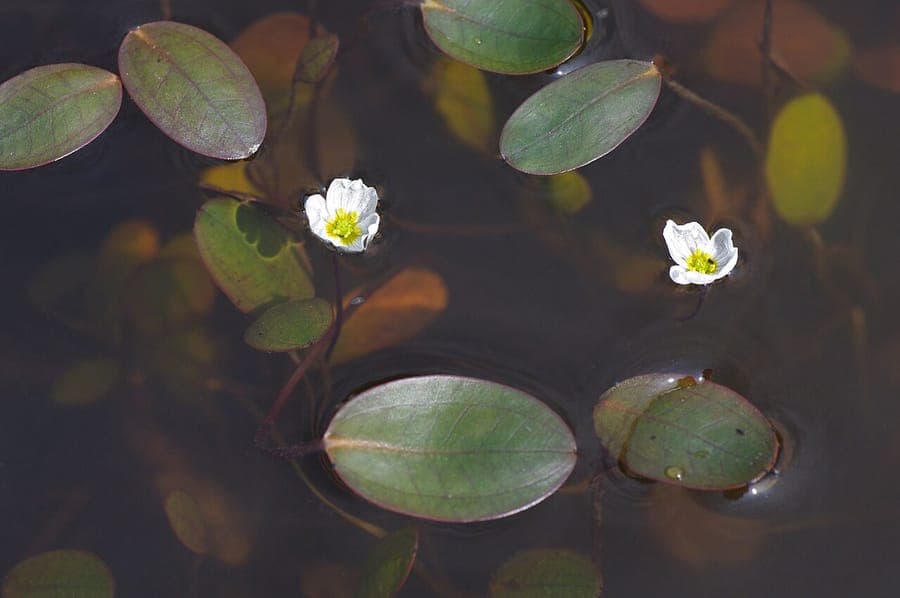
Floating water-plantain presents a fascinating combination of submerged and floating foliage. Submerged leaves are elongated, narrow, and grass-like, measuring 5 to 20 centimeters in length. These leaves emerge directly from a compact rosette and help orient the plant beneath the water surface. Floating leaves, conversely, are considerably broader with elliptical shape, approximately 2 to 5 centimeters long and deep green in color. These leaves give the plant its distinctive name - they float on the water surface like little rafts.
The blooming period extends from May through September, with peak flowering in June and July. Flowers are diminutive, white to pale pink, appearing on delicate stems above the water surface. Each flower possesses three petals and emerges in clusters, creating a delicate appearance. Individual flowers measure approximately 8 to 12 millimeters across. Following pollination, tiny seeds form in small seed capsules. These seeds are crucial for wild reproduction, though seed production in cultivation is sometimes limited.
The plant reaches total heights of approximately 10 to 30 centimeters above the water surface, varying with water depth. In very shallow water (5-10 centimeters), Luronium natans remains compact, while in deeper water it produces longer stems. Growth rate is moderate; several seasons elapse before a young plant establishes a mature colony.
During autumn, foliage gradually brownes as the plant prepares for winter dormancy. The plant overwinters as a compact rosette positioned near the bottom, where bottom substrates provide insulation against extreme freezing. This unique overwintering strategy makes Luronium natans particularly interesting for gardeners wishing to observe seasonal transformations.
Ideal location
Floating water-plantain thrives in shallow water, ideally between 10 and 40 centimeters deep. Locations where the plant can produce both floating and submerged leaves yield optimal results. The ideal pond position is where gentle water movement occurs, yet turbulent waves are absent. A sheltered corner behind a grouping of reeds works excellently.
Sunlight is essential for robust growth and abundant flowering. Luronium natans requires minimum 6 hours of direct sunlight daily. Ideally, the plant receives morning and midday sun, while afternoon shade is acceptable. In full shade, the plant weakens considerably and flowers sparsely.
Water current must be gentle rather than vigorous. Excessive flow can dislodge young plantlets and disperse them. A natural water regime mimicking seasonal fluctuations substantially enhances Luronium natans vitality.
Soil requirements
Floating water-plantain performs optimally in nutrient-rich substrates containing ample organic matter. A mixture of heavy clay soil combined with one-third decomposed plant material or leafmold provides ideal growing conditions. Soil pH should range between 6.0 and 7.5; neutral to slightly acidic is preferred. In ponds with very hard water, pH may reach 7.5-8.0, which remains acceptable.
The substrate must contain sufficient nitrogen and phosphate for healthy growth. When establishing the pond, apply a layer of mature compost (3-5 centimeters thick) at the bottom, upon which the plant is later positioned. This creates a nutrient reservoir from which Luronium natans gradually draws nourishment.
Prevention of heavy silt accumulation is important. Excessive suspended particles smother the grass-like submerged leaves. A well-functioning ecosystem with natural filters (such as aquatic fauna) maintains water clarity.
Diseño gratis
¿Quieres ver Floating water-plantain: complete guide en tu jardín? Crea un diseño gratis ahora.
Watering
As an aquatic plant, Luronium natans requires no separate irrigation system, as the plant remains constantly submerged. What is essential, however, is maintaining stable water levels. Fluctuations exceeding 10 centimeters per week stress the plant. Regular water addition (such as during dry periods) compensates for evaporation and sustains optimal levels.
In non-flowing ponds, water renewal is important. Replacing one-third of the water monthly removes accumulated waste products and replenishes nutrients. This is performed carefully with a garden hose, directed at the surface to prevent sediment disturbance.
When Luronium natans is cultivated in containers or basins, daily surface inspection is advisable. High temperatures accelerate evaporation. Water in containers must remain clean; rippled water surfaces or thick algal films inhibit gas exchange in submerged leaves.
Pruning
Floating water-plantain requires minimal pruning. The only necessary action is removing dead leaves and flowers as soon as visible damage or browning appears. This is accomplished carefully with fine tweezers or sharp scissors to avoid removing entire plant sections.
In autumn, when the plant begins senescence, it is preferable to leave the plant undisturbed. Allow dead foliage to remain as long as complete decomposition hasn't occurred. This permits the plant to translocate energy back to root systems.
When multiple Luronium natans plantlets crowd together, older rosettes can be carefully removed to reduce competition. This procedure occurs in spring, just as new growth initiates.
Maintenance calendar
Spring (March-May): Inspect the plant for signs of new growth. Carefully remove dead leaves from the previous season. Install young plantlets if available. Ensure stable water levels and pure water.
Summer (June-August): Monitor flowering and seed development. Remove dead flowers regularly. Add water if levels decline. Prevent stagnation by monitoring water quality closely.
Autumn (September-October): Observe the plant as it gradually senesces. Protect against strong autumn storms that cloud water. Do not remove foliage; allow natural withering.
Winter (November-February): Regularly verify that water does not freeze solid. Break holes in thick ice to ensure oxygen circulation. The plant rests in dormancy beneath the water surface.
Winter hardiness
Floating water-plantain is fully winter-hardy in temperate climate zones (USDA zones 6-9). The plant withstands temperatures to -15 degrees Celsius. In Europe, where it naturally occurs in regions with cold winters, frost is anticipated.
The critical overwintering factor is water quality and oxygen availability. In completely frozen ponds, oxygen depletion occurs, damaging the plant. Therefore, maintain at least one small opening in ice for gas exchange. This is achieved by vertically positioning a reed stem in water before freezing.
In regions where water freezes solid for months, Luronium natans is better relocated to shallow containers in unfrozen water (such as in an unheated frame). Maintain water temperature around 5 degrees Celsius so the plant remains dormant.
Companion plants
Floating water-plantain combines excellently with other delicate aquatic plants sharing similar conditions. Dwarf water lilies (Nymphaea pygmaea varieties) work superbly in the same pond, providing size contrast. The shallow-water cultivar 'Nymphaea odorata' grows alongside Luronium natans without excessive competition.
A water garden containing Luronium natans is incomplete without marginal plants at the waterline. Meadowsweet (Filipendula ulmaria), water mint (Mentha aquatica), and arrowhead (Sagittaria sagittifolia) enliven the shallow margins. These plants filter water and provide structural interest.
Certain aquatic fauna benefit from Luronium natans presence. Dragonflies and damselflies deposit eggs on foliage. Small fish seek shelter beneath floating leaves. This contributes to a healthy aquatic ecosystem.
Closing remarks
Cultivating floating water-plantain is a rewarding undertaking for the patient water gardening enthusiast. This rare aquatic species brings elegance and biological value to any pond. With proper site selection, water quality management, and seasonal attention, Luronium natans provides years of beauty and ecological benefit. Visitors to gardenworld.app discover ideal inspiration for designing their own water gardens featuring this unique plant. The combination of submerged foliage and floating flowers makes this species a true showstopper in any front garden water feature.
¿Quieres ver Floating water-plantain: complete guide en tu jardín? Crea un diseño gratis ahora.
Sube una foto, elige un estilo y obtén un diseño fotorrealista con lista de plantas en menos de un minuto.
Más de 10.000 jardines diseñados
Sin tarjeta de crédito


Plantas similares
California damsonium: complete guide
Damasonium californicum
Full guide to Damasonium californicum (California damsonium): shallow water, bog soil, care and companion plants for this rare western aquatic.
Yellow water lily: complete guide
Limnocharis flava
Discover the yellow water lily. Everything you need to know about cultivation, care and water placement.
Sagittaria subulata: complete guide
Sagittaria subulata
Discover narrow-leaf arrowhead (Sagittaria subulata), an aquatic plant for ponds and water gardens. Complete cultivation and care guide.