
Wikimedia Commons / CC BY-SA 3.0, via Wikimedia Commons
Lunaria annua: complete guide to annual honesty
Lunaria annua
¿Quieres ver Lunaria annua: complete guide to annual honesty en tu jardín?
1 minuto, sin tarjeta de crédito
Overview of Lunaria Annua
Lunaria annua, commonly known as annual honesty or money plant, is a fascinating biennial plant material distinguished by two distinct phases of appeal: first the purple or white flowers in May-June, then the spectacular silvery seed discs persisting into winter. This plant belongs to the Brassicaceae family (cabbage family) and originates from Southern and Central Europe. Lunaria annua has since become established in many parts of Europe and North America, grows easily, and requires minimal maintenance. For garden designers, this plant proves valuable due to its extended ornamental interest (8+ months): first flowers, then silvery seed discs that enhance dried arrangements.
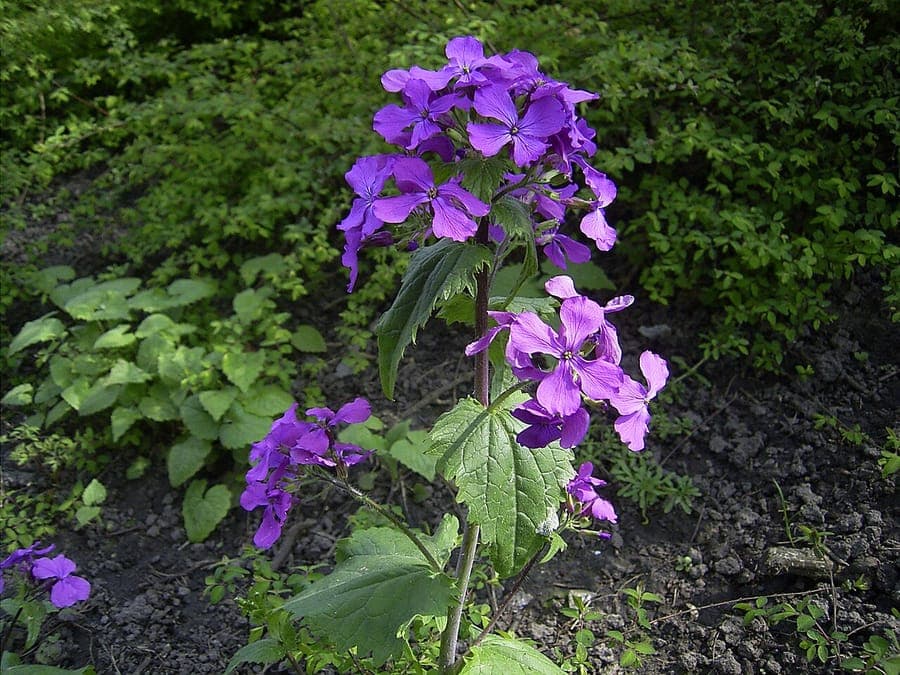
The plant typically reaches 60 to 100 centimeters in height and grows in an upright, branched habit. The stems are somewhat smooth, green to red-purple. The leaves are heart-shaped, roughly hairy, approximately 5 to 10 centimeters long and broad, with serrated margins. The leaves are alternately arranged and give the plant a full, lush appearance during the first growing season.
Appearance and Flowering
The flowers of Lunaria annua form the plant's first major attraction. They measure approximately 8-15 millimeters in diameter, usually purple to lilac, though white and pink cultivars ('Alba') are also available. The flowers are collected in long, dense spikes that are strongly fragrant. The flowering period runs from May through June (sometimes July in cooler regions), lasting approximately 4-6 weeks. The flowers attract many pollinators, especially bees and butterflies.
After flowering, the truly spectacular seed discs appear. These are flat, approximately 3-4 centimeters wide, divided into two chambers by a central septum. As the external green layer falls away (usually in September-October), a transparent, silvery-white disc becomes visible with beautiful vein structure. These seed discs remain on the plant until October-November and can be trimmed and dried for decorative arrangements.
Ideal Location and Light Requirements
Lunaria annua grows best in full sun to partial shade (minimum 4-5 hours sun daily). The plant flowers better in full sun, but also grows well in light shade, especially in hotter regions where shade in July-August can be valuable against desiccation. In full shade, the plant will still grow but be thinner and produce fewer flowers.
Wind resistance: The plant is fairly wind-resistant due to its sturdy, somewhat woody stems. However, extremely strong wind can damage flowers and seed discs.
Soil Requirements and Ground Preparation
Lunaria annua is not particularly fussy about soil type and grows well in most soils provided they drain well. The plant tolerates clayey, sandy, and loamy soils equally. For optimal growth, add well-rotted compost or leaf mold to the top 15 centimeters of soil. A pH between 6.5 and 7.5 is ideal, but the plant also grows in slightly acidic soils (to pH 6.0).
The plant is not demanding regarding nutrition and requires little fertilization. Excessive nitrogen can actually lead to excessive leaf growth and fewer flowers.
Diseño gratis
¿Quieres ver Lunaria annua: complete guide to annual honesty en tu jardín? Crea un diseño gratis ahora.
Sowing and Propagation
Lunaria annua is easily propagated from seed. For flowering in the second year, sow seed in June-July of the previous year in an open garden spot. The seed germinates and grows in autumn into a rosette pattern. Over winter, the plant remains dormant, and the following spring (March-April) the growing season begins with stem elongation. This is the standard biennial cycle.
Alternatively: sow seed in spring (March-May) for flowering the same year, though plants will be smaller. For indoor sowing, sow seed in January-February in trays with seed compost, then plant out later in May.
Watering and Moisture Management
Lunaria annua is fairly drought-tolerant once established, though regular moisture promotes growth and flowering. Water regularly (especially in dry summers) until the top 3 centimeters of soil feel dry. Once the plant has grown from seed and rosette formation is present, watering can be reduced in winter.
In the second growing season, water regularly for optimal flowering, especially from March through June.
Pruning and Maintenance
Pruning is rarely needed for Lunaria annua. However, if you prefer more compact plants, pinch out stem tops in March (before elongation). This leads to more side-branching.
Particularly important: when you wish to use the silvery seed discs for dried arrangements, cut them in September-October. Hang them upside-down in a dry place (for example in a closet or dry storage room) and let them dry for 2-4 weeks. Thereafter, the black seeds can be carefully removed from inside, leaving only the silvery disc.
Maintenance Calendar
June-July (previous year): Sow seed for next year's flowering. August-October (previous year): Rosette growth, minimal maintenance. November-February: Dormancy, no maintenance. March-April: Stem elongation and growth beginning. May-June: Flowering, weekly checks, occasional watering. July-August: Seed development, continued watering. September-October: Harvest and dry seed discs.
Winter Hardiness and Frost Protection
Lunaria annua is fully hardy in Northern and Central Europe. Plants that grow from seed in autumn can tolerate temperatures to -15°C. No special protection is needed. Rosette plants can overwinter outdoors; snow actually provides extra insulation.
Companion Plants and Combinations
Lunaria annua combines beautifully with:
Helleborus (Lenten rose) - for flowering when Lunaria is still in rosette phase. Digitalis (foxglove) - similar growth, complementary flowering time. Myosotis (forget-me-not) - purple against white-pink Lunaria flowers. Osmunda (fern) - for textural layer and background. Iberis (candytuft) - yellow flowers contrast with purple Lunaria.
In contemporary garden designs, use Lunaria annua for a Shakespearean, cottage-like atmosphere. The silvery seed discs are also valuable in dried arrangements, wedding flowers, and autumn decorations. On gardenworld.app, assemble complete seasonal designs with Lunaria as a core component.
Conclusion
Lunaria annua is a versatile, low-maintenance plant offering two different seasons of visual interest. Whether admiring the purple flowers in May-June or using the silvery seed discs in autumn for arrangements and decoration, this plant certainly deserves a place in your garden. For more inspiration and garden designs featuring Lunaria annua, visit gardenworld.app and discover how this classic plant can extend your garden's seasonal interest.
¿Quieres ver Lunaria annua: complete guide to annual honesty en tu jardín? Crea un diseño gratis ahora.
Sube una foto, elige un estilo y obtén un diseño fotorrealista con lista de plantas en menos de un minuto.
Más de 10.000 jardines diseñados
Sin tarjeta de crédito


Plantas similares
Brassica cretica: complete guide
Brassica cretica
Brassica cretica, the Cretan cabbage, grows wild on Aegean cliffs. Discover how to grow this drought-tolerant, yellow-flowered Mediterranean perennial.
Corsican cabbage: complete guide
Brassica insularis
Corsican cabbage is a rare Mediterranean rock cabbage with white flowers and blue-green leaves. Location, soil and winter protection.
Prostrate cabbage: complete guide
Brassica procumbens
Prostrate cabbage is a creeping North African cliff plant with yellow flowers. Discover location, soil type and winter protection.