user:Alfonso" / CC BY-SA 3.0, via Wikimedia Commons
Luma apiculata: complete guide
Luma apiculata
¿Quieres ver Luma apiculata: complete guide en tu jardín?
Diseño completo en HD: 7,99 €
Cuida tu Luma apiculata con la app GardenWorld
Reconoce plantas con la cámara y recibe un calendario de cuidados con recordatorios para esta planta.


Overview
Luma apiculata, known as Chilean myrtle or arrayaan, is a beautiful native shrub from southern Chile and Argentina. This elegant plant naturally inhabits the cool forests of Patagonia and offers sophistication and structure to sheltered gardens. With its refined leaves, charming white flowers, and especially its striking ornamental bark, Luma apiculata creates a focal point in any garden design.
The plant is particularly valued in Europe as a decorative shrub or small tree for sheltered locations in temperate climates.
Appearance and Bloom
Luma apiculata grows as a densely branched shrub to small tree with extremely fine, small ovate leaves. The foliage is dark green and glossy, providing year-round visual appeal.
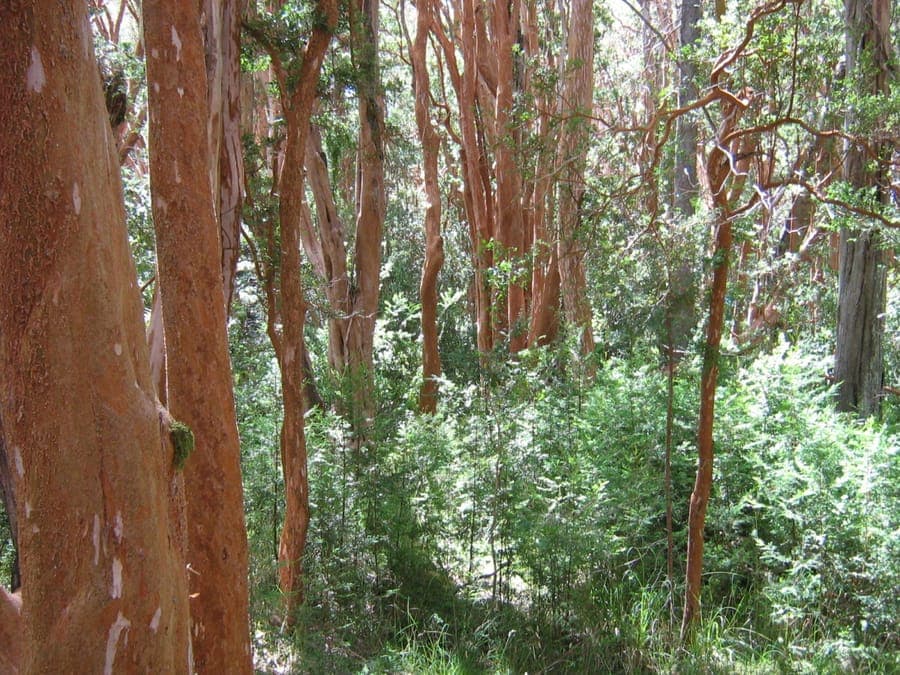
The bark is the most distinctive feature. As the plant matures, the bark continuously exfoliates in small patches, creating beautiful patterns of red-brown, cream, and brown tones. This natural exfoliation functions as living artwork.
Flowers appear in late summer through autumn, small and white to cream-colored, approximately 1 centimeter in diameter, growing in clusters. Following bloom, purple berries develop.
Ideal Location
Luma apiculata grows best in sunny locations receiving at least four hours of direct sunlight daily. The plant tolerates partial shade but will produce fewer flowers. Protection from harsh winds is important, especially in northern regions.
The plant excels in sheltered gardens, against walls or in containers. In harsher climates, establish it in a greenhouse or conservatory. It thrives against south-facing walls where it receives extra warmth.
Soil
Luma apiculata requires well-draining soil. The plant flourishes in acidic to neutral earth (pH 5.5 to 7.0). Garden soil amended with sand and peat produces excellent results.
Waterstagnation must be absolutely avoided - this plant tolerates waterlogging poorly. Always add substantial quantities of sand to ensure proper drainage.
Annual application of organic fertilizer promotes healthy growth.
Vista previa gratis
¿Quieres ver Luma apiculata: complete guide en tu jardín? Crea una vista previa gratis de tu diseño.
Watering
Watering must be done carefully. During the growth period (April through October), water regularly but allow the soil surface to dry between waterings. Excessive water proves harmful.
In winter the plant requires less water. Check regularly that soil doesn't dry completely, especially during warm periods.
The plant appreciates higher humidity, so misting during dry summers helps.
Pruning
Pruning can be performed in spring to maintain shape or keep the shrub more compact. Remove dead or damaged branches at any time.
The plant grows slowly enough that extensive pruning is rarely necessary. Basic formative pruning alone suffices for natural form.
Maintenance Calendar
April-May: Preparation; inspect for damage June-October: Regular watering; observe flowering November-December: Reduce water; prepare for winter January-March: Minimal care; possible pruning in March
Winter Hardiness
Luma apiculata is susceptible to frost damage in cold winters. The plant is hardy to approximately -5 to -10 degrees Celsius, depending on plant origin. In the Netherlands, frost damage can occur in extremely cold winters.
In northern regions, it is recommended to overwinter the plant in a protected location or shelter. Winter fleece protection helps in marginal regions.
Companion Plants
Luma apiculata combines beautifully with:
- Eucalyptus
- Kalmia
- Other Mediterranean species
- Fatshedera
- Japanese ivy
Closing
Luma apiculata is a refined choice for gardeners seeking a distinctive shrub with character and year-round beauty. Its ornamental bark, delicate leaves, and charming flowers make it a valuable element in sheltered gardens. With proper location and careful watering, you'll enjoy this Chilean beauty for many seasons.
Find Luma apiculata at specialized garden centers. Consult gardenworld.app for more growing information and companion planting ideas.
Searching for more South American plants? Explore our complete plant guide on gardenworld.app for unique species in your garden.
Frequently asked questions about Luma apiculata
Is Luma apiculata winter hardy?
Luma apiculata is susceptible to frost damage in cold winters. The plant is hardy to approximately -5 to -10 degrees Celsius, depending on plant origin.
When and how do you prune Luma apiculata?
Pruning can be performed in spring to maintain shape or keep the shrub more compact. Remove dead or damaged branches at any time.
How much water does Luma apiculata need?
Watering must be done carefully. During the growth period (April through October), water regularly but allow the soil surface to dry between waterings.
Where does Luma apiculata grow best?
Luma apiculata grows best in sunny locations receiving at least four hours of direct sunlight daily. The plant tolerates partial shade but will produce fewer flowers.
What soil does Luma apiculata need?
Luma apiculata requires well-draining soil. The plant flourishes in acidic to neutral earth (pH 5.5 to 7.0).

Míralo en tu jardín
Mira Luma apiculata en tu jardín
Una foto de tu jardín y unas preguntas. En un minuto aproximadamente ves el resultado.
Pruébalo con una fotoReconoce esta planta en tu propio jardín. Reconocer una planta
Plantas similares
Feijoa (Acca sellowiana): cultivo del guayabo del Brasil
Acca sellowiana
La feijoa o guayabo del Brasil (Acca sellowiana) es un arbusto perenne de flores con estambres rojos y frutos aromáticos. Ubicación, frío, polinización y cosecha.
Limpiatubos (Callistemon citrinus): cultivo en maceta y en el jardín
Callistemon citrinus
Cómo cultivar el limpiatubos (Callistemon citrinus, hoy Melaleuca citrina): ubicación, sustrato, riego, poda e invernada de este robusto arbusto australiano.
Calistemo llorón (Callistemon viminalis): cuidados y 'Little John'
Callistemon viminalis
Calistemo llorón (Callistemon viminalis, hoy Melaleuca viminalis): cultivo en tierra y maceta, la variedad enana 'Little John', poda y protección del frío.
