
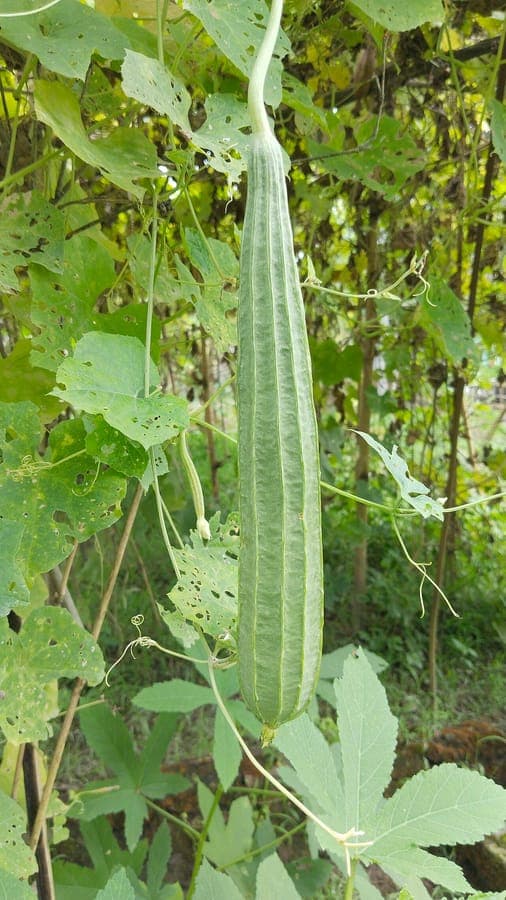
Nayan j Nath / CC BY-SA 4.0, via Wikimedia Commons
Chinese-okra: complete guide
Luffa acutangula
¿Quieres ver Chinese-okra: complete guide en tu jardín?
1 minuto, sin tarjeta de crédito
Overview
Chinese okra (Luffa acutangula), also known as Ridged Gourd or Angled Loofah, is a fast-growing annual climbing plant native to South Asia. Reaching lengths of 1-2 meters, this plant is prized for its edible young fruits but equally valued for dried mature fruits that serve as natural sponges. The plant produces beautiful yellow flowers, providing dual benefits as both vegetable and utility crop.
Appearance and Bloom
The plant develops large, heart-shaped leaves on slender climbing tendrils. Bright yellow flowers measure approximately 4-5 centimeters in diameter, appearing continuously throughout the growing season. Fruits are elongated, reaching 20-30 centimeters, featuring distinct vertical ridges distinguishing this species. Young fruits are tender and edible; mature fruits become woody, with the interior forming the fibrous sponge material.
Ideal Location
Chinese okra demands abundant sunlight: minimum six to eight hours direct daily exposure. Plant where it can climb against a trellis, fence, or supporting structure. Protect from strong winds, as climbing vines are fragile. The plant suits warm temperate to tropical gardens and can cultivate in elevated subtropical regions.
Soil
Chinese okra prefers rich, well-drained soil. Incorporate substantial compost or aged manure before planting. A pH of 6.0-7.0 is ideal. The plant tolerates diverse soil types but grows optimally in fertile soil. Maintain consistent soil moisture without waterlogging.
Diseño gratis
¿Quieres ver Chinese-okra: complete guide en tu jardín? Crea un diseño gratis ahora.
Watering
Regular, deep watering is essential for optimal growth and fruiting. Water thoroughly and frequently, especially during dry periods. The plant absorbs substantial water during the growing season. Mulching around the base conserves moisture and moderates soil temperature. Avoid wetting foliage to prevent fungal diseases.
Pruning
Limited pruning is necessary. Pinch the main growing tip when the plant reaches approximately 30-45 centimeters to stimulate branching. Subsequently maintain three to four strong primary stems by removing all side branches. Later in the season, remove dead leaves and diseased fruits to improve air circulation.
Maintenance Calendar
Spring: Start seeds indoors 4-6 weeks before last frost. Transplant outdoors when sufficiently warm. Summer: Monitor water needs. Feed midseason. Autumn: Begin harvesting young fruits. Allow some fruits to fully mature for sponge. Winter: Collect dried sponges and seeds for next season.
Winter Hardiness
Chinese okra is frost-sensitive, grown as annual in most European gardens. The plant dies at temperatures below 10 degrees Celsius. Transplant outdoors only after all frost danger passes and soil is well warmed (minimum 15-18 degrees Celsius).
Companion Plants
Chinese okra cultivates successfully with heat-loving vegetables. Plant near heat-tolerant herbs such as Thai basil. Flowers attract pollinators. Young fruits harvest for consumption; mature fruits serve as sponge material.
Closing Thoughts
Chinese okra is a unique garden plant providing both food and practical sponges. With proper location and watering, expect abundant harvests. Allow some fruits to fully mature on the plant for sponge material used traditionally throughout Asia and increasingly in Europe.
¿Quieres ver Chinese-okra: complete guide en tu jardín? Crea un diseño gratis ahora.
Sube una foto, elige un estilo y obtén un diseño fotorrealista con lista de plantas en menos de un minuto.
Más de 10.000 jardines diseñados
Sin tarjeta de crédito


Plantas similares
Kiwano: complete guide
Cucumis metuliferus
Everything about growing kiwano: location, soil, watering, and harvesting this striking African horned cucumber with spiny orange fruits.
Sponge gourd: complete guide
Luffa aegyptiaca
Full guide to growing sponge gourd (Luffa aegyptiaca): sowing, care, harvesting edible fruits and drying natural loofah sponges in your garden.
Cucumis prophetarum: complete guide
Cucumis prophetarum
Wild cucumber is a fascinating climbing plant with remarkable spiky fruits. Learn how to grow this exotic annual from seed to harvest for decorative interest.