
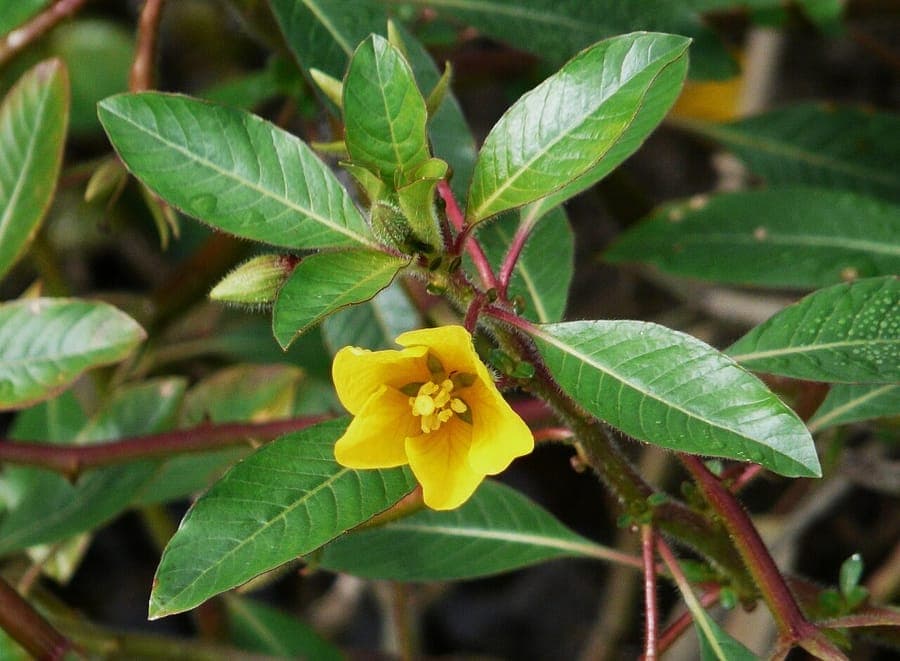
Père Igor / CC BY-SA 3.0, via Wikimedia Commons
Ludwigia peploides: complete guide
Ludwigia peploides
¿Quieres ver Ludwigia peploides: complete guide en tu jardín?
1 minuto, sin tarjeta de crédito
Overview
Ludwigia peploides, commonly called water primrose or jussie, is an amphibious plant from the Onagraceae family. This flexible plant can grow both in water and on land, making it a unique choice for water gardens, aquariums, and aquatic landscapes. The plant is native to the Americas and Asia and is now cultivated worldwide for its ornamental value.
The water primrose is celebrated for its elegant, often reddish-tinted stems and delicate yellow flowers that brighten waterscapes.
Appearance and blooming
Ludwigia peploides displays attractive features with elliptical to lance-shaped leaves that are green but often develop red or purple hues, especially under optimal light. The stems are slender and somewhat creeping to floating, making it suitable for various water depths.
The flowers are small, yellow, four-petaled beauties appearing along the stems. Though delicate individually, they appear in such profusion that they create a golden haze across the water.
The plant can grow both submerged and above water, making it highly versatile.
Ideal location
Ludwigia peploides thrives best under bright, clear water conditions with excellent lighting. The plant prefers 8+ hours of light daily for optimal growth and leaf coloration.
In aquariums, position it in the background as vegetation cover. In water gardens, it thrives best in shallow sections where stems can float or rest on bottom substrate.
Soil
This plant grows both in water and in moist soil. In aquariums, it can root in gravel or sand, or simply float freely. In water gardens, it can grow in moist garden soil or aquatic substrate.
The plant is flexible and adaptable to various growing mediums.
Diseño gratis
¿Quieres ver Ludwigia peploides: complete guide en tu jardín? Crea un diseño gratis ahora.
Watering
Water is naturally essential for this aquatic species. The plant thrives in freshwater aquariums or ponds. Water temperature should remain between 15 and 25 degrees Celsius for optimal growth.
The plant accepts various water hardness values and pH ranges, making it robust and suitable for most water environments.
Pruning
Regular trimming maintains compact form and encourages side stems. Pinch tips or cut longer stems to promote branching.
Remove yellowed or damaged leaves regularly to maintain water clarity.
Maintenance calendar
Spring: Begin pruning. Increase light exposure. Summer: Trim regularly. Enjoy full growth and flowering. Fall: Careful pruning. Prepare for dormancy. Winter: Reduce light. Minimal growth. Save plant material for spring.
Winter hardiness
Ludwigia peploides is not winter hardy and requires protection in temperate climates. In heated aquariums, it can grow year-round. In outdoor water gardens, it must be protected or brought indoors when temperatures drop below 10 degrees Celsius.
The plant grows best in tropical and subtropical water environments.
Companion plants
Ludwigia peploides grows well with other aquatic plants:
Hygrophila polysperma - Stem plants for contrast Echinodorus bleheri - Leaf plants for bottom growth Cabomba species - Fine textures Cryptocoryne - Shade-tolerant zones
Combinations create interesting, diverse water gardens.
Closing thoughts
Ludwigia peploides is a beautiful, versatile plant for aquariums, water gardens, and aquatic landscaping. The elegant stems, yellow flowers, and colorful foliage make it a treasured addition. With good lighting and water care, this plant will remain vibrant and beautiful.
Available at aquarium specialists. Visit gardenworld.app/en for water garden ideas!
¿Quieres ver Ludwigia peploides: complete guide en tu jardín? Crea un diseño gratis ahora.
Sube una foto, elige un estilo y obtén un diseño fotorrealista con lista de plantas en menos de un minuto.
Más de 10.000 jardines diseñados
Sin tarjeta de crédito


Plantas similares
Shortfruit evening primrose: complete guide
Oenothera brachycarpa
Everything about Oenothera brachycarpa - the shortfruit evening primrose from the American Southwest. Growing tips, placement and care for your garden.
Sundrops (Oenothera tetragona): complete guide
Oenothera tetragona
Everything about Oenothera tetragona - the cheerful daytime-blooming sundrops perennial. Growing tips, placement, pruning and care for a long summer display.
Seabeach evening primrose: complete guide
Oenothera humifusa
Full guide to Oenothera humifusa, the seabeach evening primrose native to the US Atlantic coast. Yellow blooms, silvery foliage, drought-tolerant.