
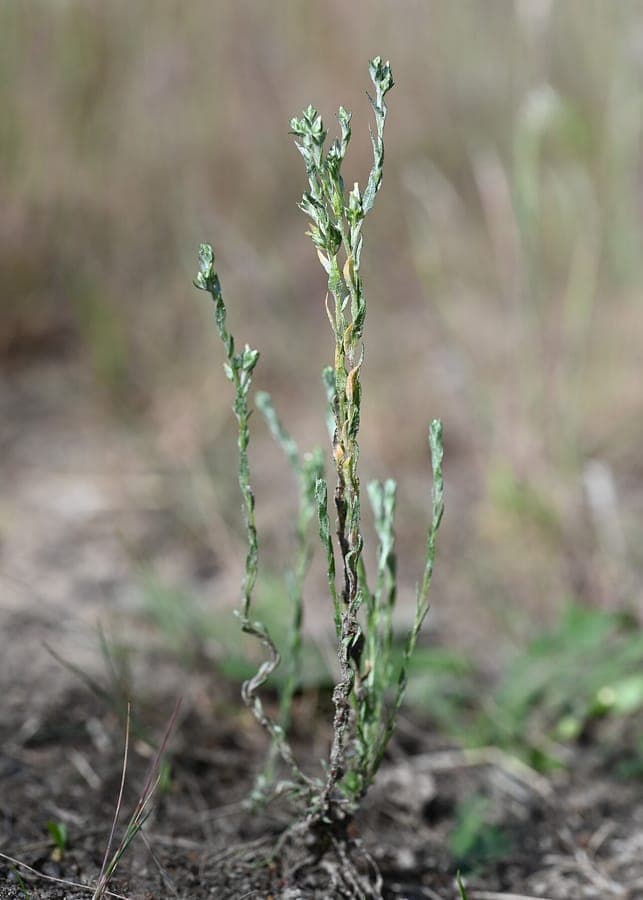
Krzysztof Ziarnek, Kenraiz / CC BY-SA 4.0, via Wikimedia Commons
Logfia minima: complete guide
Logfia minima
¿Quieres ver Logfia minima: complete guide en tu jardín?
1 minuto, sin tarjeta de crédito
Logfia minima, commonly known as little cottonrose, is a charming annual species from the Asteraceae family, native to Macaronesia, northwestern Africa, and Europe. This diminutive but delightful plant brings an airy, natural quality to gardens with its fine-textured silvery foliage and delicate clusters of tiny white flowers. Standing typically 15 to 35 centimeters tall, Logfia minima is perfect for cottage gardens, Mediterranean compositions, and naturalized settings. Its ease of cultivation and minimal maintenance requirements make it an excellent choice for gardeners of all experience levels.
Appearance and Bloom
Logfia minima presents a distinctive appearance characterized by extremely fine, thread-like foliage densely distributed along wiry stems. The leaves are grayish-green, finely hairy, creating a soft, silvery appearance that catches light beautifully throughout the day. This fine hair covering provides both aesthetic appeal and reduces water loss in arid conditions. The plant forms a loose, airy mound, never becoming dense or solid. Flowering occurs from May through July over an 8 to 10 week period, with tiny white to pale yellow flower heads measuring just 3 to 5 millimeters across, clustered tightly at stem tips. These minute but numerous flowers create a cumulative visual effect that is surprisingly ornamental. After flowering, seed capsules develop and persist, offering decorative winter interest.
Ideal Location
Logfia minima demands full sun conditions with a minimum of six hours of direct sunlight daily for optimal flowering. Shade-grown specimens become leggy, produce fewer flowers, and lose their characteristic compact form. This is strictly a sun-lover that punishes partial shade with reduced vigor. Plant in rock gardens, dry borders, drainage swales, Mediterranean gardens, and along sunny south or west-facing edges. The plant's low stature makes it ideal for foreground positions, containers on sunny patios, and gravel gardens. USDA hardiness extends to zone 2 (minus 40 degrees Celsius), though it functions as a tender annual in most temperate climates.
Soil Requirements
Logfia minima thrives in well-draining, even poor soils. Heavy clay soils create problems through waterlogging and root rot. Sandy to loamy soils with pH ranging from 5.5 to 7.5 suit this plant perfectly. Remarkably undemanding nutritionally, Logfia minima actually performs better in lean soils. Adding coarse sand or fine gravel to clay-heavy soils immediately improves results. For container cultivation, use a very gritty mix with cactus potting soil. Mulching with 2 to 3 centimeters of pea gravel maintains soil temperature.
Diseño gratis
¿Quieres ver Logfia minima: complete guide en tu jardín? Crea un diseño gratis ahora.
Watering
Despite excellent drought tolerance once established, young seedlings benefit from consistent moisture during their first four to six weeks of growth. Mature plants need supplementary watering only during extended dry spells. A weekly irrigation of approximately 1.5 centimeters of water maintains steady blooming. Watering early in the day reduces fungal disease risk. Container specimens require more frequent watering as potting mixes dry faster. Once established, Logfia minima often requires no watering beyond seasonal rainfall. Overwatering is the most common cultivation error.
Pruning and Maintenance
Logfia minima requires virtually no pruning beyond deadheading for extended bloom. Pinching off spent flower heads every one to two weeks extends flowering from 8-10 weeks to possibly 12 weeks. This light pinching also encourages a slightly bushier habit. If you prefer self-seeding, simply leave seed heads intact. Dead annual growth can be pulled in autumn and composted.
Maintenance Calendar
March-April: Sow seeds indoors 4-6 weeks before last frost date, or direct sow outdoors once soil is workable. May: Transplant seedlings to garden. June-July: Peak flowering period. August-September: Seed maturation. October: Self-seeded plants may germinate. November-March: Winter dormancy in cold regions.
Winter Hardiness
Extremely cold-hardy to USDA zone 2, Logfia minima survives winter better than many perennials. In mild climates (zones 9-10), it functions as a winter annual, germinating in fall and flowering early in spring. This winter-annual cycle extends bloom season.
Companion Planting
Logfia minima's fine texture creates beautiful contrast with bolder plants. Excellent companions include Papaver rhoeas (corn poppies), Centaurea cyanus (cornflowers), and Delphinium ajacis (larkspur). In rock gardens, combine with dwarf thyme species and Festuca glauca (blue fescue). For wildlife gardens, mix with other self-seeding natives. In containers, pair with herbs like oregano and sage. For Mediterranean schemes on gardenworld.app, combining with silver-foliaged plants creates sophisticated effects.
Conclusion
Logfia minima represents fine low-maintenance, high-charm garden plants. Requiring only sun and well-drained soil, this delicate annual rewards gardeners with months of airy blooms. Its ability to self-seed creates natural continuity year after year. Whether in wildflower gardens, Mediterranean borders, or dry gardens, Logfia minima brings understated elegance. Visit gardenworld.app for personalized garden designs.
¿Quieres ver Logfia minima: complete guide en tu jardín? Crea un diseño gratis ahora.
Sube una foto, elige un estilo y obtén un diseño fotorrealista con lista de plantas en menos de un minuto.
Más de 10.000 jardines diseñados
Sin tarjeta de crédito


Plantas similares
Calendula stellata: complete guide
Calendula stellata
Complete guide to Calendula stellata, the star-flowered marigold from Sicily: location, soil, watering and companion planting tips.
Korean chrysanthemum: complete guide
Chrysanthemum x rubellum
Chrysanthemum x rubellum is a hardy autumn perennial with single pink to copper flowers from August to November. Care and combinations.
Helianthus divaricatus: complete guide
Helianthus divaricatus
Helianthus divaricatus is a North American woodland sunflower with yellow summer blooms, ideal for naturalistic borders and shady edges.