
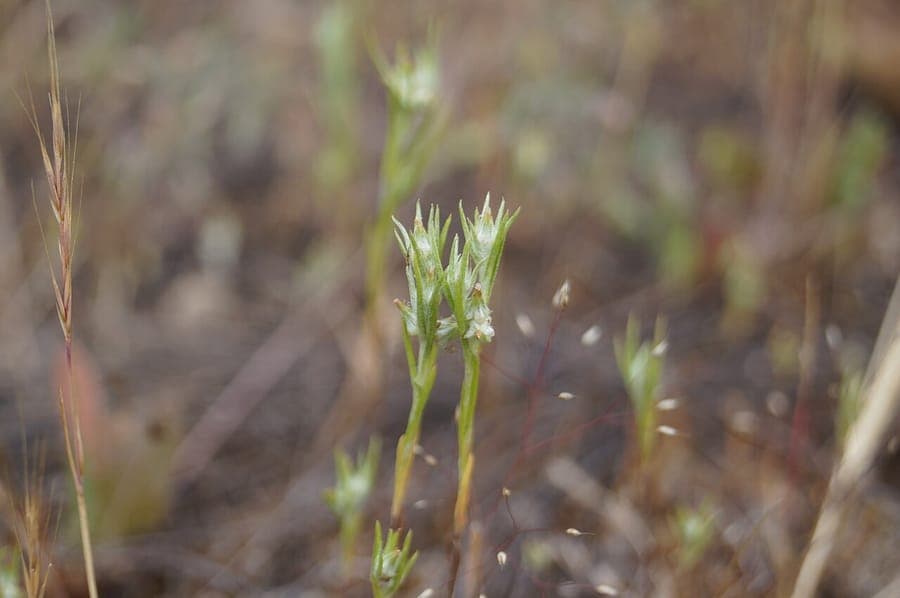
Pato Novoa from Valparaíso, Chile / CC BY-SA 2.0, via Wikimedia Commons
Logfia gallica: complete guide
Logfia gallica
¿Quieres ver Logfia gallica: complete guide en tu jardín?
1 minuto, sin tarjeta de crédito
Overview
Logfia gallica, commonly known as Narrow-leaved cudweed or Narrowleaf cottonrose, is a delicate annual herb from the Asteraceae family. Native to the Mediterranean basin and Macaronesia, this charming plant thrives in warm, dry conditions and brings a touch of refined elegance to any garden setting. Its fine-textured foliage and abundant yellow flowers create a feathery, cloud-like appearance throughout the blooming season.
Gardens across southern Europe have embraced Logfia gallica for its versatility and minimal care requirements. The plant's airy, branching habit makes it ideal for borders, containers, and xeriscape designs. At GardenWorld, we recognize it as a valuable addition to any gardener's palette, especially those seeking low-maintenance yet visually striking specimens.
Appearance and Bloom
This annual reaches a height of 15 to 30 centimeters with exceptionally narrow, thread-like leaves that define its characteristic appearance. The foliage is fine-textured and grayish-green, arranged densely along slender stems to create an intricate, feathery silhouette.
The flowers are small and numerous, bright yellow in color, clustered into tight, rounded flowerheads. During the May to July blooming period, the plant transforms into a miniature glitter-ball of golden stars. The seed heads retain the same woolly structure characteristic of the Asteraceae family, adding visual interest even after flowering ends.
The growth habit is naturally branching and upright, creating an airy, lattice-like form that works beautifully as an accent or filler plant.
Ideal Location
Logfia gallica flourishes in full sun situations. Provide at least 6 to 8 hours of direct sunlight daily for optimal growth and prolific flowering. The plant thrives in warmth and intense light conditions. Sheltered locations offering some wind protection are preferable, though the plant demonstrates reasonable wind tolerance once established.
This species excels in Mediterranean gardens, dry borders, rock gardens, and coastal settings. It performs admirably in containers on sunny terraces and balconies. Its compact growth habit makes it suitable as an edging plant or accent in larger planting schemes.
Soil
Logfia gallica strongly prefers very well-draining, nutrient-poor soils. Sandy or loamy earth amended with grit or perlite performs best. The plant will not tolerate waterlogged or heavy clay conditions. Aim for a neutral pH between 6 and 7.
Keep organic matter additions minimal - this species actually thrives in poor soils. Heavy fertilization promotes lush foliage at the expense of flowers. For container cultivation, use a gritty potting mix comprising 50 percent seed compost and 50 percent horticultural grit.
Watering
Once established, Logfia gallica is remarkably drought-tolerant. Water regularly during the establishment period (first 3-4 weeks). Thereafter, water only when the soil feels completely dry approximately 5 centimeters below the surface. In Mediterranean climates, supplemental watering is rarely necessary.
The plant absolutely cannot tolerate waterlogging - ensure water drains freely. For container specimens, check moisture levels weekly and water only as required. During the growth period (spring and early summer), you may water slightly more frequently, but always err on the side of dryness rather than wetness.
During winter dormancy (in cooler regions), drastically reduce watering.
Diseño gratis
¿Quieres ver Logfia gallica: complete guide en tu jardín? Crea un diseño gratis ahora.
Pruning
Logfia gallica requires minimal pruning. Deadhead spent flowers using fine scissors to encourage fresh bloom production. This simple task extends the flowering period from May through August.
If the plant develops an uneven growth habit by late summer, carefully trim it back to shape. Remove any dead or damaged branches in spring. Heavy pruning is not recommended as it disrupts the plant's naturally elegant form.
For container specimens, light spring pruning encourages a denser, more compact habit.
Maintenance Calendar
March-April: Spring inspection. Remove winter-damaged material. Direct sow seeds or plant container specimens.
May-July: Flowering season. Perform deadheading for continuous bloom. Maintain minimal watering schedule.
August-September: Seed maturation. Allow seeds to develop if you wish to harvest them for next season's propagation.
October-November: Plant decline begins in cooler regions. Leave seedheads for wildlife food value.
December-February: Winter dormancy. Minimal maintenance required in Mediterranean climates. In colder zones, the plant dies naturally.
Winter Hardiness
Logfia gallica is an annual in most European climates. It cannot survive hard frost. In Mediterranean regions (Zones 9-11), it may persist and self-seed.
In northern and central Europe (Zones 5-8), resow it annually or treat it as a summer annual. Plant out after your area's last frost date.
In milder regions, collect seed and sow fresh in spring of the following year.
Companion Plants
Logfia gallica pairs beautifully with other drought-loving Mediterranean species:
- Lavender varieties for fragrance and color contrast
- Santolina (Cotton lavender) for textural interest
- Sedum and stonecrop for architectural form
- Stipa ornamental grasses for vertical accents
- Helianthemum (Rock rose) for complementary yellow tones
- Artemisia for silvery foliage contrast
- Echinacea varieties for late-season continuity
Combine with other annuals to create a vibrant, season-long flowering display.
Closing
Logfia gallica deserves greater recognition in modern gardens. This versatile, easy-to-grow plant brings lightness and golden sparkle to dry areas. Its minimal maintenance demands and drought tolerance make it ideal for water-wise gardening.
GardenWorld recommends including it in your design - it is a genuine gem that delivers consistent, uncomplicated rewards. Whether planted in borders, containers, or xeriscapes, Narrow-leaved cudweed provides unfailing yellow flower clusters.
Visit gardenworld.app for more planting advice and garden design inspiration. Our experts help create outdoor spaces you will truly enjoy. With Logfia gallica as part of your plan, you are well on your way to a beautiful garden.
¿Quieres ver Logfia gallica: complete guide en tu jardín? Crea un diseño gratis ahora.
Sube una foto, elige un estilo y obtén un diseño fotorrealista con lista de plantas en menos de un minuto.
Más de 10.000 jardines diseñados
Sin tarjeta de crédito


Plantas similares
Calendula stellata: complete guide
Calendula stellata
Complete guide to Calendula stellata, the star-flowered marigold from Sicily: location, soil, watering and companion planting tips.
Korean chrysanthemum: complete guide
Chrysanthemum x rubellum
Chrysanthemum x rubellum is a hardy autumn perennial with single pink to copper flowers from August to November. Care and combinations.
Helianthus divaricatus: complete guide
Helianthus divaricatus
Helianthus divaricatus is a North American woodland sunflower with yellow summer blooms, ideal for naturalistic borders and shady edges.