
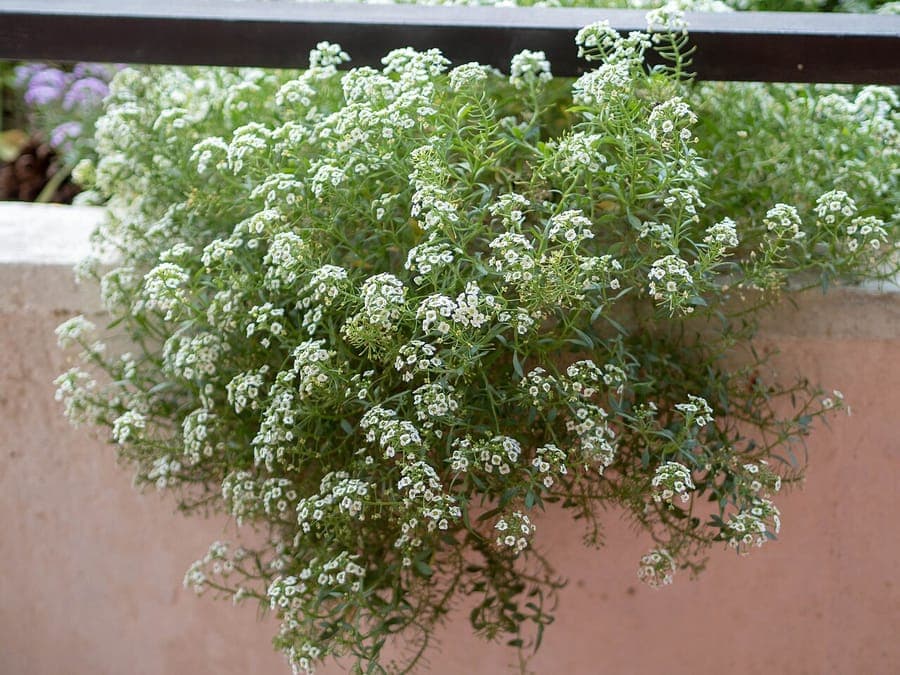
w0zny / CC BY-SA 4.0, via Wikimedia Commons
Sweet alyssum: complete guide
Lobularia maritima
¿Quieres ver Sweet alyssum: complete guide en tu jardín?
1 minuto, sin tarjeta de crédito
Overview
Sweet alyssum, scientifically Lobularia maritima, is a classic, elegant garden plant from the Brassicaceae family. This species originates from the Mediterranean region, particularly from West and Central Mediterranean countries extending to Syria. The plant is recognized worldwide as a popular ornamental garden flower. The botanical name Lobularia references the small, lobed seed pods characteristic of this species. Sweet alyssum is remarkably versatile, growing equally well in garden beds and containers alike.
The plant grows primarily as an annual in temperate climates, though it can persist as a perennial in warm regions. It is exceptionally popular throughout Europe because of its long flowering period, easy cultivation, and pleasant fragrance. The plant is widely used in hanging baskets, borders, rockeries, and containers. Among gardenworld.app users, it ranks among the most beloved classic flowers.
The plant is renowned for its abundant flowering and pleasant sweet fragrance. From May until the first frost, healthy plants produce continuously small, delicate flowers. This makes it perfect for long, uninterrupted color displays. With regular watering and minimal feeding, Sweet alyssum develops into a full, abundant specimen displaying thousands of visible flowers simultaneously. The subtle fragrance intensifies in evening and morning hours.
Appearance & bloom cycle
Sweet alyssum presents itself as a compact, densely growing plant with very fine, slender stems and exceptionally small, narrow leaves. The plant typically reaches heights of 15 to 30 centimeters, though trailing cultivars exist that cascade to 50 centimeters. Leaves are remarkably small, usually just a few millimeters across, fine-textured, and green in color. Some cultivars display purplish or silvery leaf tints.
The flowering of Sweet alyssum is the true showstopper. Blooms are extremely delicate, approximately 0.4 to 0.6 centimeters in diameter, appearing in incredible quantities in dense flower clusters. Flowers feature four petals arranged in a simple, elegant pattern. Color variety is richly diverse: classic pure white (White Carpet, Tall White), pink shades (Rosie, Pretty in Pink), purple (Lilac), soft yellow (Pale Yellow), and deep violet (Violet Queen). The bloom period is exceptionally long: May through October in temperate climates, occasionally interrupted during very hot periods. The fragrance is pleasantly sweet, especially in morning and evening hours.
The plant grows compactly and densely, creating impressive appearance in containers. Stems continuously branch, producing characteristic full, cushion-like growth forms, especially in upright cultivars; trailing varieties naturally cascade downward with graceful, fountain-like patterns.
Ideal location
Sweet alyssum blooms best in locations with good light exposure. The plant accepts 6 to 8 hours of direct sunlight daily, though it also grows well in partial shade receiving at least 3 to 4 hours of light. The plant becomes sparse-flowering in full shade conditions. In very warm climates, slightly more shade during the hottest hours proves beneficial.
The plant is not particularly temperature-sensitive and grows well in virtually all temperate conditions. In extremely hot areas exceeding 28 degrees Celsius, flowering can stagnate temporarily, but typically the plant recovers once cooler weather returns. The plant appreciates air movement and ventilation, which prevents diseases and promotes robust growth.
Diseño gratis
¿Quieres ver Sweet alyssum: complete guide en tu jardín? Crea un diseño gratis ahora.
Soil requirements
Sweet alyssum grows in virtually all soil types, from sandy to clay, provided they drain well. For containers and boxes, light, nutrient-rich potting soil is recommended. A mixture of 70% universal potting soil and 30% perlite or sand provides excellent drainage. The plant dislikes waterlogging, so good drainage material in pots is essential.
Water pH is relatively unimportant, but neutral to slightly acidic (pH 6-7) is ideal. In very alkaline soils above pH 7.5, the plant still grows well. The plant is quite undemanding nutritionally, so rich soils are unnecessary. Indeed, excessive nutrition can produce abundant foliage at the expense of flowers.
Watering
Sweet alyssum requires regular, consistent watering. The plant must remain moist but absolutely cannot tolerate waterlogging. The best approach involves daily checking whether the potting soil surface feels moist. During warm, dry periods, daily watering may be necessary. In wet summers, caution with watering is appropriate.
The plant benefits from bottom watering rather than overhead sprinkling, as the latter can promote leaf diseases. For balcony gardens, planting in self-watering containers proves helpful if you're away daily.
Pruning
Sweet alyssum requires minimal pruning intervention. Spent flowers need not be removed; they naturally shed as new blooms continuously appear. When the plant begins declining mid-summer (fewer flowers), light pruning helps: simply trim the top 5 centimeters and this stimulates abundant new side branching and increased flowering.
Maintenance calendar
May: Planting in gardens or containers; initial feeding. June-August: Regular watering; minimal pruning. September: Growth slows; reduce feeding. October-November: Season ends; remove plants (annual treatment).
Winter hardiness
Sweet alyssum is not winter-hardy in temperate climates and is treated as an annual. In very warm climates (USDA 10-11), the plant can overwinter and grow as a perennial. In northern Europe, the plant cannot overwinter outdoors.
Companion plants
Sweet alyssum combines beautifully with many other summer bloomers. Classic combinations: white with purple pansies or lavender, pink alyssum with petunia, purple alyssum with orange calendula. In borders it pairs excellently with ankle-height summer guests like silvery Artemisia and red Pelargonium.
In hanging baskets, it mixes successfully with trailing petunia, Diascia, and fuchsia. For a classic Mediterranean look: white alyssum with purple petunia and silver-foliaged Senecio. The plant is exceptionally easy to combine with virtually anything because of its subtle color palette. It works beautifully with blue lobelia, creating the classic Victorian cottage garden aesthetic.
Closing
Sweet alyssum is truly a classic that never falls from fashion. With regular watering and good positioning, it will reward you with unceasing flowers and pleasant fragrance from summer through October. This is the plant for anyone desiring long, continuous color displays with the delightful bonus of sweet evening fragrance. Visit gardenworld.app for more inspiration about garden design and summer flower combinations.
¿Quieres ver Sweet alyssum: complete guide en tu jardín? Crea un diseño gratis ahora.
Sube una foto, elige un estilo y obtén un diseño fotorrealista con lista de plantas en menos de un minuto.
Más de 10.000 jardines diseñados
Sin tarjeta de crédito


Plantas similares
Brassica cretica: complete guide
Brassica cretica
Brassica cretica, the Cretan cabbage, grows wild on Aegean cliffs. Discover how to grow this drought-tolerant, yellow-flowered Mediterranean perennial.
Corsican cabbage: complete guide
Brassica insularis
Corsican cabbage is a rare Mediterranean rock cabbage with white flowers and blue-green leaves. Location, soil and winter protection.
Prostrate cabbage: complete guide
Brassica procumbens
Prostrate cabbage is a creeping North African cliff plant with yellow flowers. Discover location, soil type and winter protection.