
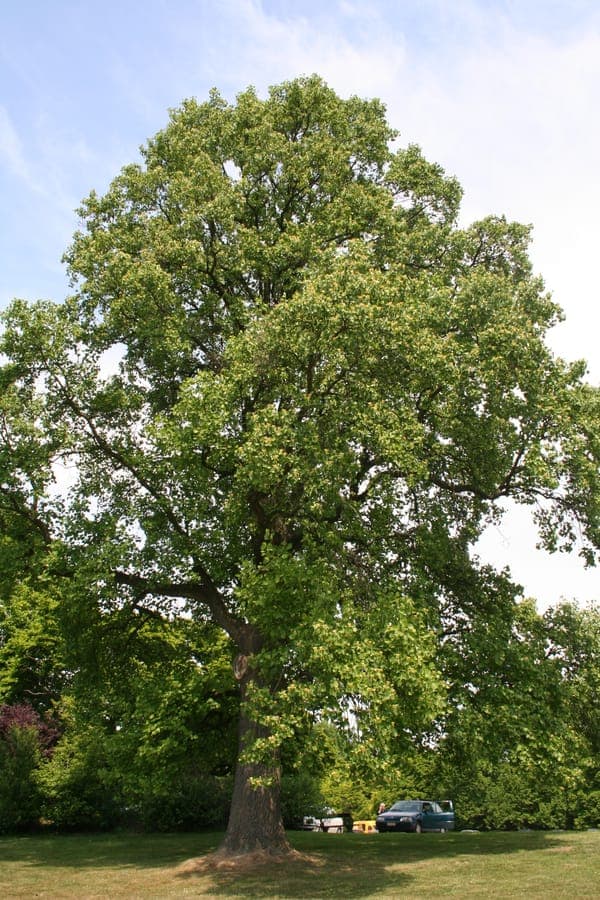
Jean-Pol GRANDMONT / CC BY 3.0, via Wikimedia Commons
Tulip-poplar: complete guide
Liriodendron tulipifera
¿Quieres ver Tulip-poplar: complete guide en tu jardín?
1 minuto, sin tarjeta de crédito
Overview
The Tulip-poplar or Tulip-tree (Liriodendron tulipifera), native to southeastern North America, is a magnificent deciduous tree renowned for rapid growth and exceptional beauty. Reaching heights of 25-45 meters in natural settings, this architectural specimen produces distinctive tulip-shaped flowers featuring golden-yellow inner petals with orange-green markings at the base.
Appearance and Bloom
The leaves are extraordinarily distinctive: their apex appears squared off as if cut by scissors, making identification instant and unmistakable. This unique silhouette adorns the tree throughout the growing season. Autumn foliage transforms to brilliant golden-yellow shades, creating spectacular seasonal displays. Flowers emerge in May and June once full foliage appears. These impressive blooms, larger than many ornamental flowers, feature predominantly golden-yellow coloration with greenish-orange markings.
Ideal Location
Tulip-poplar thrives in full sun locations receiving four to six hours of direct daily sunlight. Although it tolerates light shade, flowering decreases substantially under shadier conditions. This tree suits large-scale gardens, parks, and landscape settings where its ultimate size presents no constraint. Position where ample space exists for complete crown development without pruning or training into confined forms.
Soil
The tree prefers deep, well-drained soil with moderate to rich nutrient content. It demonstrates flexibility regarding soil type but thrives in loamy to sandy soils with pH ranging 4.5 to 6.5. Heavy clay soils improve significantly with added compost or peat moss incorporation. The tulip-tree tolerates wet to dry conditions, though it prefers soil not permanently waterlogged.
Diseño gratis
¿Quieres ver Tulip-poplar: complete guide en tu jardín? Crea un diseño gratis ahora.
Watering
Established tulip-poplars demonstrate considerable drought tolerance, yet grow optimally with regular moisture, especially during dry summers. Young trees require thorough, consistent watering until full establishment, typically two to three years. Ensure well-drained soil prevents waterlogging. Mulching around the base conserves moisture and moderates root zone temperatures.
Pruning
Tulip-poplars require minimal pruning due to naturally upright, straight growth habits. Remove dead, diseased, or damaged branches in late winter before growth commences. Heavy pruning disturbs the tree and can suppress flowering for multiple years. For young specimens, ensure one central leader develops by removing competing shoots during the first year.
Maintenance Calendar
Spring: Inspect for winter damage; apply thin compost layer around base. Summer: Monitor moisture needs during dry spells. Autumn: Enjoy spectacular fall color. Winter: Remove dead branches carefully. Check for frost damage in very cold regions. Monitor for pest damage as seasons change.
Winter Hardiness
Tulip-poplar is hardy to approximately -18 to -20 degrees Celsius, suitable for most European climates. In extreme cold regions, young trees benefit from windbreaks during the first two years. Mature specimens are exceptionally cold-tolerant.
Companion Plants
Tulip-poplar makes an outstanding specimen tree for large estates and parks. Its rapid growth and striking summer and autumn presence immediately conveys scale and elegance. Avoid planting near other large shade trees; use it as a landscape anchor. Underplant with shade-tolerant groundcovers and shade-loving understory plants.
Closing Thoughts
Tulip-poplar is an exceptional choice for those seeking a fast-growing, sculptural tree with distinctive beauty through all seasons. With patience and basic care, this natural wonder develops into a monumental landscape feature. Your gardens will celebrate for decades to come.
¿Quieres ver Tulip-poplar: complete guide en tu jardín? Crea un diseño gratis ahora.
Sube una foto, elige un estilo y obtén un diseño fotorrealista con lista de plantas en menos de un minuto.
Más de 10.000 jardines diseñados
Sin tarjeta de crédito


Plantas similares
Saucer magnolia: complete growing guide
Magnolia × soulangeana Soul.-Bod.
Saucer magnolia is a hybrid featuring spectacular pink-white flowers appearing before leaf emergence. Ideal as specimen plant. Winter-resistant to -15°C.
Magnolia delavayi: complete guide
Magnolia delavayi
Delavay magnolia is an imposing shrub from southern China with large glossy leaves and fragrant creamy-white flowers. Learn about cultivation, hardiness, and care for this rare species.
Sweet michelia: complete guide
Magnolia doltsopa
Discover the sweet michelia, a majestic tree from the Himalayas. Learn everything about this impressive specimen, blooming, and perfect growing conditions.