
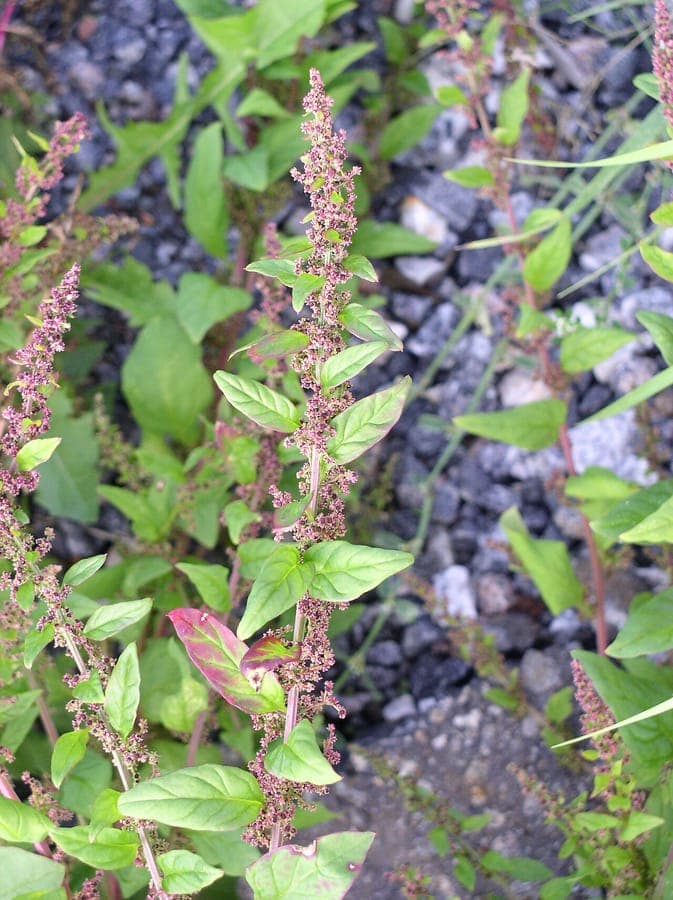
Antti Bilund / CC BY-SA 3.0, via Wikimedia Commons
Many-seed Goosefoot (Lipandra polysperma): complete guide
Lipandra polysperma
¿Quieres ver Many-seed Goosefoot (Lipandra polysperma): complete guide en tu jardín?
1 minuto, sin tarjeta de crédito
Overview
Many-seed goosefoot (Lipandra polysperma), formerly known as Chenopodium polysperma, is a small, discrete annual plant from the Amaranthaceae family. While some might dismiss it as 'weed,' this plant is actually a fascinating specimen with fine texture and interesting botanical qualities. Distributed from Europe to Asia, many-seed goosefoot thrives in poor soils and is a true survivor in gardens.
Appearance & Bloom
Many-seed goosefoot grows as a delicate, heavily-branched plant of 20-50 cm tall. The plant features very fine, linear green leaves covering the entire surface, creating an almost cloud-like impression. The flowers are minuscule and inconspicuous - tiny greenish flowers grouped in clusters - and appear during summer. The true attraction lies in the light, airy growth pattern that contrasts beautifully with heavier neighboring plants.
Ideal Location
Many-seed goosefoot thrives in full sun to partial light and is very flexible. The plant feels at home in open, sunny spots but also tolerates some shade. Perfect for gravel slopes, ornamental blocks, and borders where you want a light, airy effect. This plant excels in Mediterranean or low-water gardens.
Soil Requirements
This is where many-seed goosefoot really shines: this plant accepts almost any soil condition. Poor, lean soil is actually preferred. Well-drained sandy to loamy soil is ideal. The plant is highly tolerant of drought and dislikes waterlogged soil. A pH between 5.5–7.5 is acceptable. No fertilization needed.
Watering
Sow many-seed goosefoot directly after frost danger passes. Once established, the plant requires minimal watering. Actually, many-seed goosefoot grows better in dryness than in excessive moisture. Water only during very dry periods. The plant is ideal for water-saving gardens and requires no overhead irrigation.
Diseño gratis
¿Quieres ver Many-seed Goosefoot (Lipandra polysperma): complete guide en tu jardín? Crea un diseño gratis ahora.
Pruning
Pruning is not really necessary. However, removing older affected foliage can improve appearance. The plant can be pulled up after seed ripening, or you can let it self-sow naturally for next season.
Maintenance Calendar
April–May: Sow directly in place after frost danger passes. Light watering for seed germination.
June–July: Full growth. Almost no maintenance needed. Drought is not a problem.
August–September: Seeds ripen. Plant gradually turns brownish, which actually adds ornamental value.
October–November: Seed is ripe. Allow self-sowing if desired, or pull the plant and compost.
December–March: Rest period.
Winter Hardiness
Many-seed goosefoot is annual and adapted to warm to temperate seasons. The plant dies in frost waves. Sow each year anew after frost danger passes (April-May in Netherlands and Germany). This is not a winter-hardy plant - fully seasonal.
Companion Plants
Many-seed goosefoot combines subtly with:
- Other fine-leaved plants like Ammi majus (bishop's flower)
- Light flowers like Cleome (spider flower)
- Gray-foliaged Senecio cineraria
- Purple Salvia blooms
- Soft yellow Helichrysum
- White Gypsophila (baby's breath)
- Soft pink Cosmos
Closing
Many-seed goosefoot may be small and discrete, but it offers value to garden designers seeking light texture and airy effects. It accepts poor soils and dry environments, making it perfect for water-conscious and ecologically-designed gardens. Sow this elegant plant for subtle, airy beauty. For more inspiration and design help, visit gardenworld.app, where you can design your own ornamental garden.
Seeds of many-seed goosefoot are available from specialized seed suppliers in the Netherlands (Intratuin, Gamma) and Germany (OBI, Hornbach).
¿Quieres ver Many-seed Goosefoot (Lipandra polysperma): complete guide en tu jardín? Crea un diseño gratis ahora.
Sube una foto, elige un estilo y obtén un diseño fotorrealista con lista de plantas en menos de un minuto.
Más de 10.000 jardines diseñados
Sin tarjeta de crédito


Plantas similares
Bassia laniflora (woolly summer-cypress): complete guide
Bassia laniflora
Full guide to Bassia laniflora: origin, appearance, ideal location, soil, watering and care for this drought-tolerant annual.
Suaeda spicata: complete guide
Suaeda spicata
Everything about Suaeda spicata (spiked seablite): a rare salt-tolerant coastal succulent from the western Mediterranean and Macaronesia.
California amaranth: complete guide
Amaranthus californicus
Full guide to California amaranth (Amaranthus californicus): growing tips, ideal location, soil needs, watering, and garden design ideas.