
Ivar Leidus / CC BY-SA 4.0, via Wikimedia Commons
Yellow toadflax: complete guide
Linaria vulgaris
¿Quieres ver Yellow toadflax: complete guide en tu jardín?
1 minuto, sin tarjeta de crédito
Yellow Toadflax: Cultivation and Care
Overview
Linaria vulgaris, commonly known as Yellow toadflax or Butter-and-eggs, is a robust and versatile plant native to Europe through Siberia and Central Asia. Belonging to the Plantaginaceae family, this flower is celebrated for its bright yellow blooms and remarkable ability to thrive in diverse growing conditions. Yellow toadflax is extremely hardy and low-maintenance, making it an excellent choice for gardeners seeking robust, reliable plants.
Appearance and Bloom
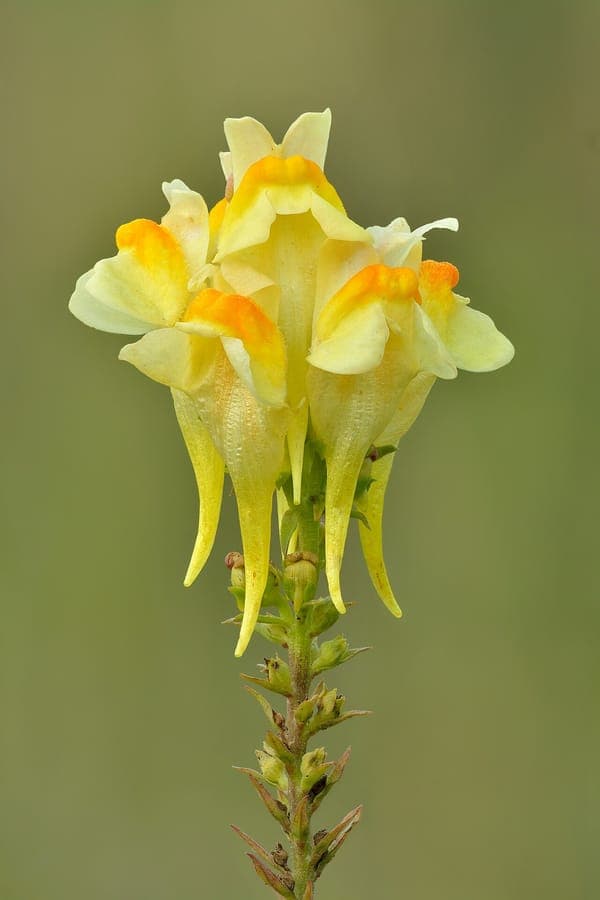
Yellow toadflax grows as an upright, slender plant reaching 30-90 cm in height. The plant develops fine, linear leaves giving it an airy appearance. The main attraction is the bright yellow flowers with orange markings. These blooms appear in long, dense spikes and flower from June through September. The trumpet-shaped yellow flowers attract pollinators and provide spectacular displays from July to September.
Ideal Location
Yellow toadflax thrives in full sun. Position the flower where it receives at least 6 hours of direct sunlight daily. The plant tolerates partial shade but will produce fewer flowers. In very hot climates, some afternoon shade is beneficial. The plant is highly adaptable to various locations.
Soil Requirements
This plant is undemanding and grows in most soils. Well-draining soil is preferred. Light, sandy, or gravelly soil is ideal. Target a pH between 6 and 7.5. The plant tolerates poor soils and requires minimal feeding. Avoid very wet winter-climate soils.
Watering
Once established, Yellow toadflax is extremely drought-tolerant. Water regularly during the first weeks after planting, then only when the soil surface feels dry. The plant tolerates long drought periods. Excessive moisture causes problems and root rot. In very wet winters, protection may be necessary.
Diseño gratis
¿Quieres ver Yellow toadflax: complete guide en tu jardín? Crea un diseño gratis ahora.
Pruning
Pruning is not strictly necessary but keeps the plant more compact. Remove spent flowers to encourage further blooming. After flowering, stems can be cut back. In early spring, overgrown plants can be severely cut back.
Maintenance Calendar
- January-February: Spring pruning of overgrown plants
- March-April: New growth emerges; start watering
- May-June: Flowering begins; deadhead regularly
- July-September: Continue deadheading; water during dry periods
- October-November: Reduce watering
- December: Winter dormancy; minimal care
Winter Hardiness
Yellow toadflax is extremely winter-hardy, surviving to USDA zone 3. This makes it excellent for colder climates. The plant survives well in snowy regions. In very wet winters, protection may be needed in zones 3-4.
Companion Plants
Yellow toadflax pairs well with:
- Purple: Linaria purpurea for purple-yellow contrast
- Silver: Artemisia, Senecio for silvery texture
- Blue: Veronica, Salvia nemorosa
- Red: Heuchera, red-flowering shrubs
Conclusion
Yellow toadflax is an extremely robust and reliable plant for yellow accents in gardens. With its long flowering period, extreme hardiness, and adaptability, it delivers years of garden pleasure. Visit gardenworld.app for more garden design tips and discover how to integrate this plant into your landscape. At gardenworld.app, you can also request a complete front-yard redesign.
With minimal care, your yellow toadflax will shine from June through September!
¿Quieres ver Yellow toadflax: complete guide en tu jardín? Crea un diseño gratis ahora.
Sube una foto, elige un estilo y obtén un diseño fotorrealista con lista de plantas en menos de un minuto.
Más de 10.000 jardines diseñados
Sin tarjeta de crédito


Plantas similares
Balkan toadflax: complete guide
Linaria dalmatica
Discover the Balkan toadflax (Linaria dalmatica), a striking yellow-flowered plant from Southeast Europe. Read our comprehensive cultivation and care guide.
Purple toadflax: complete guide
Linaria purpurea
Discover the Purple toadflax (Linaria purpurea), an elegant purple-flowering plant from South Europe. Complete cultivation and care guide.
Striped toadflax: complete guide
Linaria repens
Discover the Striped toadflax (Linaria repens), a low creeping groundcover from Northwest Europe with delicate white and purple flowers.