
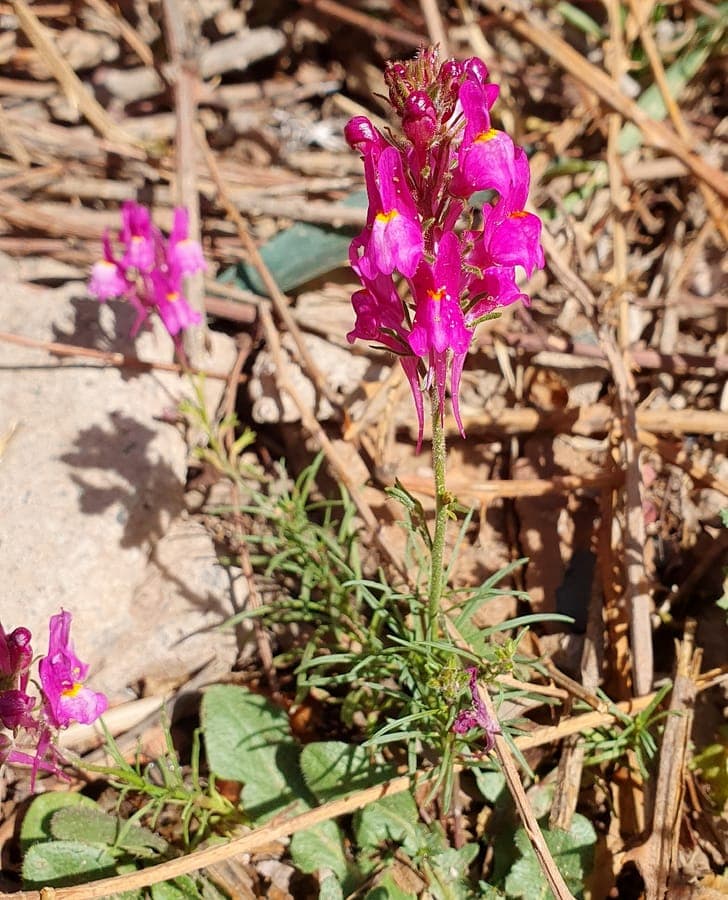
antoine2684 / CC BY 4.0, via Wikimedia Commons
Annual toadflax: complete guide
Linaria maroccana
¿Quieres ver Annual toadflax: complete guide en tu jardín?
1 minuto, sin tarjeta de crédito
Annual Toadflax: Cultivation and Care
Overview
Linaria maroccana, commonly known as Annual toadflax or Moroccan toadflax, is a delightful annual flower native to Morocco. This plant belongs to the Plantaginaceae family and is celebrated for its exuberant color range. The annual toadflax offers a wonderful spectrum of flower colors including reds, pinks, yellows, whites, and oranges, making it a favorite choice for gardeners seeking brightness and color.
Appearance and Bloom
Annual toadflax grows as a compact, upright annual plant typically reaching 30-40 cm in height. The plant produces abundant small, delicate flower spikes with blooms in vibrant combinations of reds, pinks, yellows, whites, and orange tones. The flowers display the characteristic toadflax-shaped structure. Flowering extends from May through September, providing a long bloom period for an annual.
Ideal Location
Annual toadflax thrives in full sun to light dappled shade. Position the flowers where they receive at least 6 hours of direct sunlight daily. In very warm locations, some afternoon shade preserves color intensity and extends the flowering period. In cooler regions, full sun is preferred.
Soil Requirements
This plant is undemanding and grows in most soils. A well-draining, moderately fertile soil yields the best results. For container cultivation, use a light, humus-rich potting mix. Target a pH between 6 and 7.5. Avoid heavy clay soils or very dry sandy soils.
Watering
Water young seedlings regularly until well-established. Once growing, moderate watering suffices. During dry periods, especially with high temperatures, daily watering supports vigorous blooming. Avoid wetting the foliage to prevent fungal issues. For container-grown plants, check regularly that the soil doesn't dry out completely.
Diseño gratis
¿Quieres ver Annual toadflax: complete guide en tu jardín? Crea un diseño gratis ahora.
Deadheading
Deadheading (removing spent flowers) is crucial for annual toadflax to encourage continuous blooming and maintain plant compactness. Regularly pinch off spent flower spikes to stimulate continuous flowering until the first frost. A light trim in August keeps plants bushier.
Maintenance Calendar
- January: Pre-soak seeds
- February-March: Sow seeds under glass; grow seedlings
- April-May: Transplant after last frost; firm in soil
- May-June: Regular watering; begin deadheading
- July-September: Continuous deadheading; water during dry periods
- October: Expect frost damage; harvest completion
- November-December: No activity
Winter Hardiness
Annual toadflax is frost-sensitive and cannot survive winter in temperate climates. Plant in spring after the last frost date. In warm regions (zones 8-10), it may self-seed in certain years. Elsewhere, treat as a true annual.
Companion Plants
Annual toadflax combines beautifully with:
- Silver foliage: Senecio (silvery leaves)
- Purple flowers: Petunias in purple tones
- White blooms: Sweet alyssum for edging
- Blue: Lobelia for trailing effect
Conclusion
Annual toadflax is an exuberant flower for colorful gardens and containers. With its long flowering period and enchanting color variety, it offers substantial visual reward for minimal effort. Visit gardenworld.app to discover professional garden designs that can incorporate colorful annual plantings. Let experts inspire you in creating a vibrant front yard with gardenworld.app.
With regular deadheading and suitable growing conditions, your annual toadflax will bloom until the first frost!
¿Quieres ver Annual toadflax: complete guide en tu jardín? Crea un diseño gratis ahora.
Sube una foto, elige un estilo y obtén un diseño fotorrealista con lista de plantas en menos de un minuto.
Más de 10.000 jardines diseñados
Sin tarjeta de crédito


Plantas similares
Purple toadflax: complete guide
Linaria purpurea
Discover the Purple toadflax (Linaria purpurea), an elegant purple-flowering plant from South Europe. Complete cultivation and care guide.
Balkan toadflax: complete guide
Linaria dalmatica
Discover the Balkan toadflax (Linaria dalmatica), a striking yellow-flowered plant from Southeast Europe. Read our comprehensive cultivation and care guide.
Striped toadflax: complete guide
Linaria repens
Discover the Striped toadflax (Linaria repens), a low creeping groundcover from Northwest Europe with delicate white and purple flowers.