
Kelvinsong / CC BY 3.0, via Wikimedia Commons
Japanese lily: complete guide
Lilium speciosum
¿Quieres ver Japanese lily: complete guide en tu jardín?
1 minuto, sin tarjeta de crédito
Overview
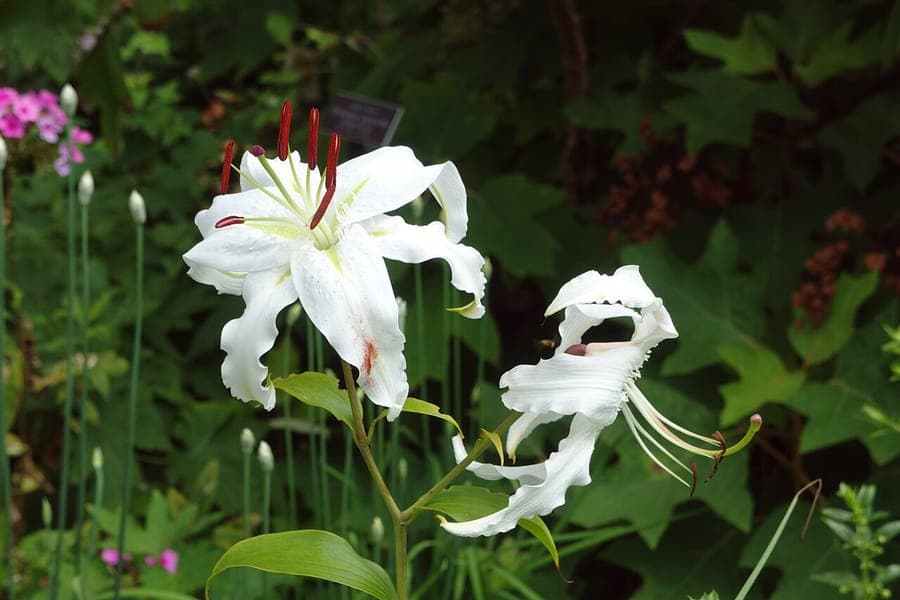
Japanese lily (Lilium speciosum, also called Showy lily) is an elegant lily species from Southeast China, Taiwan and Japan. This breathtaking summer bloomer is renowned for its large, recurved flowers with intense fragrance and is popular as ornamental and cut flower. In temperate regions, this culture is increasingly appreciated.
Appearance and bloom cycle
Japanese lily grows to 80-100 cm tall and carries 4-8 large, wide-opening flowers per stem. Petals are white to pink with red spotting, especially at the base. The characteristic recurved shape gives an airy, ethereal appearance. Intensely fragrant, especially at evening. Blooming extends from July through September. Perfect cut flower with long vase life (7-10 days).
Ideal location
Japanese lily thrives in full sun to light half-shade. At least 4-6 hours of direct sunlight daily. The plant grows better with some afternoon shade in very hot regions, but flowering is richer in full sun. A half-shaded spot where morning dew dries quickly works well for disease prevention.
Soil requirements
Well-draining, nutrient-rich soil is essential. Work in plenty of compost or leaf mold before planting. pH 6.0-7.0 is ideal (this lily dislikes acidic soil). Poor drainage leads to bulb rot. For heavy clay soils: fill planting holes with sand. At least 20 cm deep, nutrient-rich layer needed.
Watering
Regular moisture is important. Water when the top 2 cm feels dry. Excessive water is harmful; well-draining soil is crucial. During dry periods, water at least once weekly. After blooming (October), gradually reduce watering. Prevention of water pooling is essential.
Diseño gratis
¿Quieres ver Japanese lily: complete guide en tu jardín? Crea un diseño gratis ahora.
Pruning and maintenance
Carefully remove faded flowers, but never remove the entire stem - this feeds the bulb with nutrients. When the stem is completely wilted (October), cut back to 5 cm above ground. Never cut stems before October, even for cut flowers - this weakens the bulb.
Maintenance calendar
- April-May: Follow emergence; stake young stems
- June-July: Regular watering; bud formation
- August-September: Full bloom; add feeding
- October: Blooming finished; reduce water; cut back stems
- November-March: Bulb dormancy; keep dry; protect plant
Winter hardiness
Japanese lily is moderately winter-hardy to approximately -15°C (USDA zone 5-6). In temperate regions, fairly hardy, especially in well-drained locations. Protection in cold winters (mulch cover) helps. In very wet winters: lift bulbs and store dry.
Companion plants
Japanese lily combines beautifully with:
- Delphiniums for blue contrast
- Lavender (Lavandula) for color and fragrance
- White astilbe for texture
- Hostas in half-shade
- Ground cover plants for foot protection
GardenWorld tip: Plant in drifts of 3-5 bulbs for impressive summer effects. Combine with early-blooming perennials for uninterrupted interest.
Closing thoughts
Japanese lily proves that luxury can grow in your own garden. This elegant Asian beauty delivers years of blooming with minimal effort. The intense fragrance and exceptional form make this an indispensable plant for summer gardens. Plant bulbs in autumn and enjoy decades of pleasure.
GardenWorld can help design an eternal summer garden. Visit gardenworld.app for more lily combinations and planting plans.
¿Quieres ver Japanese lily: complete guide en tu jardín? Crea un diseño gratis ahora.
Sube una foto, elige un estilo y obtén un diseño fotorrealista con lista de plantas en menos de un minuto.
Más de 10.000 jardines diseñados
Sin tarjeta de crédito


Plantas similares
Reverchon's gagea: complete guide
Gagea reverchonii
Full guide to Gagea reverchonii, Reverchon's gagea: rare Pyrenean bulb with bright yellow spring flowers, soil needs and companion planting.
Leafy gagea: complete guide
Gagea foliosa
Gagea foliosa is a rare Mediterranean bulb with bright yellow star-shaped flowers blooming February to March in well-drained rocky settings.
Tubular gagea: complete guide
Gagea fragifera
Gagea fragifera is a mountain bulb with golden-yellow star flowers blooming May to July on subalpine slopes from Europe to the Himalaya.