
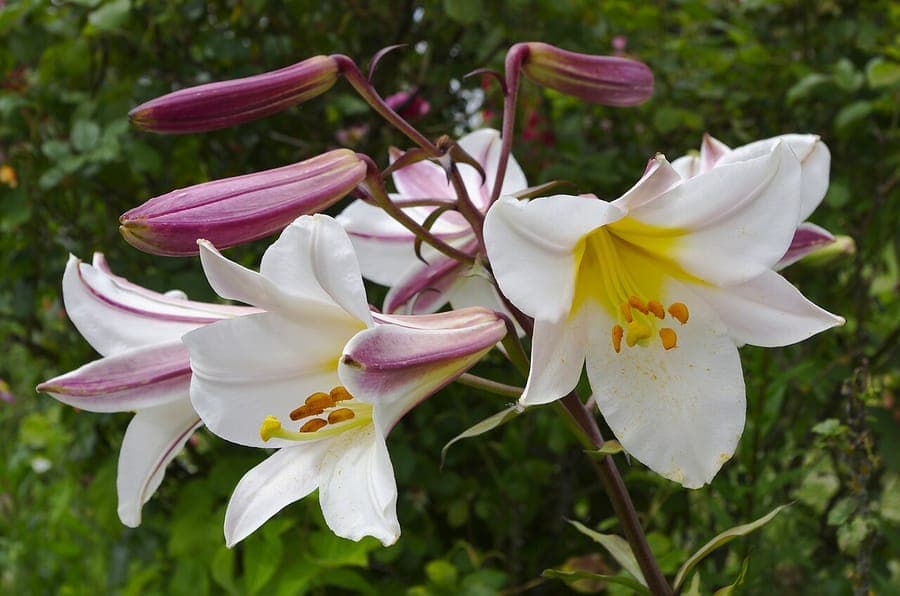
JLPC / CC BY-SA 3.0, via Wikimedia Commons
Lilium regale: complete guide
Lilium regale
¿Quieres ver Lilium regale: complete guide en tu jardín?
1 minuto, sin tarjeta de crédito
Overview
Lilium regale, known as the regal lily or royal lily, is one of the most elegant and famous lilies in the world. This majestic lily from West Sichuan in China is known for its large, pure white trumpet flowers with purple streaks on the outside. The fragrance is overwhelmingly sweet and pleasant.
The regal lily is reliable, hardy, and grows well in temperate climates. It is a classic choice for front yards and gardens worldwide. With well-draining soil and a sunny location, this lily will return for decades.
Appearance & Bloom
Lilium regale grows to 90-180 centimeters tall, depending on growing conditions. The flowers are very large, up to 15 centimeters long, pure white on the inside with yellow stamens. The outside is rose to purple-red, especially on the backs. Yellow throats also occur.
Each bulb typically bears 5-8 flowers, though strong specimens can have up to 20. Flowering occurs from July to August. The fragrance is unmatched - sweet, intense, and very pleasant.
After flowering, interesting seed pods form that are also decorative. The leaves are narrow and green.
Ideal Location
The regal lily grows best in full sun to lightly shaded spots. At least 5-6 hours of direct sunlight daily is ideal. The plant can also thrive in somewhat less sunny locations, though blooming may be lighter.
Plant in a location where fragrance can be maximally enjoyed. The plant is also great to grow in containers.
Soil
Well-draining soil is critical. Heavy clay soils should be improved with sand and organic matter. Plant in raised beds or where water drains quickly. Lightly acidic to neutral pH is ideal. Very fertile soils can promote excessive growth.
Diseño gratis
¿Quieres ver Lilium regale: complete guide en tu jardín? Crea un diseño gratis ahora.
Watering
Consistent moisture during growth is important. Water when the top layer feels dry. Prevention of waterlogging is critical. After blooming, gradually reduce watering as the stem dies back.
In containers, water thoroughly, ensuring good drainage.
Pruning
Remove faded flowers to maintain neat appearance. Keep the stem intact until it dies back - nutrients return to the bulb. Only then can you prune.
Maintenance Calendar
March-April: Growth starts. Water regularly. May-June: Continued growth. July-August: Blooming. Enjoy the flowers and fragrance! September-October: Stem dying back. Gradually reduce watering. November-February: Dormancy. Minimal maintenance.
Annually after blooming: Add compost.
Winter Hardiness
Lilium regale is hardy to -20 degrees Celsius, making it extremely winter-hardy in most European regions. In very wet, heavy soils, improved drainage is essential.
Companion Plants
The regal lily combines beautifully with roses, lavender, catmint, and other summer bloomers. Silver-leaved plants help highlight the lilies. Dark purple clematis or salvias form lovely contrasts.
Ensure companion plants do not grow taller than the lilies.
Closing
Lilium regale is a true classic that generations of gardeners have cherished. The fragrance, elegance, and reliability make it a top choice. Bulbs are widely available at garden centers in spring.
Want to feature this lily in your front yard? Gardenworld.app helps with complete garden designs. Ensure good drainage and regular care, and you will enjoy this queen of lilies.
¿Quieres ver Lilium regale: complete guide en tu jardín? Crea un diseño gratis ahora.
Sube una foto, elige un estilo y obtén un diseño fotorrealista con lista de plantas en menos de un minuto.
Más de 10.000 jardines diseñados
Sin tarjeta de crédito


Plantas similares
Reverchon's gagea: complete guide
Gagea reverchonii
Full guide to Gagea reverchonii, Reverchon's gagea: rare Pyrenean bulb with bright yellow spring flowers, soil needs and companion planting.
Leafy gagea: complete guide
Gagea foliosa
Gagea foliosa is a rare Mediterranean bulb with bright yellow star-shaped flowers blooming February to March in well-drained rocky settings.
Tubular gagea: complete guide
Gagea fragifera
Gagea fragifera is a mountain bulb with golden-yellow star flowers blooming May to July on subalpine slopes from Europe to the Himalaya.