
Wikimedia Commons / Public domain, via Wikimedia Commons
Lilium pomponium: complete guide
Lilium pomponium
¿Quieres ver Lilium pomponium: complete guide en tu jardín?
1 minuto, sin tarjeta de crédito
Overview
Lilium pomponium, known as Pompon lily or Minor Turk's-cap lily, is a fascinating bulbous plant originally from the Southwestern Alps, particularly France and Italy. This exceptional plant is native to mountainous areas where it grows on calcareous slopes and alpine meadows.
This elegant lily is highly valued by alpine gardeners and mountain plant enthusiasts. With its characteristic red, reflexed flowers and compact growth habit, it offers a unique addition to alpine rock gardens and other specialized plantings.
Appearance and Bloom
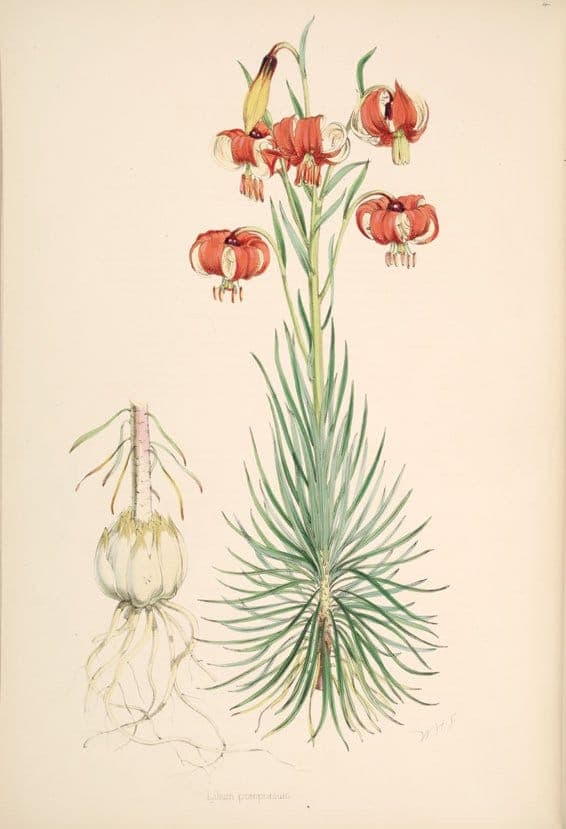
Lilium pomponium distinguishes itself through its characteristic flowers. The blooms are bright red to purple-red with six strongly reflexed petals forming an elegant turk's-cap shape. This unique floral morphology is highly distinctive and makes it easily recognizable.
The flowers appear from May to July, usually with several to multiple blooms per stem. The flowers hang elegantly downward and the reflexed petals reveal yellow stamens. Each bloom provides striking visual interest.
The plant typically reaches heights of 30 to 60 centimeters, depending on growing conditions. The leaves are narrow and linear, growing along the stem in whorls. After flowering, characteristic seed capsules form. The plant dies back after blooming but returns each year from the bulb.
Ideal Location
Lilium pomponium thrives best in full sunlight. Select a location receiving at least six to eight hours of direct sunlight daily. The plant grows poorly in shade but can tolerate some afternoon shade in very warm climates.
This Alpine lily performs well on slopes and elevated positions where water drains easily. The plant tolerates windy, mountainous weather better than many other lilies. Protected microclimates help prevent frost damage to early shoots.
Retailers: Dutch and Belgian gardeners should consult specialized alpine nurseries. Intratuin and Gamma sometimes stock alpine bulbs. German gardeners should consult OBI and Hornbach, as well as nurseries specializing in alpine plants.
Soil
Lilium pomponium performs best in calcareous to neutral soils (pH 6.5-7.0). The plant is highly alkaline-tolerant and grows even well in strongly alkaline alpine soils. This gives it an advantage in alpine areas where much soil is calcareous.
What is essential is perfect drainage. Heavy clay soils must be continuously amended with gravel, sand, and humus material. The plant cannot grow in waterlogged conditions and will rot in wet soils. For alpine rock gardens and trough plantings, well-draining, nutrient-poor mixes are recommended.
Diseño gratis
¿Quieres ver Lilium pomponium: complete guide en tu jardín? Crea un diseño gratis ahora.
Watering
Once established, Lilium pomponium is relatively drought-tolerant, especially in well-draining soils. Young plantings should be watered regularly during the first growing season, especially in spring when shoots are actively growing.
Watering should be done carefully to keep stems and leaves dry, as wet foliage can lead to fungal infections. The plant performs well with minimal summer watering, especially on slopes where water drains away.
Pruning
Lilium pomponium requires minimal pruning. After flowering, seed capsules can be removed to encourage energy redirection to bulb growth. Stems can be removed after leaves have yellowed and the plant dies back.
Allow plant material to persist well into fall to direct nutrition back to the bulb. This promotes flowering in subsequent years.
Maintenance Calendar
Moderate maintenance required.
- Spring: Install stakes for young shoots in windy locations; water regularly.
- Summer: Monitor water needs; watch for pests; enjoy the blooms.
- Fall: Allow plant material to die back; remove seed capsules if desired.
- Winter: Mulch to insulate root zones; no active maintenance.
Winter Hardiness
Lilium pomponium is very cold-hardy and can withstand temperatures to -15 to -20 degrees Celsius. The plant is suitable for USDA hardiness zones 6-9, though good drainage is essential in regions with winter moisture problems.
Young bulbs may benefit from mulching in their first winter. Mature bulbs are highly resilient and typically require no protection. In areas with heavy winter moisture, elevated plantings help prevent moisture problems.
Companion Plants
Lilium pomponium combines beautifully with other alpine plants. Try combining it with alpine grasses, sedums, phlox, or other dwarf alpine perennials. Silver-colored plants like Artemisia or Santolina accentuate the red flowers.
In alpine rock gardens, it works excellently as a focal point between the usually horizontal arrangements of typical alpine designs. The plant provides vertical interest in these compositions.
Closing Thoughts
Lilium pomponium is an exceptional choice for alpine gardeners and mountain plant enthusiasts. With its elegant red flowers, compact growth, and alpine origin, it offers a true "alpine experience" in the garden. Whether you are a specialist in alpine gardening or simply seeking a magnificent, unusual blooming bulb, this Pompon lily deserves a place in your garden.
Looking for Lilium pomponium plants? Visit gardenworld.app/en for more plant recommendations and design tips for alpine gardens.
¿Quieres ver Lilium pomponium: complete guide en tu jardín? Crea un diseño gratis ahora.
Sube una foto, elige un estilo y obtén un diseño fotorrealista con lista de plantas en menos de un minuto.
Más de 10.000 jardines diseñados
Sin tarjeta de crédito


Plantas similares
Reverchon's gagea: complete guide
Gagea reverchonii
Full guide to Gagea reverchonii, Reverchon's gagea: rare Pyrenean bulb with bright yellow spring flowers, soil needs and companion planting.
Leafy gagea: complete guide
Gagea foliosa
Gagea foliosa is a rare Mediterranean bulb with bright yellow star-shaped flowers blooming February to March in well-drained rocky settings.
Tubular gagea: complete guide
Gagea fragifera
Gagea fragifera is a mountain bulb with golden-yellow star flowers blooming May to July on subalpine slopes from Europe to the Himalaya.