
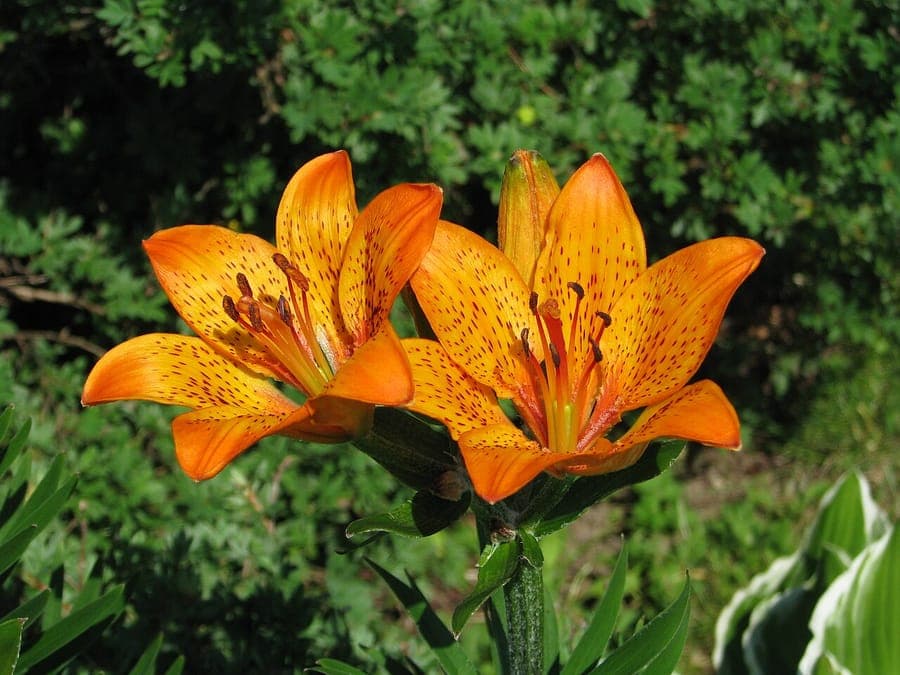
Нацку / CC BY-SA 3.0, via Wikimedia Commons
Yellow lily: complete guide
Lilium pensylvanicum
¿Quieres ver Yellow lily: complete guide en tu jardín?
1 minuto, sin tarjeta de crédito
Overview
The Lilium pensylvanicum, commonly known as the yellow lily or Siberian lily, is a stunning bulbous flower native to Siberia, Mongolia, and northern China. This plant is named after the region where it was discovered, though the botanical name reflects classification within the lily family. With its characteristic golden-yellow blooms and elegant forms, this lily ranks among the most popular choices for gardens needing color and structure.
This lily grows to approximately 60-80 cm tall and flowers from June to July with five to seven blooms per stem. The flower is highly distinctive with its large, yellow-tinted petals and dark stamens bearing fine nectary glands. The plant is fully hardy and suitable for most of Europe.
Appearance and bloom
The Lilium pensylvanicum is easily recognizable by its unique flower form. The flowers are funnel to bowl-shaped with six petals that open widely. The blooms are golden to lemon-yellow, sometimes with small spots or streaks at the base. The stamens are striking with their reddish-brown anthers that produce abundant yellow pollen.
The plant grows upright with narrow, linear leaves distributed along the stem. Each bulb can produce multiple stems, making the plant fuller than many other lily species.
Ideal location
The Lilium pensylvanicum thrives in sunny locations. Provide at least six to eight hours of direct sunlight daily. In very warm climates, some afternoon shade is welcome. The plant prefers sheltered places without strong wind gusts that can damage the tall, elegant stems.
Place this lily in rock gardens, against walls, or in borders where it remains highly visible. Also excellent in container cultivation, ensuring a pot of at least 20 cm diameter.
Soil
Perhaps the most critical aspect of lily cultivation is soil composition. The Lilium pensylvanicum requires well-draining soil. Heavy clay soils can cause bulb rot. Improve soil before planting with coarse sand, potting soil, or peat to promote drainage.
Add organic matter such as composted leaf or compost, but not excessive fresh manure. A pH of 6.0 to 7.0 is ideal. If your soil is naturally well-draining, this lily grows without problems.
Diseño gratis
¿Quieres ver Yellow lily: complete guide en tu jardín? Crea un diseño gratis ahora.
Watering
Provide regular water, especially during dry periods. The plant needs more water during growth phase (April-June) than during rest. Ensure the soil does not dry out, but stagnant water must be avoided.
During wet periods, no additional watering is necessary. If it rains, usually sufficient. In container cultivation, water more regularly than in ground cultivation.
Pruning
Pruning is minimal. Remove only faded flowers to direct energy to the bulb. Leave the stem after flowering until it naturally yellows, usually in October. This process helps the bulb prepare for winter.
Remove dead leaves and stems only when these have completely disappeared.
Maintenance calendar
February-March: Prepare soil and plant bulbs at 15-20 cm depth. April-May: Spray against aphids and caterpillars. Apply light fertilizer. June-July: Plant blooms. Provide regular water. August-September: Less water needed. Prepare for dormancy. October-December: Cut stem when fully yellow. No more care needed. January: Prepare for next growing season.
Winter hardiness
This species is very hardy and can tolerate temperatures to -30 degrees Celsius. The plant needs no extra protection in most parts of Europe. In very wet winters, a dry mulch layer helps, but usually not necessary.
The bulbs can remain in the field for years without replanting, though ideally lift every three years and repot when clusters become too dense.
Companion plants
The yellow lily combines beautifully with:
- Dusty miller (Senecio): silvery foliage contrasts beautifully
- Rosemary: complementary growth and fragrance
- Sage: purple varieties create color contrast
- Stonecrop (Sedum): similar water and soil requirements
- Blue fescue (Festuca glauca): bluish foliage under lilies
Conclusion
The Lilium pensylvanicum is an excellent choice for those seeking a reliable, long-flowering plant. With minimal care, this lily grows for years and provides color when many other garden plants have faded. You can purchase this beautiful lily at Intratuin or Gamma. Far from difficult, this plant ranks among the easiest lilies for beginners.
Follow these guidelines and you will enjoy for years the golden beauty of this Siberian treasure. Visit gardenworld.app for more garden inspiration and designs.
¿Quieres ver Yellow lily: complete guide en tu jardín? Crea un diseño gratis ahora.
Sube una foto, elige un estilo y obtén un diseño fotorrealista con lista de plantas en menos de un minuto.
Más de 10.000 jardines diseñados
Sin tarjeta de crédito


Plantas similares
Reverchon's gagea: complete guide
Gagea reverchonii
Full guide to Gagea reverchonii, Reverchon's gagea: rare Pyrenean bulb with bright yellow spring flowers, soil needs and companion planting.
Leafy gagea: complete guide
Gagea foliosa
Gagea foliosa is a rare Mediterranean bulb with bright yellow star-shaped flowers blooming February to March in well-drained rocky settings.
Tubular gagea: complete guide
Gagea fragifera
Gagea fragifera is a mountain bulb with golden-yellow star flowers blooming May to July on subalpine slopes from Europe to the Himalaya.