
Jackgreen23? / CC BY-SA 4.0, via Wikimedia Commons
Lilium pardalinum: complete guide
Lilium pardalinum
¿Quieres ver Lilium pardalinum: complete guide en tu jardín?
1 minuto, sin tarjeta de crédito
Overview
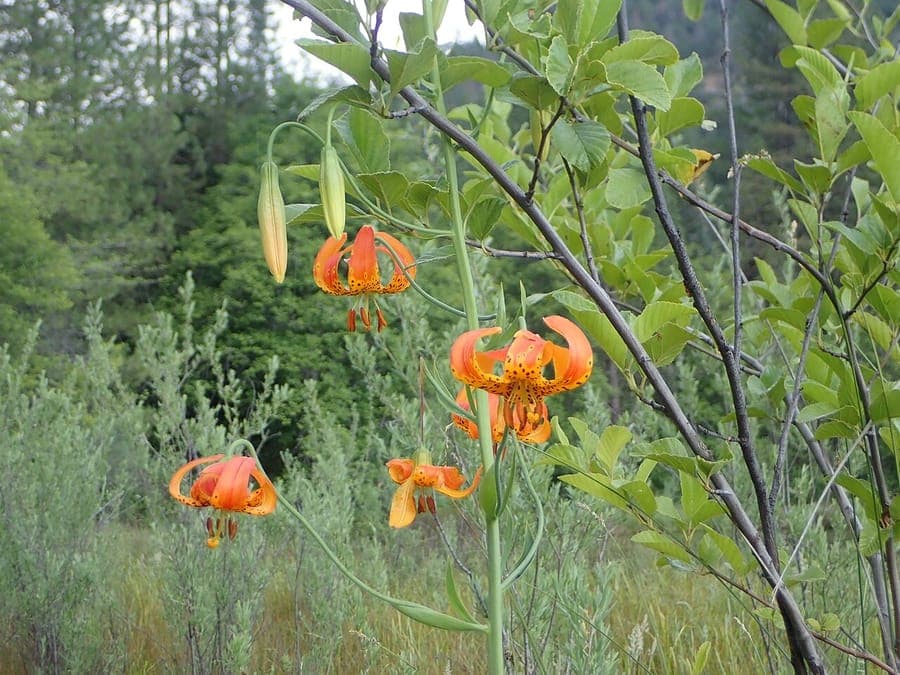
Lilium pardalinum, commonly known as Panther lily or Leopard lily, is a beautiful and rare lily originating from California and the Mexican borderlands. This species belongs to the Liliaceae family and is considered one of the most spectacular lily species in horticultural and breeding programs. The plant is named after its striking, dark-spotted flowers that resemble a leopard.
Appearance and bloom
Lilium pardalinum grows to a height of 100 to 150 centimeters. The plant bears narrow, lance-shaped leaves growing along the stem. The flowers are large, elegant, and hang somewhat downward, making them particularly attractive. The color is red-orange to golden-orange with characteristic dark brown to black spots. A yellow throat and dark-yellow stamens create a beautiful contrast. The blooming period runs from June to July.
Ideal location
Lilium pardalinum thrives best in filtered light locations. Full sun can fade the flowers, while too much shade can hinder growth. The plant prefers partially shaded locations, especially in the afternoon. In cooler mountainous areas, more sun can be tolerated. Protection from strong winds is recommended.
Soil
The soil requirements of Lilium pardalinum are quite specific. The plant requires well-draining, slightly acidic soil rich in organic matter. Humus-rich soil with peat mixture is ideal. The pH should be between 5.5 and 6.5. This lily is best grown in special lily soil or self-mixed soil with sand, peat, and gravel. Water stagnation must be absolutely avoided.
Diseño gratis
¿Quieres ver Lilium pardalinum: complete guide en tu jardín? Crea un diseño gratis ahora.
Watering
Lilium pardalinum requires regular water, especially during the growing period. The plant must never dry out, but water stagnation must be prevented. Balanced watering with well-draining soil is essential. In summer, extra water can be given during dry periods. After blooming, watering can be gradually reduced.
Pruning
Pruning is not really necessary for Lilium pardalinum, but dead flowers can be removed for a neater appearance. After blooming, stems should not be completely cut back, as the plant still withdraws nutrients back to the bulb. Only in late autumn, when foliage is completely yellow, can stems be removed close to the ground.
Maintenance calendar
Spring: New shoots appear, possible support may be needed. Summer: Regular watering and disease monitoring. Bloom period: June-July. Autumn: Reduce watering after blooming. Winter: Bulb protection in cold areas.
Winter hardiness
Lilium pardalinum is reasonably winter-hardy to about -15 degrees Celsius. In mild climates, it can remain in the ground, but in cold areas, bulb protection with mulch is recommended. The plant can also be grown in pots and overwintered indoors.
Companion plants
Lilium pardalinum combines beautifully with other alpine flowers and shade-loving plants. Fuchsia, Hosta, and other lily species are suitable neighbors. Its height makes it suitable as a background flower in mixed borders.
Closing remarks
Lilium pardalinum is a true jewel for the serious lily enthusiast. While it requires some extra care, the effort is rewarded by incredibly beautiful flowers. This rare lily can be grown through specialized growers who supply lilies. For more tips on growing exotic lilies, find information at gardenworld.app. Also at gardenworld.app, you can read how to create a mountainous garden where this beautiful lily thrives optimally.
¿Quieres ver Lilium pardalinum: complete guide en tu jardín? Crea un diseño gratis ahora.
Sube una foto, elige un estilo y obtén un diseño fotorrealista con lista de plantas en menos de un minuto.
Más de 10.000 jardines diseñados
Sin tarjeta de crédito


Plantas similares
Reverchon's gagea: complete guide
Gagea reverchonii
Full guide to Gagea reverchonii, Reverchon's gagea: rare Pyrenean bulb with bright yellow spring flowers, soil needs and companion planting.
Leafy gagea: complete guide
Gagea foliosa
Gagea foliosa is a rare Mediterranean bulb with bright yellow star-shaped flowers blooming February to March in well-drained rocky settings.
Tubular gagea: complete guide
Gagea fragifera
Gagea fragifera is a mountain bulb with golden-yellow star flowers blooming May to July on subalpine slopes from Europe to the Himalaya.