
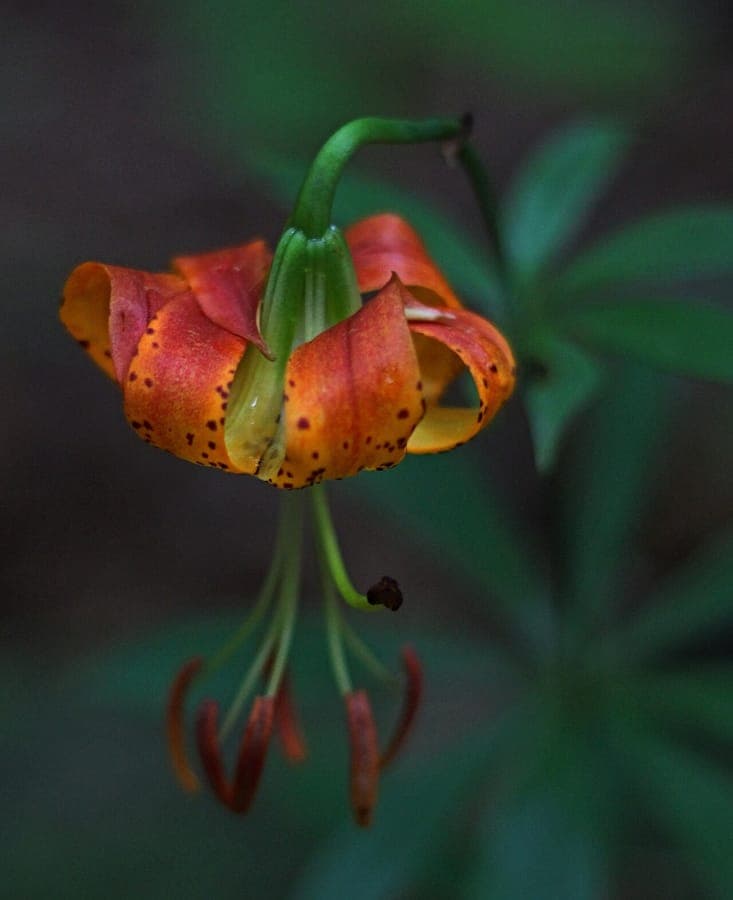
Wasrts / CC BY-SA 4.0, via Wikimedia Commons
Lilium michauxii: complete guide
Lilium michauxii
¿Quieres ver Lilium michauxii: complete guide en tu jardín?
1 minuto, sin tarjeta de crédito
Overview
Lilium michauxii, known as Carolina lily, is a native North American lily species from the southeastern United States, ranging from West Virginia to Texas. This lily species grows naturally in open shrubland, forest edges, and moist grassland. The Carolina lily is a somewhat demanding cultivar, challenging to grow but highly attractive to lily collectors due to its unusual red-orange flowers and unique growing habits. This species grows lower than many other lilies and has shallow roots that prefer moister soil. In good conditions, this lily can bloom year after year and self-propagate.
Appearance and Bloom
The Carolina lily grows as a relatively low plant, usually 60-120 centimeters tall, with several slender, line-like leaves along the stem. The leaves are dark green and give the plant an elegant, graceful appearance. The flowers are the showstopper of this species - they are beautiful turk's cap or reflexed flowers in bright red-orange tones. Each flower hangs downward or pendant, with curved petals (tepals) creating a characteristic helmet shape. Flowers typically appear in June-July in North America, depending on elevation. Each stem carries several flowers in a loose flower arrangement. The flowers lack intense fragrance, but their striking color provides ample compensation. This lily produces black seeds in capsular fruits after flowering.
Ideal Location
Carolina lilies grow best in partial sunlight - they prefer 3-4 hours of direct sun daily supplemented with bright, filtered light for the rest of the day. Full shade causes poor flowering and weak growth. Position them in a moister location in the garden, such as near a small pond or in dappled shrubland where water is retained longer. Ensure the plant doesn't sit in boggy water, but moister soil contributes to good growth. Protect from strong wind, although moderate ventilation helps prevent disease.
Soil
The soil mixture is critical for Carolina lilies. This plant grows in moister, more humus-rich soil than many other lilies. Create a suitable mix consisting of:
- 40% plant humus (partially decomposed leaves)
- 30% sand
- 20% garden soil
- 10% charcoal or gravel (for drainage)
The pH should be slightly acidic (pH 6.0-6.5). Ensure drainage holes are present, because although this lily prefers moister soil, stagnant water will cause root rot. Adding decomposed leaves helps create a better microbial network for nutrient availability.
Diseño gratis
¿Quieres ver Lilium michauxii: complete guide en tu jardín? Crea un diseño gratis ahora.
Watering
Ensure Carolina lilies receive moister soil during the growing season (April-September). Water regularly so the soil doesn't dry out but also isn't waterlogged. Deep watering once weekly is usually sufficient, more during very dry periods. In autumn, gradually reduce watering as the plant begins to die back. In winter, when the plant is dormant, water minimally - just enough to keep soil lightly moist. Resume spring watering cautiously at season's beginning. Water at the plant's base, not over the foliage.
Pruning
Carolina lilies require no real pruning. Remove only spent flowers (deadheading) to prevent seed development and direct the plant's energy toward root growth. Leave the foliage untouched until it naturally yellows and dies back in autumn - then cut dead stems to ground level. Remove diseased or damaged leaves immediately.
Maintenance Calendar
April: Gradually increase spring watering, check for mealybugs. May-July: Regular watering, remove spent flowers, monitor for weeds. August-September: Gradual reduction of watering, remove dying foliage. October-March: Minimal watering, plant dormant, no fertilizing. Year-round: Check for slugs and aphids.
Winter Hardiness
Carolina lilies are hardy to approximately -15 degrees Celsius in most parts of Northern Europe. They can overwinter outdoors in well-drained soil, preferably in moister areas. Ensure good drainage in winter - stagnant water around the bulbs will cause rotting. Mulch around the plant with a layer (5-10 cm) of partially decomposed leaves in October. Remove this mulch in April when new growth begins.
Companion Plants
Carolina lilies combine well with other moisture-preferring bog plants:
- Liriope (lilyturf)
- Daylily/Hemerocallis
- Indian physic (Gillenia)
- Swamp lily (Zigadenus)
- Astilbe (some varieties in moister soil)
- Hosta (in partial shade)
- Culver's root (Veronicastrum)
Combine with dark-leaved or white-variegated plants for better contrast.
Conclusion
The Carolina lily is for true lily enthusiasts, not necessarily the easiest choice. But for those willing to accommodate its moister preferences, this lily species offers incredible rewards in the form of striking red-orange flowers every summer. Once established in a suitable moist spot, the Carolina lily will last for decades. Consult quality nurseries or local lily collectors for cultivated specimens. Gardenworld.app has more information about lily cultivation.
¿Quieres ver Lilium michauxii: complete guide en tu jardín? Crea un diseño gratis ahora.
Sube una foto, elige un estilo y obtén un diseño fotorrealista con lista de plantas en menos de un minuto.
Más de 10.000 jardines diseñados
Sin tarjeta de crédito


Plantas similares
Reverchon's gagea: complete guide
Gagea reverchonii
Full guide to Gagea reverchonii, Reverchon's gagea: rare Pyrenean bulb with bright yellow spring flowers, soil needs and companion planting.
Leafy gagea: complete guide
Gagea foliosa
Gagea foliosa is a rare Mediterranean bulb with bright yellow star-shaped flowers blooming February to March in well-drained rocky settings.
Tubular gagea: complete guide
Gagea fragifera
Gagea fragifera is a mountain bulb with golden-yellow star flowers blooming May to July on subalpine slopes from Europe to the Himalaya.