
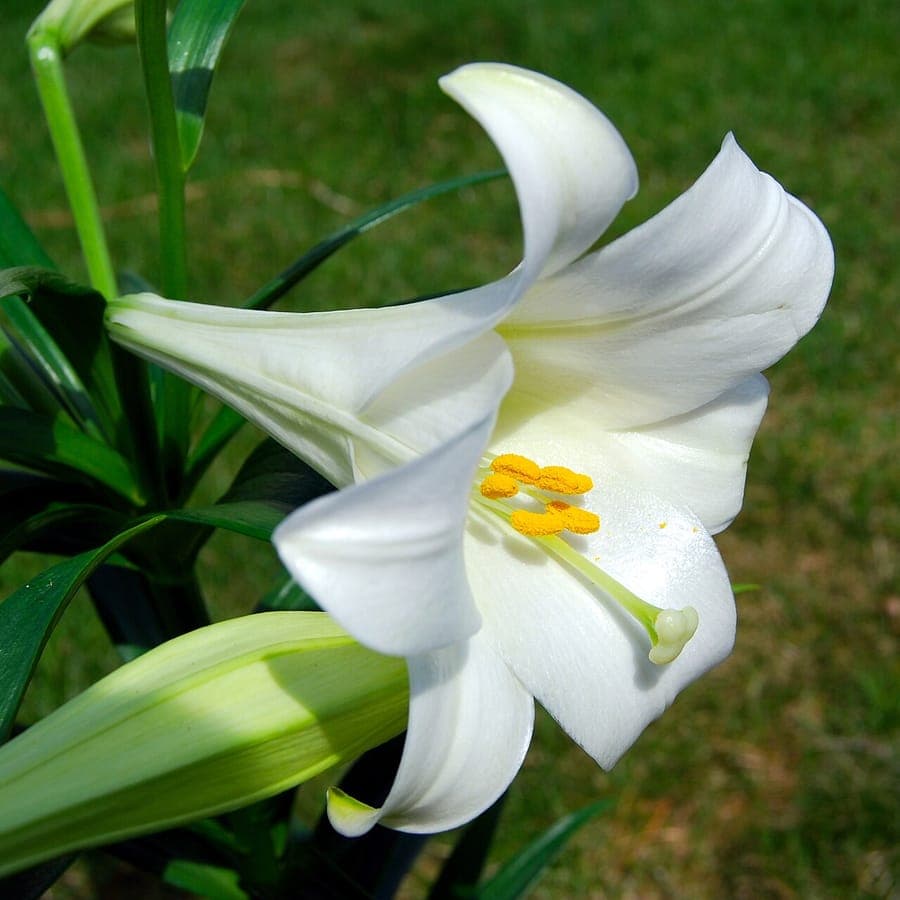
UpstateNYer / CC BY-SA 3.0, via Wikimedia Commons
Easter lily: complete guide
Lilium longiflorum
¿Quieres ver Easter lily: complete guide en tu jardín?
1 minuto, sin tarjeta de crédito
Overview
The Easter lily (Lilium longiflorum), also known as the trumpet lily, is an elegant bulb flower native to Japan. This impressive bloom is renowned because it typically flowers around Easter and is found in many homes and gardens worldwide.
Appearance & bloom
The Easter lily grows 24 to 32 inches tall and produces sturdy, upright stems. Each plant typically bears 6 to 12 large, fragrant flowers. The blooms are pure white and feature a classic trumpet-like shape. The petals are soft and elegantly curved outward. Flowering occurs from April to June, depending on planting depth and water temperature.
Ideal location
Place the Easter lily in full sun or light shade. A location with at least 6 hours of direct sunlight daily ensures optimal flower development. Provide good air circulation to prevent diseases. In warm climates, slight afternoon shade may be beneficial.
Soil
Easter lilies require well-draining, fertile soil. The ideal pH is between 6.0 and 6.5. Add compost or leaf mold to heavy clay soils. Ensure good drainage as these plants are sensitive to root rot from excessive moisture. A layer of sand around the bulbs helps improve water drainage.
Watering
Keep the soil consistently moist but not waterlogged. Water regularly during the growing season. After flowering, reduce water until the plant dies back. For potted plants: water until water drains from the drainage hole, then allow it to drain. Careful watering is essential as excessive moisture causes root rot.
Diseño gratis
¿Quieres ver Easter lily: complete guide en tu jardín? Crea un diseño gratis ahora.
Pruning
Remove faded flowers immediately, but leave the stem standing. This encourages later flowering. After blooming, the stem can be removed once it dies completely. Never cut healthy leaves as they return nutrients to the bulb.
Maintenance calendar
Spring: Plant bulbs at 8-10 inches deep. Summer: Water regularly, add fertilizer. Fall: Stop fertilizing, adjust watering. Winter: Bulbs can remain in ground or be dug up and stored.
Winter hardiness
Easter lilies are fairly winter hardy and can survive to USDA zone 5 (-22 to -4 F). In colder regions, plant bulbs deeper (10-12 inches). A protective mulch layer in autumn is recommended in frost-prone areas.
Companion plants
Pair Easter lilies beautifully with lavender, cotton lavender, or dandelion-like plants. Group at least three bulbs together for a stronger visual effect. Lower plants like violets (Viola) or sedums work wonderfully in front.
Closing
The Easter lily is a timeless classic flower that provides joy for years. With proper drainage, suitable sunlight, and careful watering, your Easter lily will bloom again each year. Order online or pick up at your local garden center for best quality. Find more inspiration at gardenworld.app/en.
¿Quieres ver Easter lily: complete guide en tu jardín? Crea un diseño gratis ahora.
Sube una foto, elige un estilo y obtén un diseño fotorrealista con lista de plantas en menos de un minuto.
Más de 10.000 jardines diseñados
Sin tarjeta de crédito


Plantas similares
Reverchon's gagea: complete guide
Gagea reverchonii
Full guide to Gagea reverchonii, Reverchon's gagea: rare Pyrenean bulb with bright yellow spring flowers, soil needs and companion planting.
Leafy gagea: complete guide
Gagea foliosa
Gagea foliosa is a rare Mediterranean bulb with bright yellow star-shaped flowers blooming February to March in well-drained rocky settings.
Tubular gagea: complete guide
Gagea fragifera
Gagea fragifera is a mountain bulb with golden-yellow star flowers blooming May to July on subalpine slopes from Europe to the Himalaya.