
Eric Hunt / CC BY-SA 4.0, via Wikimedia Commons
Kelley's lily: complete guide
Lilium kelleyanum
¿Quieres ver Kelley's lily: complete guide en tu jardín?
1 minuto, sin tarjeta de crédito
Overview
Kelley's lily (Lilium kelleyanum) is an enchanting rare mountain flower species native to the Sierra Nevada mountains of California. This endemic plant was first botanically described in 1903 and is considered one of the most precious lily species of North America. The plant is on red lists due to its limited distribution range and preference for very specific mountain conditions.
Lilium kelleyanum is a herbaceous plant that grows 30 to 60 centimeters tall. The plant blooms in late summer through fall with several to dozens of flowers per plant. The flowers are usually orange to red colored and have a pleasant aroma. This is a plant for specialized gardens in mountain landscapes or alpine-inclined gardeners.
Appearance and bloom
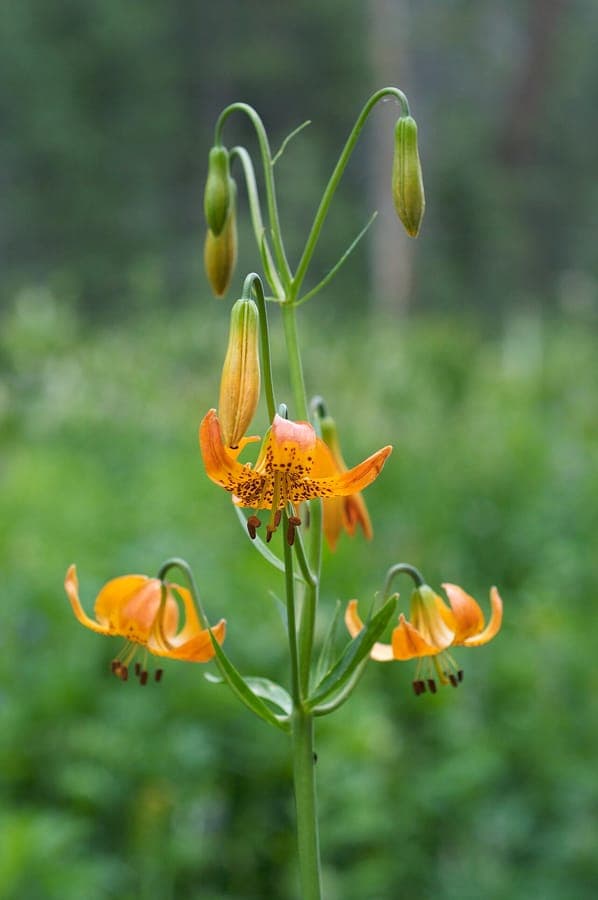
The flowers of Kelley's lily are undoubtedly the main attraction. They appear in various colors, usually orange with red markings or red with yellow spots. The flowers have the classic lily shape with recurved petals. They are approximately 5 to 7 centimeters wide.
The leaves are linear and grow scattered along the stem. They are 3 to 8 centimeters long and have a bluish green appearance. The plant forms seed bulbs in fall that can overwinter for the next growing season. After blooming, the above-ground plant dies completely.
Ideal location
Kelley's lily grows in its natural mountain habitat on south-facing slopes at elevations of 1500 to 2500 meters. In garden cultivation it prefers a location with full sun to light morning shade. Provide 6 to 8 hours of direct sunlight daily. This plant thrives in cool environments and appreciates air circulation.
This plant is ideal for alpine gardens, specialized lily borders and rock gardens. It can also be grown in pots. Avoid warm, humid summer locations. In temperate climates it grows best in mountain gardens or raised borders where temperature fluctuations occur naturally.
Diseño gratis
¿Quieres ver Kelley's lily: complete guide en tu jardín? Crea un diseño gratis ahora.
Soil
This is perhaps the most critical aspect of growing Kelley's lily. In its natural habitat it grows in sandy to rocky soil with excellent drainage. Add coarse sand, gravel or perlite to garden soil to achieve excellent drainage. The plant cannot survive in wet, heavy clay soil.
The plant prefers a pH between 5.5 and 6.5, so slightly acidic soil. Add peat moss or pine bark for acidity. The soil should be very nutrient-poor. This seems paradoxical, but alpine-region lilies are adapted to nutrient-poor conditions and bloom faster in poor soil.
Watering
Kelley's lily requires regular watering during the growing season, but absolutely no standing water. Water carefully so the top centimeter of soil remains moist without waterlogging. This is a critical balance.
After blooming and until the plant disappears, gradually reduce watering. During winter dormancy, the plant needs no water and the soil should remain dry. The bulbs can rot if they are underwater during the winter months.
Pruning
Pruning is not really necessary for Kelley's lily. Let the plant die back naturally in fall. You can remove faded flowers to prevent further seed development if you don't plan to save seed. Cut the stem to the ground when it has completely disappeared.
Maintenance calendar
January-March: Bulbs dormant, dry storage in cool place. April-May: Bulbs begin growing, start careful watering. June-July: Full growth, regular watering. August-September: Peak bloom. October-November: Plant dieback, stop watering. December: Bulbs at rest.
Winter hardiness
Kelley's lily is very winter hardy, since it naturally grows in mountain areas with icy winters. It can easily tolerate temperatures below -15 degrees Celsius. This is actually an advantage in temperate mountain climates.
Companion plants
Kelley's lily combines well with other alpine and mountain plants. Suitable companions are alpine phlox, dwarf conifers, sedges and sedums. Avoid vigorous growing plants that might outgrow the lily. In pots it can grow together with other alpine flowering plants.
Conclusion
Kelley's lily is a fascinating plant for gardeners who love rare mountain flowers. Growing it is a challenge but very rewarding when done correctly. This plant is not always readily available at garden centers, but can be ordered from specialized lily breeders. Discover more inspiration on gardenworld.app!
¿Quieres ver Kelley's lily: complete guide en tu jardín? Crea un diseño gratis ahora.
Sube una foto, elige un estilo y obtén un diseño fotorrealista con lista de plantas en menos de un minuto.
Más de 10.000 jardines diseñados
Sin tarjeta de crédito


Plantas similares
Reverchon's gagea: complete guide
Gagea reverchonii
Full guide to Gagea reverchonii, Reverchon's gagea: rare Pyrenean bulb with bright yellow spring flowers, soil needs and companion planting.
Leafy gagea: complete guide
Gagea foliosa
Gagea foliosa is a rare Mediterranean bulb with bright yellow star-shaped flowers blooming February to March in well-drained rocky settings.
Tubular gagea: complete guide
Gagea fragifera
Gagea fragifera is a mountain bulb with golden-yellow star flowers blooming May to July on subalpine slopes from Europe to the Himalaya.