
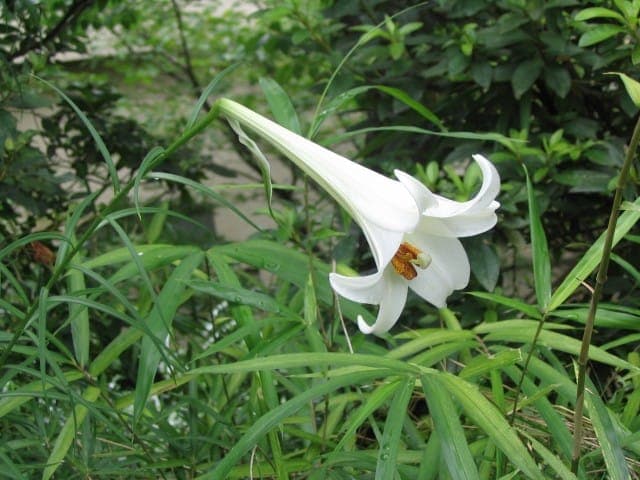
Sphl / CC BY-SA 3.0, via Wikimedia Commons
Lilium formosanum: complete guide
Lilium formosanum
¿Quieres ver Lilium formosanum: complete guide en tu jardín?
1 minuto, sin tarjeta de crédito
Overview
Lilium formosanum, known as the Taiwanese lily, Formosan lily, or St. Joseph's lily, is a stunning trumpet lily from Taiwan. This elegant lily is known for its pure white, strongly fragrant trumpet flowers with yellow stamens in the center. The plant is an excellent choice for garden designers seeking classic elegance and romantic flair.
The Taiwanese lily grows naturally on Taiwan in mountainous regions. It is a highly adaptable plant that grows well in temperate climates and reaches full bloom quite rapidly. With well-draining soil and regular care, this lily produces spectacular blooms year after year.
Appearance & Bloom
Lilium formosanum grows to 60-120 centimeters tall, depending on growing conditions. The flowers are large, pure white trumpet-shaped flowers with a yellow throat and numerous yellow stamens. Each bulb can produce 4-15 flowers that bloom sequentially.
Flowering occurs from August to September in temperate climates, though this varies. The flowers are intensely fragrant, especially in the evening. After blooming, interesting seed pods form.
The leaves are linear and green. The stem is strong and upright. Towards the end of the growing season, foliage discoloration may occur, which is natural.
Ideal Location
The Taiwanese lily grows best in full sun to lightly shaded locations. A minimum of 5-6 hours of direct sunlight daily ensures strongest blooming. In very warm regions, some afternoon shade can be beneficial.
Plant this lily where its fragrance can be optimally enjoyed, such as near seating areas or windows. The plant is also suitable for container cultivation.
Soil
Well-draining soil is essential. Heavy clay soil should be improved with sand and organic matter. Plant in beds above the water table or where water drains quickly. A mixture of standard garden soil with sand and compost works ideally.
The plant thrives in lightly acidic to neutral soil. Good drainage is more critical than soil fertility.
Diseño gratis
¿Quieres ver Lilium formosanum: complete guide en tu jardín? Crea un diseño gratis ahora.
Watering
Regular, moderate moisture is important during the growing season. Water when the top layer feels dry. However, waterlogging must be prevented. After blooming, gradually reduce watering until the stem dies back.
In pots, water thoroughly, ensuring water drains out. Ensure adequate drainage.
Pruning
Remove faded flowers and seed pods promptly after blooming unless you want to save seed. Keep the stem intact until it yellows and dies back - it returns nutrients to the bulb. Only then prune to ground level.
Maintenance Calendar
February-March: Check bulb health and moisture. April-August: Active growth. Maintain moderate watering schedule. August-September: Blooming. Enjoy! October-January: Dormancy. Minimal maintenance.
Annually after blooming: Add compost or slow-release fertilizer.
Winter Hardiness
Lilium formosanum is hardy to approximately -5 to -10 degrees Celsius without protection. In colder regions, mulch with a thin layer of organic material or overwinter in pots indoors. In very wet, heavy soils, bulb rot is a risk - drainage is critical.
Companion Plants
The Taiwanese lily combines beautifully with other summer bloomers. Dark purple clematis, lavender, geranium, and other textural plants form lovely combinations. Low-growing silver-leaved plants such as artemisia help highlight the lilies.
Ensure companion plants do not shade or compete with the lilies.
Closing
Lilium formosanum is a reliable, elegant lily bringing classic beauty and intoxicating fragrance. The plant is not difficult and is widely cultivated. For gardeners wanting to feature this lily as a centerpiece in their front yard design, gardenworld.app offers comprehensive design solutions. Ensure well-draining soil and regular care, and you will enjoy these beautiful flowers for years to come.
¿Quieres ver Lilium formosanum: complete guide en tu jardín? Crea un diseño gratis ahora.
Sube una foto, elige un estilo y obtén un diseño fotorrealista con lista de plantas en menos de un minuto.
Más de 10.000 jardines diseñados
Sin tarjeta de crédito


Plantas similares
Reverchon's gagea: complete guide
Gagea reverchonii
Full guide to Gagea reverchonii, Reverchon's gagea: rare Pyrenean bulb with bright yellow spring flowers, soil needs and companion planting.
Leafy gagea: complete guide
Gagea foliosa
Gagea foliosa is a rare Mediterranean bulb with bright yellow star-shaped flowers blooming February to March in well-drained rocky settings.
Tubular gagea: complete guide
Gagea fragifera
Gagea fragifera is a mountain bulb with golden-yellow star flowers blooming May to July on subalpine slopes from Europe to the Himalaya.