
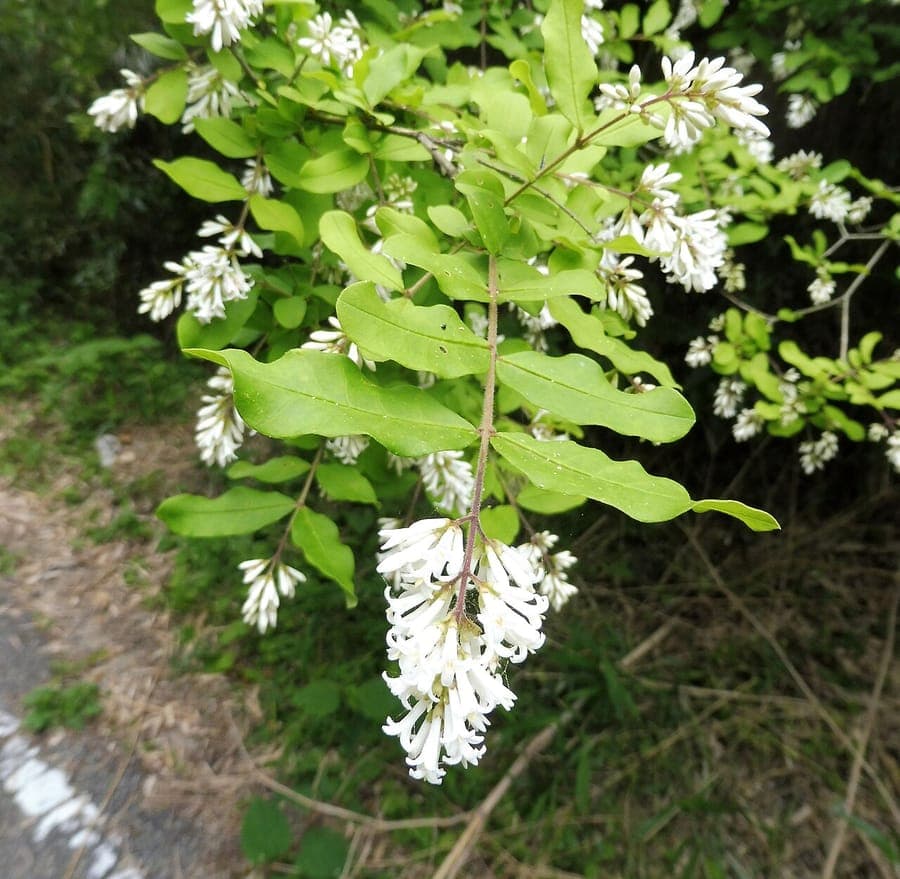
Mason Brock (Masebrock) / Public domain, via Wikimedia Commons
Ligustrum obtusifolium: complete guide
Ligustrum obtusifolium
¿Quieres ver Ligustrum obtusifolium: complete guide en tu jardín?
1 minuto, sin tarjeta de crédito
Overview
Ligustrum obtusifolium, commonly known as border privet or Japanese privet, is a versatile hedging shrub native to East Asia, particularly Japan and China. This graceful plant is valued for its elegant, airy foliage, delicate white flowers, and fine branching structure. The plant has become increasingly popular for contemporary garden boundaries, offering a more refined, less massive appearance than traditional privet varieties.
The border privet combines aesthetic elegance with practical hedge functionality. In landscape design, it is cherished for its gracile growth pattern, which introduces visual lightness to the landscape even when used as a boundary screen. This makes it ideal for homes with minimalist or Japanese-inspired garden styles.
Appearance and bloom
Ligustrum obtusifolium typically reaches a height of 2 to 3 meters, depending on growing conditions and pruning regimen. The branches grow elegantly spreading, creating a naturally open silhouette. The foliage is dark green with small, glossy leaves that remain present throughout the year, though the plant can be semi-deciduous in severe winters.
From June through July, flowers appear in characteristic white clusters at the branch tips. These flowers are small and subtle, yet abundant, creating a delicate blooming display that covers the entire plant. The fragrance is soft and pleasant, though not overwhelming. Following the flowers, small blue-purple berries develop, providing food for birds and offering attractive contrast against the green foliage.
The leaves are elliptical and approximately 1-2 cm long, giving the plant a soft, refined appearance compared to coarser privet species. These elegant proportions make Ligustrum obtusifolium particularly suitable for fine-textured garden designs.
Ideal location
This hedging plant thrives best in full sun to light shade. While it can grow in shade, flowering remains thinner and less abundant. At least four to six hours of direct sunlight daily will produce the best results.
Ligustrum obtusifolium is highly winter-hardy and suitable for temperate climates. It tolerates temperatures down to approximately -15 degrees Celsius, making it well-suited for gardens across northern Europe. However, the plant is sensitive to strong, persistent wind, particularly when young, so it appreciates some shelter in very windy locations.
Regarding placement: this shrub works excellently as a formal hedge, but also performs well in mixed borders where it displays its elegant form. It can also be grown in large containers, making it ideal for terrace situations.
Soil
Ligustrum obtusifolium is not particularly demanding regarding soil type. It grows well in normal garden soils, both slightly acidic and neutral. The plant tolerates various soil types, from sandy loam to clay-based soils, provided they drain well.
Drainage is important: the plant cannot tolerate waterlogging. Heavily waterlogged soils can lead to root rot and fungal problems. In heavy clay soils, it is advisable to add compost or sand to improve drainage.
Soil enrichment: while Ligustrum obtusifolium does not require nutrient-rich soil, it will grow better in soils improved with compost or leaf mold. When planting, incorporate ample compost into the planting hole, but avoid excess richness, as overly fertile soils can encourage weak, vigorous growth.
Watering
During the first growing season after planting, regular watering is essential. Keep the soil consistently moist but not waterlogged, particularly during the active growing season from April through October. In normal years, established plants will benefit from natural rainfall, but supplemental water should be provided during dry periods.
Once well-established, Ligustrum obtusifolium is relatively drought-tolerant. It resists short dry spells reasonably well. Potted specimens require more attention: ensure the potting mix does not dry out completely during summer months.
In wet winters, be cautious with excessive watering. Well-draining soil will help prevent moisture-related problems.
Diseño gratis
¿Quieres ver Ligustrum obtusifolium: complete guide en tu jardín? Crea un diseño gratis ahora.
Pruning
Pruning is a crucial aspect of maintaining Ligustrum obtusifolium, especially when used as a hedge. For hedge formation, it is recommended to prune two to three times annually: in May (following spring growth), in July-August (after flowering), and possibly again in October.
For more natural forms, one can prune less formally, respecting the plant's natural growth pattern. Pruning immediately after flowering (July) encourages stronger new branch development.
The plant tolerates severe pruning and will resprout from old wood. This makes it ideal for creating geometric shapes and crisp hedge outlines. Annual light pruning is usually sufficient for maintenance.
Maintenance calendar
April: Beginning of growing season. Check for winter or frost damage and prune if necessary. Application of balanced fertilizer supports growth.
May-June: First pruning after spring growth. Flowering begins and reaches its peak. Ensure adequate watering if conditions are dry.
July-August: Second pruning following bloom. This is the most critical time for hedge maintenance. Provide regular watering during dry periods.
September-October: Growth begins to decline. Optional third pruning for neater forms. Discontinue heavy fertilizing.
November-March: Dormant season. No pruning needed. Protect young plants from hard frost. Water only in exceptional dry periods.
Winter hardiness
Ligustrum obtusifolium is highly winter-hardy and tolerates temperatures down to approximately -15 degrees Celsius. In most regions of northern Europe, it will thrive without additional protection. Only in very severe winters or in extremely windy locations might some frost damage occur on tender shoot tips.
Young plants are more susceptible to frost damage than established specimens. It is advisable to provide some protection during the first winter after planting, such as burlap wrapping around vulnerable sections.
The plant is semi-evergreen to evergreen, depending on winter temperatures and local conditions. In severe winters, some leaf drop may occur, but the plant will fully re-leaf in spring.
Companion plants
Ligustrum obtusifolium works well in combination with other hedge plants. Popular companions include:
Buxus (Buxus sempervirens) - The finer structure of Ligustrum contrasts beautifully with the more compact form of Buxus.
Berberis - This can create interesting color contrasts, especially with purple Berberis varieties.
Ilex (Holly) - The dark green, glossy foliage of Ilex provides beautiful contrast with finer Ligustrum foliage.
Lavender - For more informal borders, Ligustrum can serve as backdrop for lavender plantings.
Ornamental grasses - These add texture and work well in combination with Ligustrum hedging.
In mixed borders, Ligustrum obtusifolium functions well as a structural plant without overwhelming others.
Conclusion
Ligustrum obtusifolium represents a refined choice for those seeking elegance in their garden boundaries. With its delicate flowering, winter-hardiness, and versatility, it offers an excellent balance between aesthetics and functionality. Whether creating a formal hedge or a more informal shrub planting, this Japanese privet will enrich your garden design with its subtle charm and elegant growth habit.
Available at major garden centers across northern Europe, where you can also receive expert advice on selecting the best plant material for your garden. Visit gardenworld.app for more inspiration and plant advice.
¿Quieres ver Ligustrum obtusifolium: complete guide en tu jardín? Crea un diseño gratis ahora.
Sube una foto, elige un estilo y obtén un diseño fotorrealista con lista de plantas en menos de un minuto.
Más de 10.000 jardines diseñados
Sin tarjeta de crédito


Plantas similares
Rough menodora: complete guide
Menodora scabra
Full guide to Menodora scabra: a drought-tolerant desert subshrub with bright yellow flowers, ideal for rock gardens and xeriscapes.
Fraxinus dipetala: complete guide
Fraxinus dipetala
California ash or two-petal ash from southwestern USA. Beautiful spring flowers, drought-tolerant. Experimental choice for warm Mediterranean front gardens.
Syringa komarowii: complete guide
Syringa komarowii
Syringa komarowii is a striking lilac from central China with elegant flower spikes and lovely foliage. Discover the complete care guide here.