
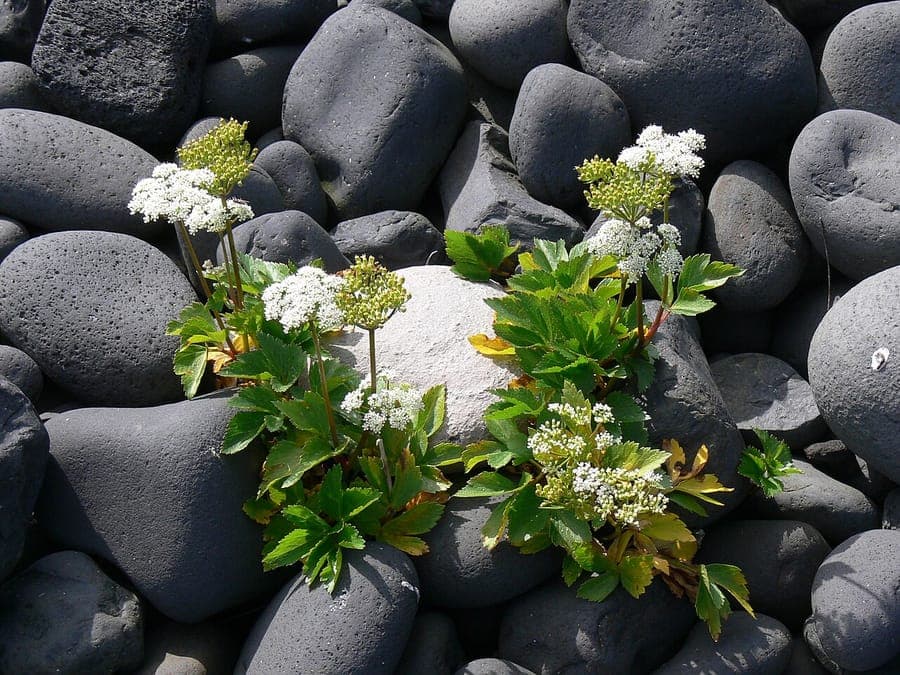
Wolfgang Sauber / CC BY-SA 3.0, via Wikimedia Commons
Ligusticum scoticum: complete guide
Ligusticum scoticum
¿Quieres ver Ligusticum scoticum: complete guide en tu jardín?
1 minuto, sin tarjeta de crédito
Ligusticum scoticum, commonly called Scots Lovage or Sea Parsley, is a fascinating aromatic plant from the Apiaceae family. This hardy plant naturally grows along the rocky coastlines of Scotland and other northern regions of Northern Europe. The plant has been valued for centuries for its aromatic and medicinal properties.
Overview
Ligusticum scoticum is a hardy-growing coastal plant with fragrant, triangular foliage resembling parsley. The plant grows to approximately 30-60 centimeters tall and spreads via underground rhizomes. The primary characteristic is the aromatic foliage that smells like a blend of lovage and parsley. During summer, the plant produces small white to light pink flowers in umbels. The roots are thick, fleshy, and taste bitter-sweet.
Appearance and Bloom
The plant forms dense clumps with layered triangular foliage on long leaf stems. The foliage is finely divided and glossy green. The plant grows to medium height and spreads slowly via underground stems. From July through August, small white or pink flowers appear in characteristic umbels. After flowering, the plant produces very small seeds in distinctive twin fruits.
Ideal Location
Ligusticum scoticum thrives in sunny to partially shaded locations. The plant prefers full sun for best flavor and growth, but can also grow in partial light. In hot climates, afternoon shade may be beneficial. The plant performs best in windy locations, reflecting its coastal plant origin.
Soil
The soil must drain well and be moderately fertile. Ligusticum scoticum grows well in sandy, loamy, or clay soils. A pH between 6.0 and 7.5 is ideal. The plant tolerates salt-rich soils better than many other garden plants due to its coastal origin. Add organic material to improve water-holding capacity.
Diseño gratis
¿Quieres ver Ligusticum scoticum: complete guide en tu jardín? Crea un diseño gratis ahora.
Watering
During the growing season, water regularly, especially for young plants. The plant tolerates some drought once established. Avoid waterlogging, as this can cause root rot. Water during periods of abnormal drought. The plant tolerates sea wind and salt better than many plants.
Pruning
Pruning is straightforward for Ligusticum scoticum. Pinch out young plants to encourage bushier growth. Harvest foliage regularly for culinary use, stimulating the plant to produce more leaves. Remove flowers before setting seed to encourage vegetative growth, unless you want to collect seed.
Maintenance Calendar
Spring (March-May): Sow seed or plant young plants, water during drier weather, begin harvesting young foliage. Summer (June-August): Water regularly, continue foliage harvesting, remove flowers unless seed is needed. Autumn (September-October): Continue harvesting, reduce watering, prepare for winter rest. Winter (November-February): Minimal care, plant enters partial dormancy.
Winter Hardiness
Ligusticum scoticum is very cold-hardy, tolerating temperatures down to -15°C. In warm climates, the plant may grow throughout winter. The plant does not die back, so you can harvest foliage year-round. In snowy regions, some protection helps.
Companion Plants
Pair Ligusticum scoticum with other coastal plants and herbs such as seabeet, sea wormwood, marjoram, and other salt-tolerant plants. Group together with other parsley-like herbs for a herb corner. The plant makes attractive combinations with silver-foliaged sea holly or sea thrift.
Closing
Ligusticum scoticum is a valuable addition to any herb garden or botanical collection. This herb offers not only culinary benefits but also decorative appeal with its delicate foliage and summer flowering. Purchase seed from online herb specialists or seed suppliers. Use fresh foliage in fish and seafood dishes or herbal infusions. For more plant intelligence and garden inspiration, visit gardenworld.app. Discover how easily you can design a balcony herb garden on gardenworld.app.
¿Quieres ver Ligusticum scoticum: complete guide en tu jardín? Crea un diseño gratis ahora.
Sube una foto, elige un estilo y obtén un diseño fotorrealista con lista de plantas en menos de un minuto.
Más de 10.000 jardines diseñados
Sin tarjeta de crédito


Plantas similares
Whorled carrot: complete guide
Daucus involucratus
Daucus involucratus is a Mediterranean umbellifer with white flower heads framed by lacy bracts. Growing this gravel garden gem.
Daucus muricatus: complete guide
Daucus muricatus
Daucus muricatus, the spiny wild carrot, grows wild on Mediterranean coasts. Discover sowing, June-July bloom, and wildflower meadow use.
Daucus pumilus: complete guide
Daucus pumilus
Daucus pumilus is a dwarf wild carrot relative with white lacy umbels, thriving on dunes and coastal rock in poor, fast-draining soil.