
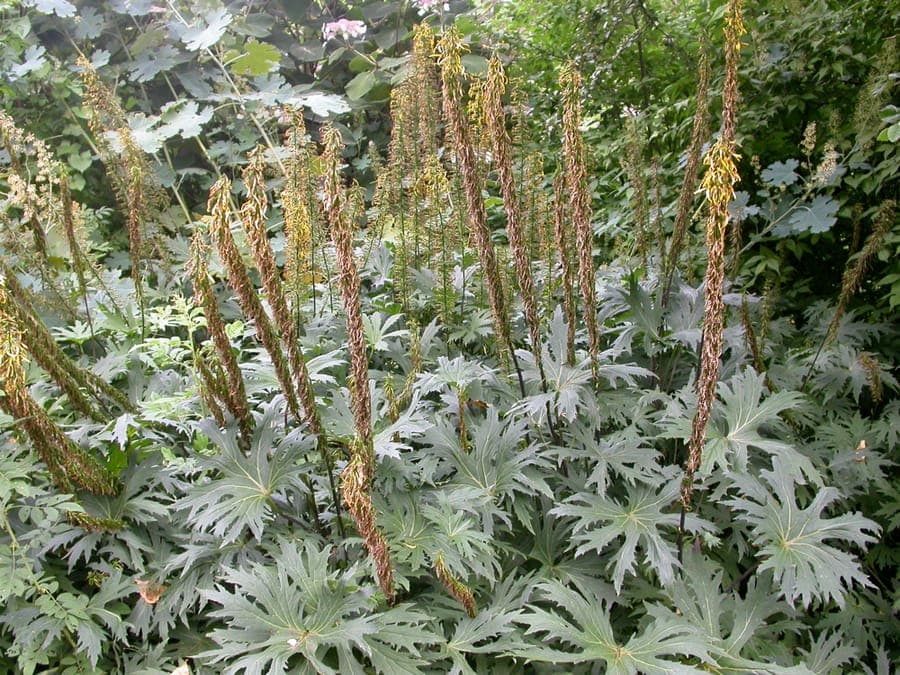
Pieter Pelser / CC BY 3.0, via Wikimedia Commons
Przewalski's Leopard-Plant: complete guide
Ligularia przewalskii
¿Quieres ver Przewalski's Leopard-Plant: complete guide en tu jardín?
1 minuto, sin tarjeta de crédito
Overview
Ligularia przewalskii, commonly known as Przewalski's Leopard-Plant or Przewalski's Gold-Kolben, is an impressive perennial from the Asteraceae family. Native to the mountainous regions of Mongolia and China where it grows in moist alpine meadows and stream banks at elevations between 2000 to 3500 meters, this plant has become increasingly popular in contemporary gardens since its introduction to European cultivation in the early 20th century.
This remarkable plant is especially valued for its monumental presence, enormous hand-shaped leaves, and striking golden-yellow flower spikes. The plant can reach considerable heights and provides a strong vertical accent in borders and shaded corners. It is a must-have for gardeners seeking large, structurally interesting specimens.
Appearance and Bloom
Ligularia przewalskii is a perennial that typically reaches between 80 to 150 centimeters in height, depending on growing conditions. The most striking feature is its exceptionally large, deeply lobed hand-shaped leaves that can reach 30 centimeters across. The foliage is deep green with an impressive textural quality.
Flowering typically occurs after a few growing seasons. Blooms appear from June through August on thick, dark reddish stems rising above the foliage. The flowers are small and golden-yellow, arranged in distinctive cylindrical spikes measuring 20 to 50 centimeters long. These characteristic flower spikes give the plant a unique architectural presence, resembling an ornamental club or staff rising above the leafy base. Following flowering, seeds develop and are dispersed by wind.
Ideal Location
Prezwalski's Leopard-Plant thrives best in light to full shade. While the plant tolerates sun exposure, it feels most at home beneath large trees or on the north or east side of a building. In hot, very sunny climates, afternoon shade is recommended to prevent leaf drying and to help maintain soil moisture more effectively.
The plant is ideally suited for boggy sections of the garden, planting under shade trees, and filling dark corners with architectural interest. Its bold form makes it excellent as a specimen plant.
Soil
Ligularia przewalskii prefers a nutrient-rich, well-draining soil with abundant organic matter. The plant grows best in lightly acidic to neutral soil with a pH between 6.0 and 7.5. Ensure you amend planting holes with generous amounts of compost or peat moss to maintain consistent moisture without waterlogging.
The plant greatly appreciates mulching, as this improves water retention and moderates soil temperature. Apply 5 to 10 centimeters of organic mulch such as shredded leaves, wood chips, or compost.
Watering
Consistent moisture is crucial for Przewalski's Leopard-Plant. The plant originates from regions with regular rainfall and prefers consistently moist soils. Maintain even moisture levels, especially during the active growing season from April to September.
Use drip irrigation or water gently at the base of the plant to avoid wetting foliage. During dry periods, daily watering may be necessary. Ensure water does not stagnate around the roots, which can lead to root rot.
Diseño gratis
¿Quieres ver Przewalski's Leopard-Plant: complete guide en tu jardín? Crea un diseño gratis ahora.
Pruning and Maintenance
Ligularia przewalskii requires minimal pruning. Remove only dead or damaged leaves as needed. After flowering, you may remove faded flower spikes to improve appearance and to discourage self-seeding if desired.
In autumn, stems can be cut back to ground level, though many gardeners prefer to leave dried stems standing for winter interest and structure. This adds textural appeal to the winter garden.
Maintenance Calendar
April to May: Growing season begins. Remove old stems completely and add compost or organic fertilizer. Ensure regular watering.
June to August: Flowering period. Keep the plant well-hydrated, especially during dry spells. Remove faded flowers if desired.
September to October: Foliage begins to fade. Add an additional mulch layer for the winter period.
November to March: Winter dormancy. The plant conserves energy underground. Additional mulch protection may be removed in very wet winters if necessary.
Winter Hardiness
Prezwalski's Leopard-Plant is exceptionally hardy and tolerates winter temperatures down to -25 degrees Celsius without protection. The plant is therefore well-suited to temperate climates and requires no special winter care. During extreme cold snaps, increasing the mulch layer provides extra root protection.
Companion Planting
Ligularia przewalskii combines beautifully with other shade and moisture-loving plants. Particularly attractive are combinations with ferns such as the Japanese Hakenochloa or Shield Fern, which provide soft contrast to the plant's bold structure.
The plant works wonderfully alongside Hostas in various colors and sizes, as well as Astilbes which contribute feathery blooms in pink, red, or white. Bergenia with rounded leaves also makes an excellent partner.
In wet meadow settings, Ligularia thrives alongside marsh orchids, kingcups, and snakeroot.
Propagation
Ligularia przewalskii can be propagated in several ways. The easiest method is from seed, which can be sown in early spring. Seeds require light to germinate, so do not press them into soil. Keep the seed bed moist and place it in a warm location around 20 degrees Celsius.
Dividing existing plants can also be done in spring if the plant has become very large. Use a sharp spade and ensure each division contains at least one growing eye. Replant divisions immediately with plenty of compost.
Diseases and Pests
Ligularia przewalskii is generally very resistant to diseases and pests. Occasionally slugs and caterpillars may nibble on leaves, especially in wet years. Manual removal or biological slug control can help. The plant can be susceptible to root rot in very wet soils, so good drainage is essential.
Conclusion
Prezwalski's Leopard-Plant is an excellent choice for gardeners seeking an imposing perennial with true architectural character. This plant is not only visually spectacular but also reliable and relatively maintenance-free. With the right growing location (moist, partial shade) and nutrient-rich soil, this Asian beauty develops into a genuine garden treasure.
For more information on purchasing and caring for Przewalski's Leopard-Plant, consult your local garden centers and nurseries. With the advice in this guide, you ensure successful cultivation of this impressive plant. Discover on gardenworld.app how to perfectly integrate this specimen into your garden design! This perennial forms a valuable element for years of garden enjoyment.
¿Quieres ver Przewalski's Leopard-Plant: complete guide en tu jardín? Crea un diseño gratis ahora.
Sube una foto, elige un estilo y obtén un diseño fotorrealista con lista de plantas en menos de un minuto.
Más de 10.000 jardines diseñados
Sin tarjeta de crédito


Plantas similares
Calendula stellata: complete guide
Calendula stellata
Complete guide to Calendula stellata, the star-flowered marigold from Sicily: location, soil, watering and companion planting tips.
Korean chrysanthemum: complete guide
Chrysanthemum x rubellum
Chrysanthemum x rubellum is a hardy autumn perennial with single pink to copper flowers from August to November. Care and combinations.
Helianthus divaricatus: complete guide
Helianthus divaricatus
Helianthus divaricatus is a North American woodland sunflower with yellow summer blooms, ideal for naturalistic borders and shady edges.